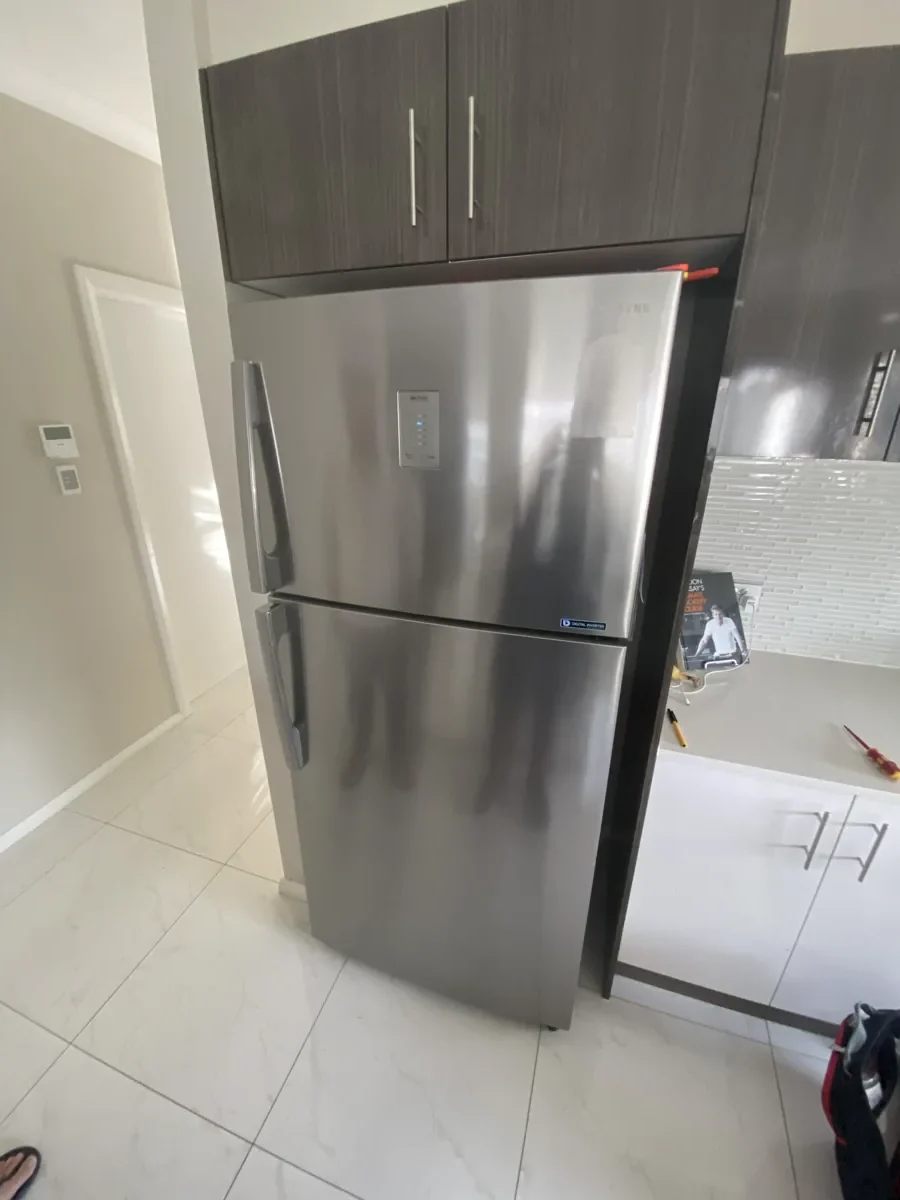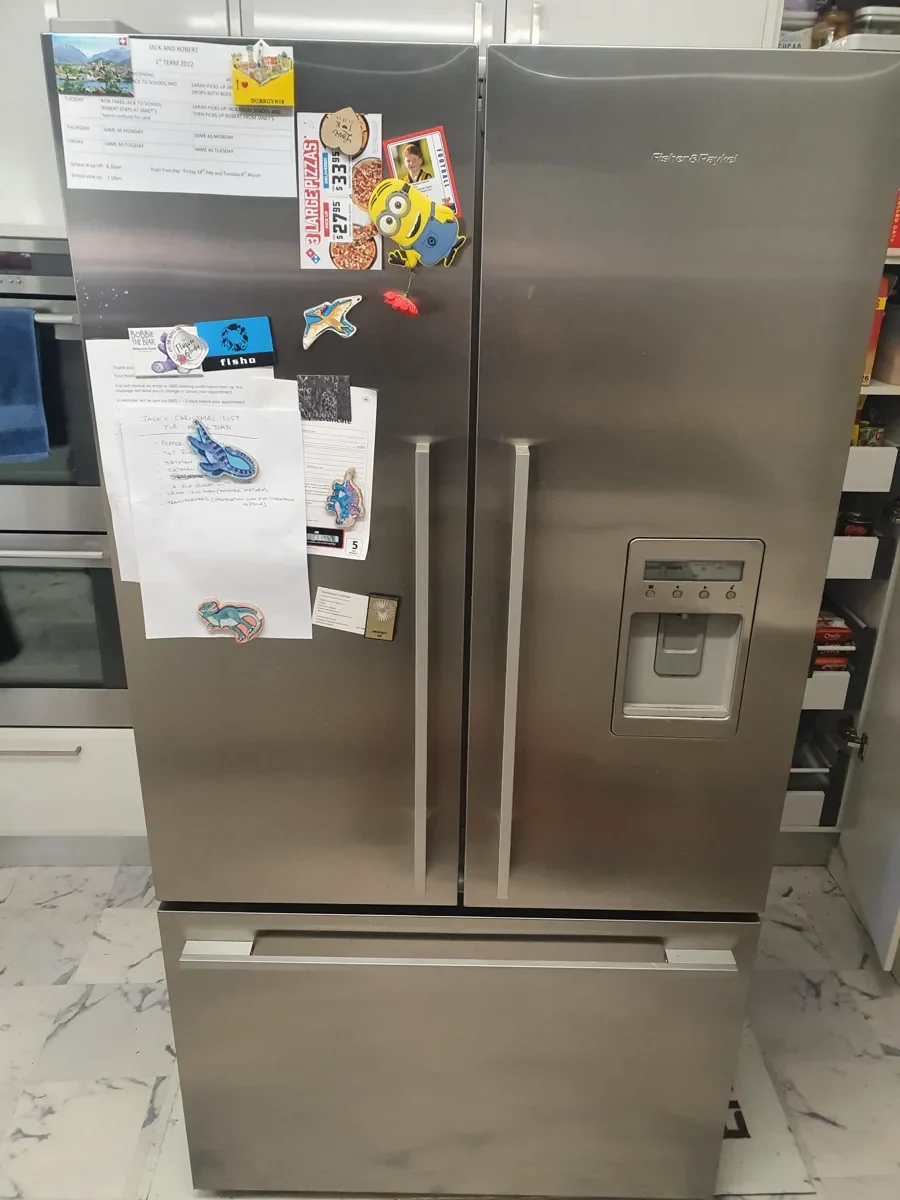

Your freezer should be set to -18°C or colder.
That applies to fridge-freezers, upright freezers and chest freezers alike. Your fridge should sit around 3°C and never above 5°C. Anything warmer than -15°C in the freezer means food is losing quality fast and the storage times on the packaging no longer apply.
Most people set the freezer once and assume it’s working as long as the ice cream stays solid. But there’s a difference between “frozen” and “frozen correctly” — and if your freezer is running at -10°C instead of the recommended -18°C, your food is technically frozen but losing quality, developing freezer burn faster, and not being stored safely for the shelf lives most guides recommend.
Getting the freezer temperature right is one of those small adjustments with a genuinely large impact on food quality, energy use, and how long the appliance itself lasts. At National Appliance Repairs, we service chest freezers, upright freezers, and fridge-freezer combinations across Australia. The right temperature is straightforward — here’s what you need to know.
The Recommended Freezer Temperature in Australia
Your freezer should sit at -18°C or colder. That’s the standard from CHOICE Australia, and it matches what food authorities use worldwide.
At -18°C, a few things happen. Bacteria stop multiplying (they’re not killed at freezer temps, just put on pause). Enzyme activity that breaks down quality slows way down. Food keeps its nutrition, texture, and flavour for as long as the recommended storage periods say it should.
Healthdirect Australia says -15°C is the bare minimum for food safety, but -18°C is where you want to be for the best results.
Quick Reference: Fridge and Freezer Temperatures
| Appliance | Ideal temperature | Acceptable range | Too warm if above |
| Fridge (fresh food compartment) | 3°C | 2°C to 4°C | 5°C |
| Freezer (fridge-freezer compartment) | -18°C | -18°C to -20°C | -15°C |
| Upright freezer | -18°C | -18°C to -22°C | -15°C |
| Chest freezer | -18°C | -18°C to -22°C | -15°C |
Colder than -22°C won’t harm food, but it uses more electricity without any real gain in food quality.
Why -18°C, Not Just “Whatever Freezes Things”
Food begins freezing at 0°C, but the process continues down to much colder temperatures. Ice cream, for example, only fully freezes at around -15°C — which is why ice cream can feel soft and scoopable even in a freezer that’s technically operating, if that freezer is only reaching -10°C or -12°C.
At -10°C:
- Many frozen foods are solid but not fully frozen
- Enzymatic reactions continue at a low but meaningful rate, degrading quality faster
- Freezer burn (surface dehydration and oxidation) develops more quickly
- Recommended frozen storage times are significantly shorter
At -18°C:
- Water in food is essentially fully frozen throughout
- Quality degradation is very slow
- Recommended storage times (3 months for most cooked meals, 6–12 months for raw meat depending on type) are achievable
Running a freezer warmer than -18°C doesn’t make the food unsafe immediately, but it does mean the food deteriorates faster and the storage guidelines on packaging no longer apply.
How to Check Your Freezer Temperature
Most domestic freezer controls use a numbered dial or slider rather than a direct temperature display. To find the actual temperature, you need a freezer thermometer — they cost a few dollars at any kitchenware or hardware retailer.
Place the thermometer inside the freezer and check it after the freezer has been closed for at least eight hours. The reading should be -18°C or colder. If it’s above -15°C, adjust the thermostat to a colder setting, wait another eight hours, and check again.
For combination fridge-freezers, adjusting the freezer temperature setting can sometimes affect the fridge section, depending on how the cooling system is configured. Check both compartments after any adjustment.
Chest Freezers vs Upright Freezers: Does the Target Temperature Change?
No. Both should run at -18°C. What changes is how well each type holds that temperature and where you should measure it.
Chest freezers are better at holding a steady temperature. Cold air is heavier than warm air, so when you lift the lid most of the cold stays inside the cabinet rather than spilling onto the floor. They’re also usually more energy efficient and stay frozen longer during a power outage, provided you keep the lid shut.
The trade-off is that most chest freezers are manual defrost, so frost build-up needs regular attention, and the bottom of the cabinet is typically a few degrees colder than the top. Place your thermometer at mid-depth, not sitting on top of the food near the lid.
Upright freezers are easier to organise and many are frost-free, but every time the door opens the cold air falls straight out. Items in the door shelves and near the front are exposed to the biggest temperature swings, so they’re the wrong place for long-term storage of meat or ice cream. Upright freezers also depend on the door gasket, which wears out sooner than a chest freezer’s lid seal. Check your thermometer on a middle shelf toward the back.
If your freezer lives in a garage or shed, check the manual for its climate class. Many freezers are only designed for a limited range of room temperatures, and an Australian garage in January can push a unit well beyond what it’s rated for.
Recommended Freezer Settings by Brand
Every major brand targets roughly the same numbers. What differs is how the controls are labelled. Whatever brand you own, confirm the result with a thermometer, since the number on the display is a target, not a measurement.
- Samsung: Samsung Australia lists -19°C for the freezer and 3°C for the fridge as the ideal settings. The freezer can be set anywhere from -15°C to -23°C, with -19°C as the default. Leaving it on the factory default is fine for most households.
- LG: LG recommends 3°C for the refrigerator and -18°C for the freezer. On digital models, the freezer is adjustable from -15°C to -23°C. For models with a numbered dial instead of degrees, on a 1 to 5 scale, a setting of 3 is usually the default and corresponds to approximately -18°C.
- Westinghouse: Westinghouse’s factory defaults are 3°C for the fridge and -18°C for the freezer, while dial-controlled models default to ‘Mid’ for both. If you change the setting, Westinghouse advises that you make only small adjustments and wait 24 hours to see if it’s correct. Owners of top-mount models should note that single-control thermostats need to operate in rooms above 10°C to maintain good freezer temps, which matters for fridges in unheated laundries or garages over winter.
- Fisher & Paykel: Models with a degree display should be set to -18°C for the freezer and 3°C for the fridge. Some ActiveSmart models use a row of lights rather than a number; on these, fewer lights illuminated means a cooler temperature for the compartment selected. Because the lights don’t show an actual temperature, a thermometer check is essential.
- Kelvinator: Kelvinator is part of the Electrolux group in Australia, alongside Westinghouse, and its chest and upright freezers typically use a simple mechanical dial without temperature markings. Start at the middle setting, check with a thermometer after 24 hours, and turn toward colder only if the reading is above -18°C.
Freezer Temperature by Food Type
| Food Category | Maximum Recommended Storage at -18°C | Notes |
| Raw beef, lamb (whole cuts) | 6-12 months | Quality degrades before safety concern arises |
| Raw minced beef | 3-4 months | Higher surface area means faster quality loss |
| Raw poultry | 9-12 months | Keep in airtight packaging to prevent freezer burn |
| Raw pork | 4-6 months | |
| Raw seafood | 2-3 months | Best frozen fresh; quality drops faster than meat |
| Cooked meals (soups, stews, casseroles) | 2-3 months | Label with date before freezing |
| Bread and baked goods | 2-3 months | |
| Vegetables (blanched) | 8-12 months | Blanching before freezing preserves colour and texture |
| Ice cream | 2-3 months (after opening) | Soft-serve or hard ice cream — store away from door |
These timelines assume the food is stored at a consistent -18°C in appropriate packaging. Food stored at warmer temperatures will deteriorate faster.
Common Reasons a Freezer Isn’t Cold Enough
If your thermometer confirms the freezer is running warm, work through these in order:
- Start with the thermostat. Dial it toward colder and wait a few hours to see if it helps.
- Check the door or lid seal. On uprights, a worn gasket is a common culprit — warm air sneaks in. On chest freezers, close the lid and look for gaps.
- Look for frost build-up. Manual-defrost models can get caked with frost on the inside walls. This frost acts as insulation, so cold can’t reach the food even though the compressor is running overtime. Defrost it regularly and you’ll fix this.
- If you have a frost-free model, don’t overpacking it. Stuff it too full and you block airflow to the evaporator fan, which causes uneven freezing and warm spots.
- Consider the location. A freezer in a Brisbane garage during summer is basically cooking from the outside in. The compressor can’t keep up with that heat load.
- If you’ve checked all that and the freezer’s still warm, you likely have a compressor or refrigerant problem — a leak, a failing compressor, or a faulty thermostat. Call a technician at this point.
Freezer Burn: What It Is and How to Prevent It
Freezer burn is the greyish-white, dry, papery patches that appear on frozen food — particularly meat, poultry, and ice cream — after extended storage. It’s caused by moisture migrating from the food to the cold air in the freezer and depositing as ice crystals on the food’s surface, leaving the food dehydrated and oxidised.
Freezer-burned food is safe to eat but significantly degraded in texture and flavour. Prevention:
- Store food in airtight, freezer-rated packaging or sealed freezer bags with as much air removed as possible
- Don’t leave partially used bags loosely closed in the freezer
- Maintain a consistent -18°C — warmer temperatures and temperature fluctuations accelerate freezer burn
- Use food within the recommended storage times
Defrosting Your Freezer
Manual-defrost freezers accumulate frost over time and need periodic defrosting to maintain efficiency. The general guide is to defrost when frost build-up reaches about 6mm thickness.
A heavily frosted freezer:
- Runs its compressor more frequently and for longer, using more electricity
- Has reduced usable internal space
- Maintains temperature less effectively — internal temperature rises as frost accumulates
For frost-free freezers, automatic defrost cycles run periodically without requiring manual intervention. If a frost-free freezer is developing heavy frost, the defrost heater, defrost thermostat, or defrost timer may have a fault.
We do same-day repairs in Melbourne, Sydney, Brisbane, Adelaide and Perth.
- Melbourne (03) 9123 0548
- Sydney (02) 9621 5988
- Brisbane (07) 3166 9770
- Adelaide (08) 7123 4027
- Perth (08) 9470 4450
FAQ
What is the minimum safe temperature for a freezer in Australia?
Healthdirect Australia advises -15°C as the minimum for frozen food safety. -18°C is the recommended target for optimal quality. Running a freezer between -15°C and -18°C is technically above the recommended target but not immediately unsafe — food will simply deteriorate faster than the storage guides assume.
My freezer dial goes from 1-5. What number should I use?
Higher numbers mean colder temps, but your dial doesn’t show actual temperatures. Set it to the highest (coldest) setting, then measure with a thermometer after 8 hours. If it reads below -22°C, dial back slightly. You’re aiming for -18°C.
Can food that thawed during a power outage be refrozen?
Only if it still has ice crystals throughout, or you’ve confirmed the temperature stayed at 0°C or below. If it’s fully thawed, cook it right away or throw it out. Refreezing thawed food that’s been in the danger zone risks food poisoning.
Why does my ice cream stay soft even though the freezer seems to be running?
Ice cream gets noticeably soft above -15°C. If yours is consistently soft and easy to scoop, the freezer’s probably running between -10°C and -14°C. Use a thermometer to check, look at your thermostat setting, and inspect the door seal. A compressor struggling in a hot garage during summer can also cause this.
Does it cost more to run the freezer colder?
Slightly — each degree colder uses a bit more energy. But a clean, properly sealed freezer at -18°C usually costs less overall than a poorly maintained one at -12°C. The neglected freezer has to run its compressor more often to make up for dirty coils, frost buildup, or a bad door seal.
Conclusion
-18°C is the target and it’s worth confirming with a thermometer at least once a year. Most freezer temperature problems have a simple cause — a thermostat setting, a frost build-up, or a worn door seal — and are straightforward to resolve.
If a freezer is consistently failing to reach or hold -18°C despite correct settings and a clean seal, the compressor or refrigerant system may need attention. We at National Appliance Repairs repair freezers and fridge-freezer combinations across Australia. Call 1300 434 380 for a same-day assessment.