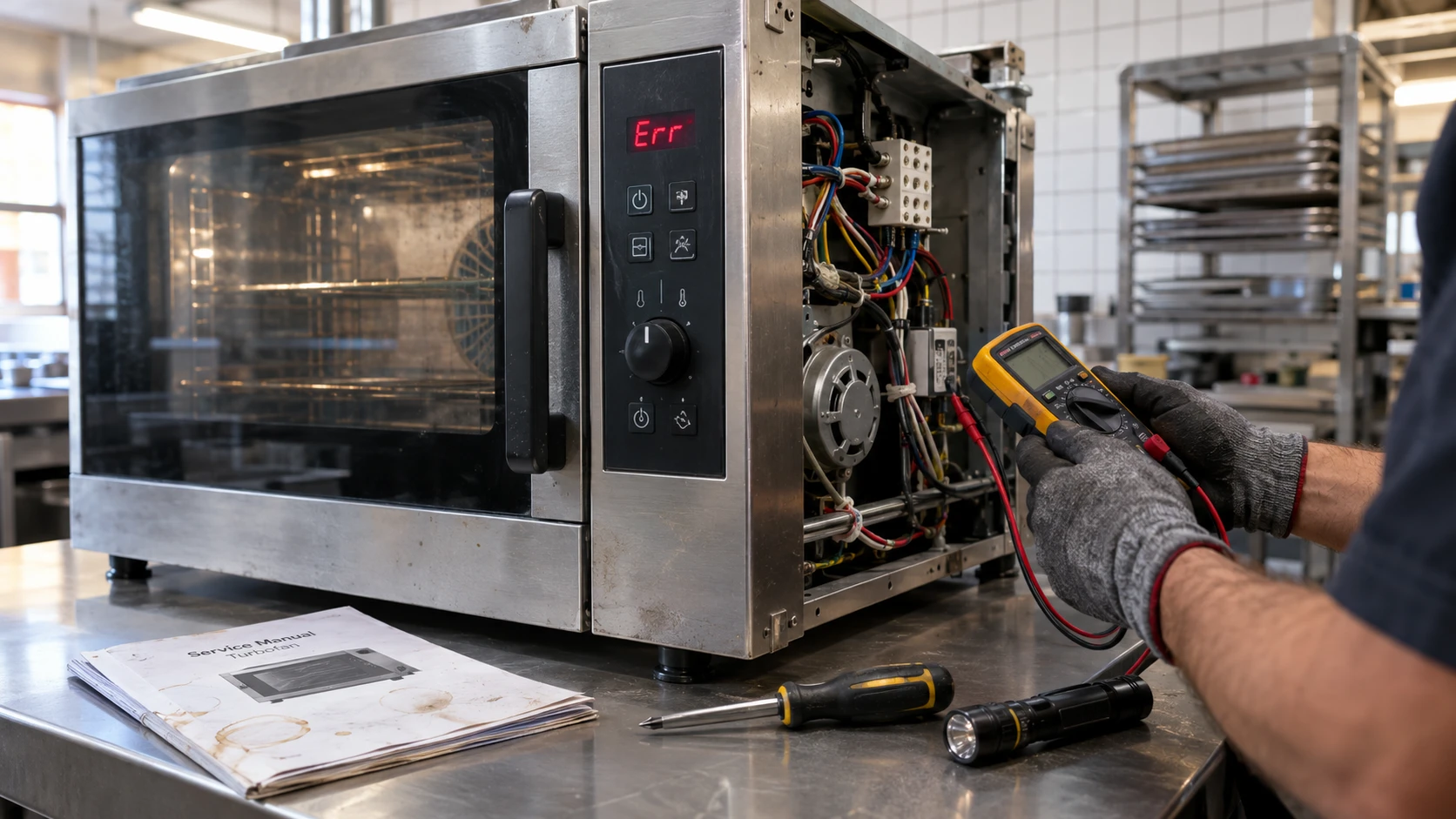

A code on a display screen looks like it’s speaking a foreign language. It isn’t. It’s the appliance doing exactly what it was designed to do –telling you, as specifically as its sensors allow, which part of the system it thinks has failed.
The problem is that most people either ignore it and keep restarting the cycle, or panic and assume the worst. Neither gets the appliance fixed faster. What actually helps is understanding the handful of categories almost every fault code falls into, because that tells you in about thirty seconds whether you’re looking at something you can check yourself or something that needs a technician.
This guide is built on how National Appliance Repairs technicians actually approach a code on site, before they’ve even opened the panel.
Why Codes Differ So Much Between Brands (and Even Between Models)
There’s no universal standard here, which is the main reason searching “error code E3” turns up five different explanations depending on the appliance and brand. A code is defined by the manufacturer’s own control board firmware, not by any shared industry convention. Some brands use a consistent numbering system across their entire range for years. Others change the code set with every new model generation. Older machines without a digital display often use flashing light patterns instead of a code at all, which is its own kind of code –just less obvious.
What that means practically: the fastest way to know what a code means is to check it against your specific appliance’s model number, not just the brand. A model number is usually on a sticker inside the door, on the back panel, or occasionally in a manual sleeve. Keep it handy before you start searching –it’s the difference between finding the right answer immediately and reading through several wrong ones first.
Need This Fixed Today?
Our licensed technicians repair this exact fault every week – fast, reliable, and backed by a workmanship guarantee.
- Licensed & insured
- Workmanship guarantee
- No fix, no fee
The Six Categories Almost Every Fault Code Falls Into
Regardless of brand, the overwhelming majority of error codes on washing machines, dishwashers, dryers, ovens, and fridges describe one of six underlying systems. Knowing which category you’re looking at tells you most of what you need before you’ve even found the specific code definition.
1. Door or Lid Lock Faults
The appliance has detected the door isn’t closed, isn’t locked, or the lock mechanism itself has failed to engage or release. This is one of the most common code categories across washing machines and dishwashers specifically, because the lock is both a safety interlock and a moving mechanical part that wears with use.
- Usually safe to check yourself: whether the door is genuinely latched, not just pushed to. Some machines won’t register a full close if there’s an obstruction –a stray sock, detergent residue –sitting in the door seal or latch area.
- Usually needs a technician: if the door is confirmed properly closed and the fault persists, the lock mechanism or the sensor reporting its state has likely failed. Our guide on washing machines that won’t turn on walks through this exact fault chain in more depth.
2. Water Fill or Supply Faults
The appliance expected water to reach a certain level within a certain time, and it didn’t. Common on washing machines and dishwashers.
- Usually safe to check yourself: is the tap actually open, is the inlet hose kinked, is there a blockage in the mesh filter where the hose connects. All three are genuinely common and all three are five-minute checks.
- Usually needs a technician: a faulty water inlet valve, or a pressure sensor reporting an incorrect level.
3. Drainage Faults
The appliance expected water to drain out within a certain time and it didn’t, or it detected water where there shouldn’t be any.
- Usually safe to check yourself: blocked filters, kinked drain hoses, or a drain hose that’s slipped out of position. On dishwashers specifically, a blocked filter basket is by far the most common cause and takes two minutes to check.
- Usually needs a technician: a failed drain pump, a blocked internal hose you can’t reach, or –on washing machines –a fault in the drum-to-pump connection. See our guide on washing machines not draining for the full symptom breakdown.
4. Heating Faults
The appliance isn’t reaching, or isn’t maintaining, the temperature it’s set to. Applies to ovens, dryers, dishwashers (wash and rinse temperature), and washing machines with heated cycles.
- Usually safe to check yourself: very little, honestly –heating faults usually involve either mains-voltage electrical components or, in dryers and gas ovens, elements that reach dangerous temperatures during normal operation. The one exception is checking for an obvious external cause, like a blocked dryer vent restricting airflow enough to trip a safety cut-out –see our guide on dryers that won’t heat for what that actually looks like.
- Usually needs a technician: element failure, thermostat or thermistor faults, or –on gas appliances –an igniter or gas valve issue. Gas heating faults specifically should always go to a licensed technician.
5. Motor or Drive Faults
The motor isn’t responding, isn’t reaching expected speed, or the control board has lost communication with it.
- Usually safe to check yourself: whether the drum or basket is physically obstructed and can turn freely by hand when the appliance is unplugged. An overloaded drum can sometimes trigger this category of fault without an actual component failure.
- Usually needs a technician: anything beyond confirming the drum turns freely –motor diagnosis involves testing components under power and isn’t a safe DIY step.
6. Communication or Control Board Faults
The appliance’s internal components aren’t communicating correctly with each other, or the control board itself is reporting a fault. These codes are often the least specific and the most likely to be misdiagnosed, because “the board can’t talk to the motor” can mean the board has failed, the motor has failed, or the wiring between them has a loose connection –and those three have very different repair costs.
- Usually safe to check yourself: unplugging the appliance for a few minutes can sometimes clear a transient fault, particularly after a power interruption. If the same code reappears once restarted, it’s a genuine fault rather than a glitch.
- Usually needs a technician, always: this is the category most likely to lead to an expensive, unnecessary part replacement if diagnosed by guesswork rather than proper testing. Swapping a control board when the actual fault was a corroded connector is a common and avoidable mistake.
Quick Reference: Code Category to Likely Action
| Category | DIY-checkable? | Typical technician job if it’s a real fault |
|---|---|---|
| Door / lid lock | Yes, partially | Lock mechanism or sensor replacement |
| Water fill / supply | Yes | Inlet valve replacement |
| Drainage | Yes, partially | Drain pump or hose replacement |
| Heating | Limited | Element, thermostat, or igniter replacement |
| Motor / drive | Limited | Motor, capacitor, or drive component diagnosis and repair |
| Communication / control board | No | Full diagnostic testing before any part is replaced |
What a Technician Actually Does Differently From a Guess
The gap between “I looked up the code and it said replace the board” and a proper diagnosis is bigger than it sounds, and it’s the difference between fixing the fault once and fixing it, then fixing it again a month later.
A proper diagnosis tests each component in the fault chain individually –checking resistance and continuity on the specific part the code points to, rather than assuming the code names the failed part directly. Plenty of codes describe a symptom rather than a cause. “Motor not responding” can be the motor, the motor controller, the wiring between them, or in some cases a completely unrelated fault tripping a safety cut-out that then reads as a motor fault. Only testing the actual chain tells you which –and it’s exactly why two “motor fault” repairs can land at very different price points, as covered in our breakdown of what appliance repairs actually cost.
This is also why calling ahead with your code, brand, and model number genuinely speeds up a repair. It doesn’t guarantee a diagnosis over the phone –that still needs hands-on testing in almost every case –but it lets a technician arrive with the parts that are actually likely to be needed, rather than making a second trip once the fault’s confirmed on site.
Find Your Appliance
Codes are genuinely brand and model-specific, so the most useful next step is finding the guide for your actual appliance rather than a general list. Guides currently available, with more added regularly:
- Fisher & Paykel washing machine error codes explained
- Bosch and Samsung oven error codes explained
- LG washing machine error codes and what they mean
- Westinghouse dishwasher error codes explained
- Samsung washing machine error codes explained
- LG washing machine error codes explained
- Fisher & Paykel washing machine error 37
Can’t find your specific brand and model listed yet, or the code isn’t covered? Call 1300 434 380 with the code and your appliance’s model number, and the team can advise over the phone whether it’s worth checking yourself first or booking a technician.
Frequently Asked Questions
My appliance is showing a code with no manual and no model sticker I can find. What do I do?
Check inside the door frame, along the back or side panel, or under a lid or drawer first –that’s where most manufacturers place it. If it genuinely can’t be found, describe the appliance’s brand, approximate age, and the code exactly as displayed when you call, and a technician can often narrow it down from there.
Can I just ignore a code if the appliance still seems to be working?
Depends on the category. A code from the communication or heating categories is worth acting on even if the appliance is still limping along, since both can indicate a fault that gets worse –or in the case of heating faults on dryers specifically, a genuine safety issue –the longer it runs. A door lock code that clears once you properly latch the door usually isn’t a fault at all.
Why did the same code come back after I unplugged and restarted the appliance?
A code that clears temporarily after a restart but returns once the appliance runs again is a genuine fault, not a glitch. The restart clears the fault memory, not the underlying cause.
Does National Appliance Repairs carry parts for most fault codes on the van?
Yes, for the most common failure points across major brands –inlet valves, drain pumps, door locks, thermal fuses, and control boards among them –which is why most code-related callouts are resolved in a single visit rather than requiring a second trip once the part’s identified.
Is it worth trying to fix a control board fault myself if I’m reasonably handy?
Not recommended. Control board and communication faults are exactly the category where a wrong guess is most expensive, and testing them safely requires equipment and knowledge beyond typical home troubleshooting.
The Bottom Line
An error code isn’t a puzzle designed to confuse you –it’s the most specific information the appliance is capable of giving about what’s gone wrong, filtered through whatever sensors it has. Knowing the six categories above tells you almost immediately whether it’s worth five minutes of your own checking or a call to a technician, and knowing your exact model number before you search saves you from reading through code definitions that don’t apply to your machine at all.
National Appliance Repairs diagnoses and repairs fault codes across all major domestic and commercial brands, with genuine parts carried across the fleet for same-visit repairs where possible. Servicing Melbourne, Sydney, Brisbane, Adelaide, and Perth. Call 1300 434 380.