
Completely dead, no lights at all — that, in our experience at National Appliance Repairs, is an entirely different problem to “powered up but refusing to start a cycle”. Takes about two minutes to work out which one you’ve got, and that alone rules out most of the simple causes before you’re on the phone to anyone.
First, Work Out Which Problem You Have
Nothing at all — no lights, no display, no response to any button — points at the power supply. Something else entirely.
Lights on, display working, but pressing start does nothing (or it just beeps), and that’s not a power problem. That’s the door, a lock setting, or an internal switch getting in the way.
If There’s No Power at All
- Check it’s actually plugged in properly. Sounds obvious, but a cord works loose during a spin cycle more often than you’d think, especially with an off-balance load shaking things around.
- Check the circuit breaker for the laundry circuit. A surge, or another appliance sharing the circuit, can trip it.
- Plug something else into the same outlet, a lamp or a phone charger, and see if it’s actually live.
- Got a GFCI-protected outlet? Common in newer installs. Check for a tripped reset button, since nearby moisture can trip these on its own.
If It Has Power But Won’t Start
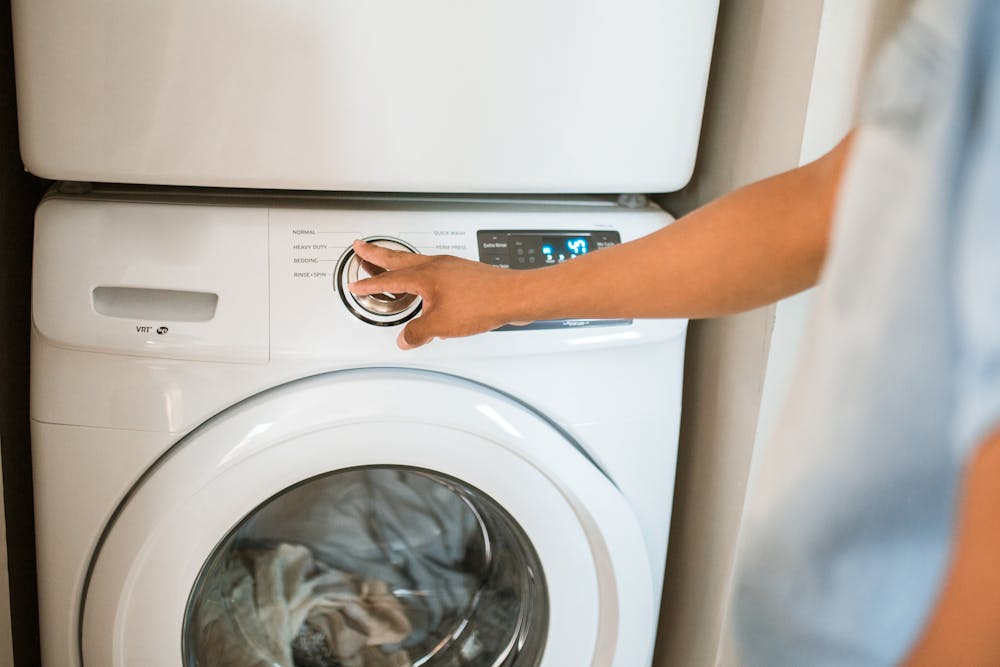
- Check for an active control lock or child lock. The display can be fully lit and the machine still won’t start with this on.
- Make sure the door’s fully closed and latched. Not just pushed shut, actually latched.
- See if delay start’s been switched on by accident.
- If there’s an error code showing, check what it means in the manual before assuming the worst.
Quick Reference Table
| What You See | Likely Cause | Next Step |
| No lights, no display at all | Power supply issue: outlet, cord, or breaker | Check outlet with another device, check breaker |
| Lights on, but start button does nothing | Control lock or delay start active | Check settings, hold unlock if applicable |
| Display on, door open indicator showing | Door not fully latched | Close door firmly, check for obstruction |
| Machine hums but doesn’t start | Motor or capacitor issue | Book a repair, don’t keep attempting cycles |
| Repeated tripping of the breaker | Internal electrical fault | Stop use, book a technician |
When the Fault Is Inside the Machine
Outlet’s fine, breaker’s fine, door’s latched, no lock setting active, and it still won’t turn on. At that point you’re looking at one of a handful of internal parts:
- A faulty door or lid switch. Plenty of machines use this as a safety interlock and won’t send power to the motor without it
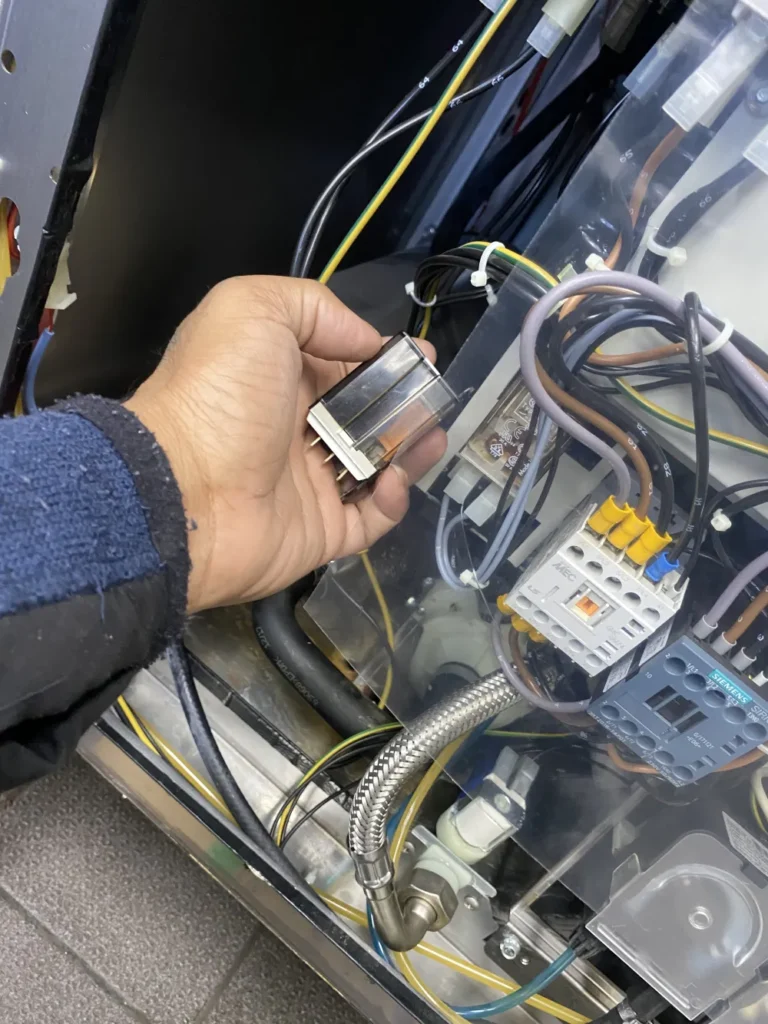
- A failing control board or user interface board
- Wiring between the control board and front panel gone loose or corroded
- On older, non-digital machines, a worn main control timer
None of this is something to open up and test yourself. A machine that’s still partially live carries real shock risk, and guessing wrong means paying for a part you didn’t need.
Front-Loaders vs Top-Loaders: The Switch Works Differently
Front-loading machines rely on a door lock mechanism that often can’t be released mid-cycle, both as a safety measure and to stop water spilling out mid-wash. If that lock mechanism fails in the closed position, the machine can read the door as open even though it’s shut, and refuse to start. Top-loaders use a simpler lid switch, usually a small plastic tab that gets depressed when the lid closes. These wear out or snap after years of lids being slammed shut, and it’s a cheap part once correctly identified, but the machine won’t tell you that directly. It just won’t start, with no more explanation than a front-loader gives.
Either way, the fix isn’t obvious from the outside, which is exactly why a proper diagnosis matters more than guessing and replacing parts one at a time.
Why This Is Worth a Professional Diagnosis Rather Than Guesswork
Swapping a control board before confirming it’s actually the fault is an expensive way to be wrong. National Appliance Repairs technicians find the actual point of failure first, whether that’s a switch, a board, or wiring, and carry the common parts for washing machine repairs across all major brands, so most jobs wrap up in one visit. Machine turns on fine but leaks or won’t drain instead? Worth a look at our guides on water pooling under a washing machine and washing machines that won’t drain.
A Few Habits That Reduce Repeat Failures
- Avoid slamming the door or lid shut. It seems minor, but repeated force is exactly what wears out latch mechanisms and lid switches early
- Don’t overload the outlet or circuit the washing machine’s plugged into with other high-draw appliances
- If your laundry has a GFCI outlet, test it occasionally using the built-in test button, since a faulty GFCI can trip intermittently for no obvious reason
- Keep the control panel and buttons clean and dry. Moisture and detergent residue on buttons can cause them to stick or register presses incorrectly over time
- If a control lock or child lock feature isn’t something you use, check it’s genuinely switched off rather than assuming it is
Is It Worth Repairing, or Time to Replace?
A control board failure on a machine that’s two or three years old is almost always worth repairing. A door switch or lid switch is a low-cost part regardless of the machine’s age. Where it gets more of a judgement call is an older machine, say ten years or more, that’s had a couple of unrelated faults already. At that point a technician can give you an honest read on whether another repair makes sense or whether the machine’s simply reaching the end of its practical life, rather than just replacing whatever’s failed this time and leaving you to deal with the next fault a few months later.
Frequently Asked Questions
Why does my washing machine have no lights or display at all?
Points at the power supply, not the machine. Loose cord, tripped breaker, or a dead outlet. Test the outlet with a lamp or anything else you’ve got handy, and you’ll know within a minute which one it is.
It’s got power, but the start button does nothing. Why?
Check for an active control lock or delay start first, then make sure the door’s genuinely latched, not just pushed to. A lot of machines won’t start a cycle without the door sensor registering a full close.
It’s humming but not running. Safe to keep trying?
No. Humming with no drum movement usually means a motor or capacitor problem, and forcing repeated starts tends to make it worse, not better. Turn it off, book a technician.
Can I test or swap the control board myself?
Wouldn’t recommend it. Mains voltage’s involved, and fitting a new board when the actual fault’s a switch or a loose wire wastes money without solving anything.
What does it cost to repair a washer that won’t turn on?
Depends on the cause. A switch or wiring fix costs a lot less than a full control board. Call 1300 434 380 for a ballpark before booking anything in.
The Bottom Line
Outlet, breaker, door latch, lock settings — work through those first and you’ll solve a surprising number of “dead” washing machines without a repair at all. Still nothing after that? Get in touch with National Appliance Repairs or call 1300 434 380 for a same-day assessment, subject to availability, across Melbourne, Sydney, Brisbane, Adelaide, and Perth.