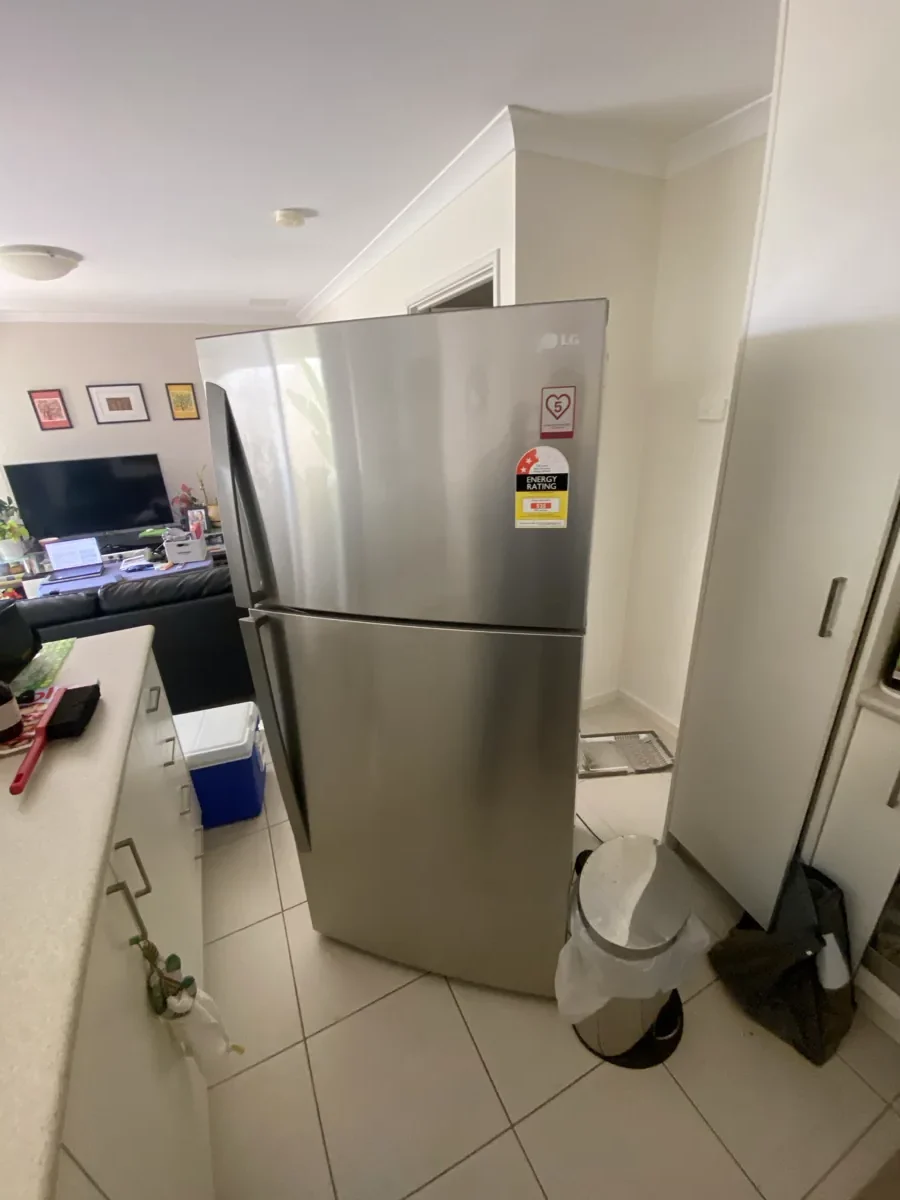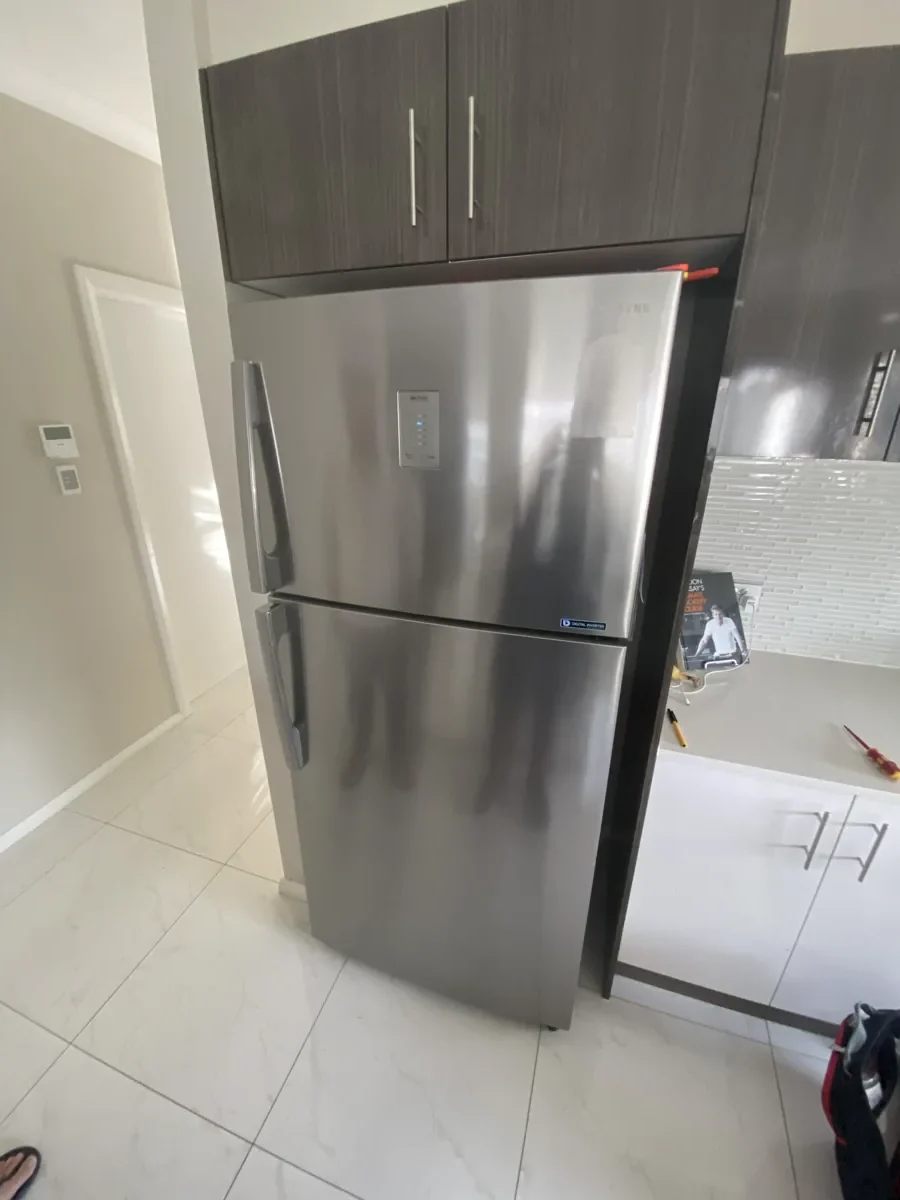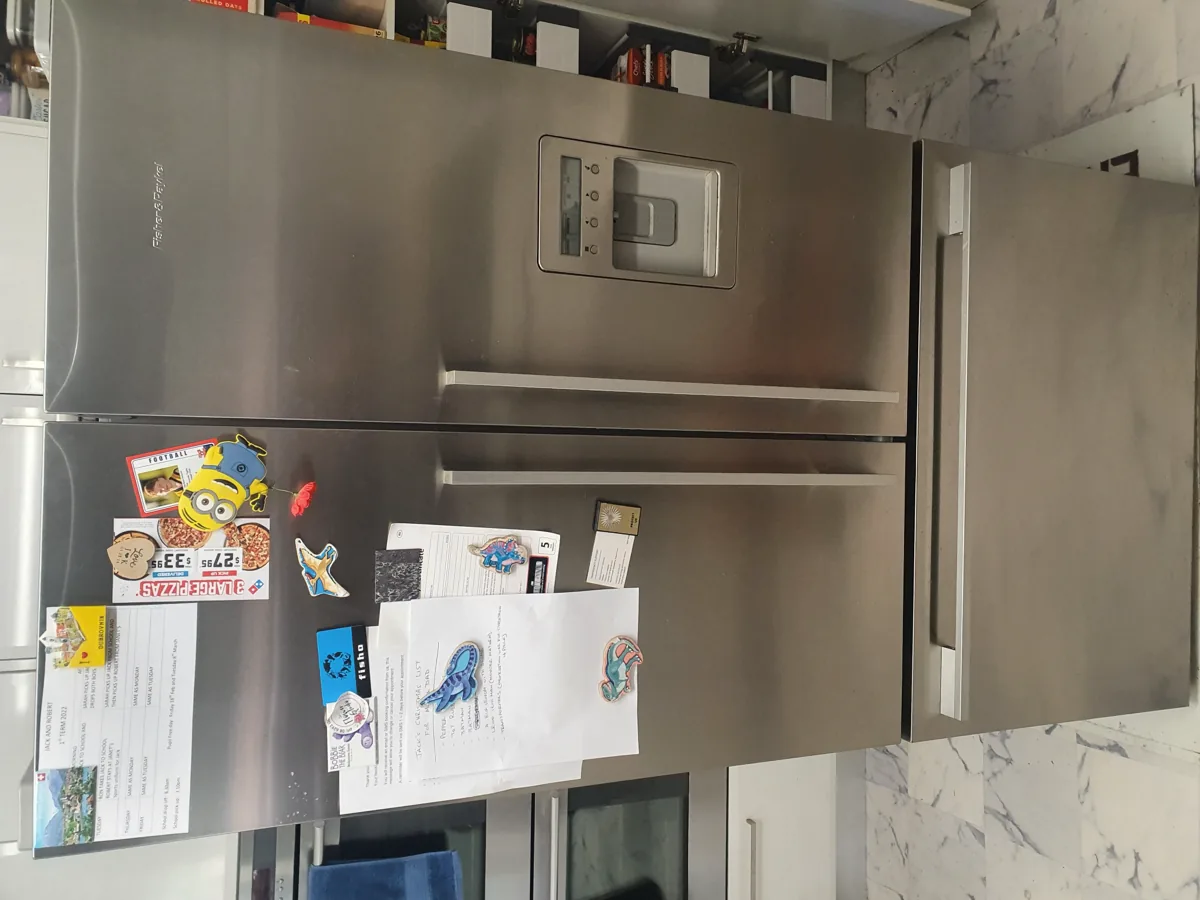
Your Fisher & Paykel fridge is beeping and a light on the control panel is flashing red. There is no number on the display, because most ActiveSmart models do not have one.
The fridge is still telling you a fault number. It is doing it in beeps and flashing lights, and once you know how to read them you can hand a technician the exact code before anyone opens a panel. National Appliance Repairs services Fisher & Paykel appliances across Melbourne, Sydney, Brisbane, Adelaide and Perth.
Two ways to read the code
Fisher & Paykel gives you two methods, and which one applies depends on your model.
- Counting the beeps: Open the fresh food compartment door and count the alarm beeps. The number of beeps is the fault code. Five beeps means fault code 5.
- Reading the lights: Look at the LED temperature panel inside the fridge and find the red flashing light. On T models the flashing lights are green. The position of that light gives you the code number.
Either way, write down what you get. F&P’s instruction from there is to record the number and the sequence of lights and contact a trained service technician.
Need This Fixed Today?
Our licensed technicians repair this exact fault every week – fast, reliable, and backed by a workmanship guarantee.
- Licensed & insured
- Workmanship guarantee
- No fix, no fee
The part nobody explains: the lights are binary
This is where most people get the wrong number, and a wrong number sends a technician to the wrong component.
The LEDs on the temperature panel are not a simple count from left to right. Each position carries a value that doubles as you move along: 1, 2, 4, 8, 16 and so on. When more than one light flashes, you add the values together.
So two lights flashing at the positions worth 2 and 16 is not fault code 2. It is 2 + 16, which is fault code 18.
| Lights flashing | Calculation | Fault code |
|---|---|---|
| Position worth 1 | 1 | 1 |
| Position worth 4 | 4 | 4 |
| Positions worth 1 and 4 | 1 + 4 | 5 |
| Positions worth 2 and 16 | 2 + 16 | 18 |
| Positions worth 8 and 16 | 8 + 16 | 24 |
Count the lights instead of adding their values and you will report a single-digit code for a fault in the twenties. Take a photo of the panel while it flashes and bring that to the call.
Silencing the alarm without losing the code
The beeping is the part people want to stop first, and you can do that without erasing anything by pressing any button on the internal control panel. The audio alarm will stop, but the fault icon will stay illuminated until it’s corrected.
On some models the normal display returns for about eight seconds before the fault pattern resumes. That is expected.
Disconnecting power for a few seconds also resets the audio alarm, and left alone it resets itself after roughly 72 hours, but do keep in mind that the fridge will likely won’t conveniently forget the faults exist after the long wait.
What the numbers cover
Fisher & Paykel groups ActiveSmart faults into three families:
- System faults: The control or power module, its self-test, and communication between components.
- Temperature faults: The fridge is not reaching or holding its set temperature, or defrost cycles are not completing.
- Sensor faults: A probe reporting compartment or evaporator temperature has failed or is reading incorrectly.
F&P does not publish what each individual number means in its consumer documentation. The number exists so a trained technician knows where to look before arriving, the same approach the company takes with its dryers.
Worth knowing before you trust a code table found online: the circulating lists mix service data across model generations and do not agree with each other.
What you can check first
Before booking anything, rule out the causes that are not faults at all.
- Check both doors are properly closed. A door held open by a container or a crisper drawer that has not slid home will produce an alarm on its own.
- Check the door seals. Run a finger around each gasket for tears, folds, hardened sections and residue.
- Clear the rear vents. Food packed against the back wall restricts the airflow ActiveSmart uses to balance the compartments.
- Check the fridge is level. An out-of-level cabinet can hold a door fractionally open unnoticed.
- Give it time after a power cut. A fridge restarting with a full load takes up to 24 hours to stabilise.
- Note the date and code. An alarm that returns after a power reset is not transient.
What ActiveSmart does that affects when you notice
ActiveSmart continuously adjusts its operation based on how the fridge is used, the ambient temperature and how full each compartment is. That is why it runs efficiently, and it is also why a developing fault can stay hidden.
The system compensates around a weakening component for a while, so by the time it raises an alarm the fault has usually been present for some time. So a code on an ActiveSmart fridge is worth acting on, not watching, particularly in an Australian summer.
If the cabinet is warming and you are unsure whether the food is still safe, Food Standards Australia New Zealand identifies 5°C to 60°C as the range where food-poisoning bacteria multiply, with a safe window of generally less than four hours.
Booking a repair
Have three things ready: the fault code, the model number, and the serial number. On most ActiveSmart models these are on a label inside the fresh food compartment, usually on a side wall or the door jamb.
Quoting all three lets our office team check whether the likely part is already in the van, often the difference between one visit and two.
Our fridge repair service and freezer repairs cover Fisher & Paykel across all five capitals, with same-day appointments subject to availability, upfront quoting, and a 12-month parts warranty with a 3-month labour warranty.
Call:
- Melbourne 03 9123 0548
- Sydney 02 9621 5988
- Brisbane 07 3166 9770
- Adelaide 08 7123 4027 or,
- Perth 08 9470 4450.
For codes on other Fisher & Paykel appliances, our guides to F&P dryer fault codes and warnings and DishDrawer U1 and U6 errors cover the laundry and dishwashing ranges.
Frequently asked questions
Why is my Fisher & Paykel fridge beeping and flashing red?
It has detected a fault and is reporting the fault number. Count the beeps when you open the fresh food door, or read the flashing LEDs on the internal temperature panel.
How do I read the fault code on an ActiveSmart fridge?
Count the alarm beeps, or add together the values of the flashing LEDs. The LED positions are worth 1, 2, 4, 8, 16 and so on, and multiple flashing lights are added together.
How do I stop my F&P fridge beeping?
Press any button on the internal control panel. That silences the audio alarm while leaving the fault icon showing, so the code is not lost.
Does unplugging the fridge fix the fault?
No. Disconnecting power for a few seconds resets the audio alarm, and it also resets itself after about 72 hours. The underlying fault stays until it is repaired.
Why can’t I find what my fault code means online?
Because Fisher & Paykel does not publish the meanings in consumer documentation. The number is intended for a trained technician, and the code tables circulating online mix data across different model generations.
The short version
An ActiveSmart fridge reports its fault in beeps and lights, not on a display. Count the beeps, or add the LED values together, and remember the lights are binary, not a simple count. Take a photo of the panel while it flashes.
Then rule out the doors, the seals and the vents before you book, because those account for a fair share of alarms. If the code persists, quote it along with your model and serial number. National Appliance Repairs services Fisher & Paykel fridges across five capitals with upfront quoting. Book online or call your nearest office.
Call Us:
or leave a message using the form below