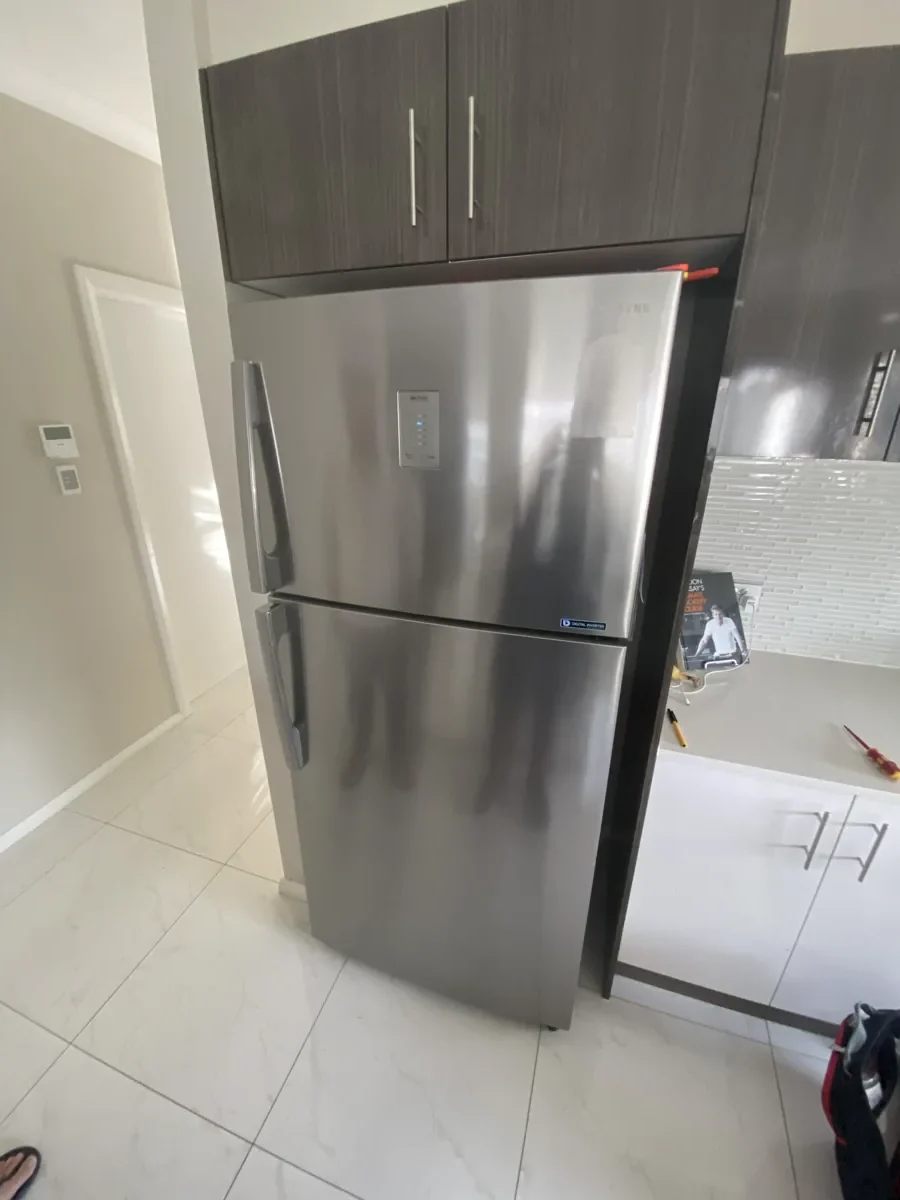
What to Do With Your Fridge and Freezer After a Brisbane Blackout

What to Do With Your Fridge and Freezer After a Brisbane Blackout

Brisbane storms do not mess around. Sunny one minute. Hail and blackouts twenty minutes later.

South-east Queensland is a thunderstorm hotspot. October to March brings lightning, hail, rain, and wind to the Energex network. That is 1.5 million customers across Brisbane, Gold Coast, Sunshine Coast, Ipswich, and beyond. A bad storm can knock out power for hours or days – take Christmas 2023 as an example, which left over 200,000 Energex customers in the dark.

When the power goes out, the countdown begins for all the food you store inside. What you do in the first hour without power -- and when the lights come back -- decides how much you lose.

National Appliance Repairs gets a flood of fridge calls after every major Brisbane storm. Some for food safety. More for appliances fried by power surges when the grid comes back. The good news is that if you’re prepared, both can be avoided.

The Countdown Starts the Moment the Power Goes Off

The most important thing you can do during a blackout is also the simplest: keep the fridge and freezer doors closed.

According to the Northern Territory Government's food safety guidance -- consistent with Australia-wide standards -- a closed refrigerator should keep food cool for four to six hours, while a full freezer should keep food frozen for up to 48 hours, and a half-full freezer for up to 24 hours.

The moment you open the door, cold air escapes and warm air enters. In Brisbane's summer ambient temperatures -- often 28--32°C or higher -- that exchange happens fast. Every unnecessary door opening shortens the safe window significantly.

Write down the time the power went off. It sounds obvious, but in the disruption of a storm -- moving kids away from windows, checking on neighbours, finding torches -- it's easy to lose track. The time the power went off is the number you need to make food safety decisions later.

The 2-Hour / 4-Hour Rule

Here is the rule for hazardous foods, according to Food Standards Australia New Zealand: meat, chicken, fish, dairy, leftovers, anything ready-to-eat. If it sits between 5°C and 60°C (the danger zone):

  • Under 2 hours? Fridge it or eat it now
  • 2 to 4 hours – eat it immediately, do not put it back in the fridge
  • Over 4 hours – Bin it

The clock counts total time above 5°C. So if your fridge hit 5°C two hours into the outage and stayed there for three more hours, throw that stuff out.

The catch? You usually do not know when the fridge crossed 5°C. A fridge that was 3°C and never opened might stay safe for over an hour. A fridge that was warm already or got opened a bunch of times? That crosses the line fast.

Only a fridge thermometer tells you for sure. No thermometer? When in doubt, throw it out.

What to Do During a Long Outage

If the power has been off for more than an hour and restoration looks unlikely soon, there are practical steps worth taking:

  • Move perishables from the fridge to the freezer -- if you have space. The freezer's insulation is better and its safe window is much longer. Health Victoria recommends putting bagged ice under food packages and trays in freezers and fridges if the power failure lasts more than an hour.
  • Use an esky (cooler) with ice bricks -- transfer meat, dairy, and other high-risk fridge contents into a well-sealed esky if alternative cold storage isn't available within 2 hours.
  • Check with neighbours or family -- if the outage is localised to your street or suburb and a nearby relative has power, transporting perishables to their fridge is a legitimate option.
  • Group fridge items together -- food packed together retains cold better than items spread out with air gaps between them.
  • Don't put hot food into the freezer -- it raises the internal temperature and puts already-stored frozen food at risk.

What to Do When the Power Comes Back

Check food temps. Do not assume.

When the power comes back on, never assume everything is fine. Grab your thermometer and double check that:

  • Freezer is really at 0°C or below? If so, refreeze or use. But if it’s above 0°C? Bin it.
  • If you find the temperature of the fridge above 5°C:
  • It’s fine to eat or keep if it’s been less than 2 hours since power went out
  • Eat it now if it’s been 2 to 4 hours
  • If it’s been more than 4 hours, then bin it

Do not plug the fridge back in straight away

Compressors do not like restarting under load. Most modern fridges have a delay relay, but older ones may not. You’ll want to wait for two to five minutes after power returns before switching the fridge on to save the compressor from a hard start, which can damage the compressor’s inner parts.

Look for surge damage

Grid restoration often comes with a voltage spike, and high voltage can fry the control board, the compressor, and the ice maker. See if you can spot any of these symptoms:

  • Fridge runs but does not cool
  • Weird or constant compressor noise
  • Display dead or throwing errors
  • Burning smell from the back
  • Light works but compressor does not start

If you check off even one issue on this list, unplug the refrigerator and give National Appliance Repairs a call Running a damaged fridge can worsen the damage and make repair all the more complicated (and expensive).

What Is and Isn't Safe to Keep

Not all fridge contents are equally vulnerable. Use this as a guide when assessing what to keep after a long blackout:

CategorySafe After 4+ Hour Outage?
Raw meat, poultry, seafoodNo -- discard
Cooked meat, leftoversNo -- discard
Dairy (milk, soft cheese, yoghurt)No -- discard
Hard cheese (Parmesan, aged cheddar)Generally yes
Eggs in shellGenerally yes if still cool
Butter and margarineYes
Fruit juices, openedDiscard if above 5°C for 4+ hours
Fresh whole fruit and vegetablesGenerally yes
Bread, peanut butter, jamYes
Frozen food with ice crystals still presentCan be refrozen
Frozen food fully thawedDo not refreeze; use immediately or discard

The principle throughout is: when in doubt, throw it out. Food poisoning in Brisbane's summer heat is a serious risk, and contaminated food often looks, smells, and tastes normal. There is no reliable sensory test.

Insurance: What's Covered

Food spoilage insurance covers loss of or spoilage to frozen or refrigerated food caused by an insured event. That could be a freezer breaking down, a power outage, or in some cases electrical motor damage. It is generally included in the contents section of a home and contents policy.

If you have lost significant food after a Brisbane blackout, check your policy's Product Disclosure Statement (PDS). Coverage limits for food spoilage commonly sit around $500 in standard policies, though this varies. Document what you have discarded with photos and a written list before throwing anything away. Then contact your insurer promptly.

If the fridge or freezer itself was damaged by a surge, that may be covered separately under home contents insurance or under a specific electrical surge or equipment breakdown provision. A technician's report documenting the nature and likely cause of the fault will support any claim.

How to Protect Your Fridge Before the Next Storm

Brisbane storm season runs from about October through March. And here is the thing. If you have been through one major outage, you will probably go through another. A few simple steps make a big difference next time.

Get a real surge protector. Not a cheap power board. A surge protector rated for large appliances. It plugs in between the wall outlet and your fridge. Its job is to protect against voltage spikes when the power comes back on. Standard power boards are not designed for a fridge's draw. You need one rated for large appliances with a joule protection rating of 1,000 or above.

  • Buy a fridge thermometer: They cost a few dollars at any kitchenware store. Stick it inside. When the power goes out and comes back on, you will know exactly what temperature your food reached.
  • Keep your freezer reasonably full: A full freezer stays frozen way longer than a half-empty one. If your freezer is usually pretty empty, throw a few containers of water in there. They freeze and add thermal mass and can buy you a few extra hours.
  • Bookmark the Energex's outage map: Do it now before the next storm. It updates in near real time and gives estimated restoration times by suburb. When the power goes out, you will know whether it is a quick fix or a multi-day disaster. That helps you decide how seriously to treat the outage.

FAQ

How long does a fridge keep food safe in a Brisbane blackout?

Four to six hours. Brisbane heat means the four-hour window is the safer bet in summer. Keep the door shut. Note when the power went off. Use a thermometer if you have one.

Can I refreeze thawed food?

Only if you still see ice crystals or a thermometer says 0°C or below. Fully thawed? Do not refreeze. Cook and eat now or bin it. Refreezing food that sat in the danger zone is risky.

Fridge runs but does not cool after power came back. Why?

Classic post-surge damage. Likely the control board or compressor. Unplug it. Call a technician. Do not let it keep running as it’ll make the damage worse.

Does QLD insurance cover food lost in a blackout?

Many policies do and usually have a $500 cap – you can check your PDS for more details. Take photos and list what you threw out and call your insurer promptly. Storm blackouts are generally covered.

Food looks and smells fine. Is it safe after a long outage?

Not necessarily. Salmonella and listeria do not smell or look different. The time-and-temperature rule is the only thing you can trust: if it’s been exposed to temperatures above 5°C for more than four hours, bin it, no matter what it looks like.

Conclusion

A Brisbane blackout during storm season is not an unusual event -- it's a routine risk for most households in south-east Queensland. The practical response is straightforward: keep the doors closed, note the time, act on the 2-hour and 4-hour rules for perishables, and check carefully for surge damage once power is restored.

If your fridge or freezer isn't cooling properly after a blackout, or if you're hearing unusual noises from the compressor, that's a job for a qualified technician. We at National Appliance Repairs provide fridge and freezer repairs across Brisbane and south-east Queensland. Call 1300 434 380 for same-day service where available.

Fridge Leaking: Comprehensive Diagnosis For Every Type of Leak

Fridge Leaking: Comprehensive Diagnosis For Every Type of Leak

A refrigerator leaking is a crisis. Water under your fridge means potential damage to your kitchen flooring, and water inside means your food is at risk. You need to know what's leaking and why.

After 15+ years of refrigerator repairs across Australia, we've learned that where the water is, why it's there, and what it looks like all tell a specific story about what's broken.

Here's how to diagnose your leak and what actually fixes it.

The Four Types of Fridge Leaks (And What You're Actually Seeing)

Your fridge has four separate water systems, and each can leak for different reasons.

Type 1: Defrost Water Leak (Most Common - 60% of Calls)

Where you see it: Water pooling under the fridge, or inside the fridge at the bottom compartment.

What's happening: Your fridge automatically defrosts its evaporator coils periodically. This produces water that drains through a system into a pan under the fridge. If any part of this system blocks, water backs up.

Why it happens: The defrost drain gets clogged with food particles, dust, or mineral deposits. The drain pan cracks or overflows. The drain hose under the fridge kinks or disconnects.

Our diagnosis process:

  • Look at where water is pooling
  • Check if it's inside the compartment (internal drain blocked) or under the unit (pan or exit hose issue)
  • Test the drain with warm water
  • Inspect the drain pan for cracks
  • Check the hose under the fridge

What we find: In 70% of defrost leak calls, we find a clogged drain. Food particles and mineral deposits (especially in Adelaide and hard-water areas) restrict water flow. We flush it and the leak stops.

Australian regional context: Hard-water regions see mineral buildup accelerate blockages. Coastal humidity creates extra condensation that stresses the drainage system. Older Australian homes sometimes have fridges that aren't positioned level, affecting drainage.

Type 2: Door Gasket / Seal Leak (25% of Calls)

Where you see it: Water leaking from around the door, especially when you open it. Sometimes water appears inside the fridge near the door edges. Occasionally water on your kitchen floor near the front of the fridge.

What's happening: The rubber gasket seal around the door is faulty. It allows warm, humid kitchen air to seep into the fridge. This creates condensation inside, which drips down and accumulates. If the drainage system is already struggling, this extra moisture causes overflow.

Alternatively, the gasket is so degraded that it actually allows water to escape around the edges.

Why it happens: Door gaskets deteriorate over time, especially in humid climates. Coastal areas (Sydney, Perth) see accelerated degradation. The seal compresses if the door is repeatedly slammed. The gasket can warp if the fridge sits in a hot location or near a heat source.

Our diagnosis process:

  • Inspect the gasket all the way around the door
  • Look for cracks, compressed sections, warping, or missing sections
  • Clean the gasket with warm soapy water to see if dirt is preventing a proper seal
  • Run a test cycle and watch for condensation forming in the door area

What we find: We often find gaskets that look fine from a distance but have small warps or compressed sections that prevent proper sealing. In humid climates, degradation happens gradually and customers don't notice until water appears.

Australian regional context: Sydney and Perth customers experience faster gasket deterioration due to salt air and humidity. We recommend replacement every 8-10 years in coastal areas (vs. 12-15 years inland). In tropical climates (Brisbane), humidity accelerates wear significantly.

Type 3: Water Supply Line Leak (Ice Maker / Dispenser - 10% of Calls)

Where you see it: Water pooling under the fridge or beside the water dispenser. Sometimes a hissing or spraying sound when the ice maker cycles.

What's happening: If your fridge has an ice maker or water dispenser, a plastic water supply line runs from your home's water connection into the fridge. This line can develop cracks, mineral deposits can block it causing pressure buildup and eventual rupture, or the connection fittings can come loose.

Why it happens: Water lines develop hairline cracks from pressure stress or age. In hard-water areas, mineral deposits accumulate inside the line, causing pressure buildup that eventually bursts it. The connection fitting at either end can loosen from vibration or temperature expansion/contraction.

Our diagnosis process:

  • Listen for hissing or water spraying when the ice maker cycles
  • Trace the water line from the fridge to the wall connection
  • Look for visible water droplets, wet spots, or mineral deposits on the line
  • Check the connection fittings at both ends

What we find: In Adelaide and hard-water regions, mineral deposits block water lines faster. We've found lines restricted to 30% of their normal flow due to mineral buildup. In coastal areas, we sometimes find corrosion on fittings. In any region, we find kinked lines that were installed incorrectly.

Australian regional context: Hard-water areas (Adelaide, parts of Brisbane, Perth) require annual water line descaling to prevent mineral buildup. Coastal humidity accelerates corrosion at connection fittings. Older Australian homes sometimes have water line issues if the fridge was installed decades ago.

Type 4: Refrigerant / Internal Component Leak (Rare - 5% of Calls)

Where you see it: Water pooling under the fridge, sometimes with a chemical smell or unusual odor. You might hear hissing sounds. The fridge might not be cooling properly despite running.

What's happening: A crack in the evaporator coils or condenser lines allows refrigerant (the chemical that cools your fridge) to leak out. This is a serious failure because refrigerant is dangerous and the cooling system is compromised.

Why it happens: Age and wear. Corrosion. Manufacturing defect (rare on new fridges, but possible on older ones). Physical damage from a repair attempt or impact.

Our diagnosis process:

  • Listen for hissing sounds
  • Check if the fridge is cooling properly
  • Look for chemical smell or unusual odor
  • Test for moisture that appears greasy or has a chemical smell

What we find: Refrigerant leaks are serious. We've found cracked coils in older fridges (15+ years), corrosion damage in coastal homes (Sydney, Perth), and manufacturing defects in a handful of new units.

Important: If you suspect a refrigerant leak, stop using the fridge immediately. Refrigerant can be dangerous. Call a professional. Don't attempt DIY diagnosis.

The Diagnostic Decision Tree

fridge_leak_diagnostic_tree.png

What We Actually Fix (And What It Costs)

Clogged defrost drain: Flush with warm water. Free if you do it. $100-150 service call if we do it.

Cracked or overflowing drain pan: Replace the pan. $80-150 for the part, 30 minutes labor.

Faulty door gasket: Replace with genuine gasket. $100-250 for the part depending on your model, 20-30 minutes labor.

Kinked or blocked water line: Straighten or flush the line. $100-150 service call if simple. Full replacement needed if the line is cracked: $200-400 depending on your model.

Water line fitting loose: Tighten or reseal. $100-150 service call.

Faulty water line inlet valve: Replace the valve. $150-300 for part, 30-60 minutes labor.

Refrigerant leak: This is complex. The leak source must be found, the system must be evacuated, the crack repaired, and the refrigerant recharged. This costs $500-1,500+ depending on complexity. Sometimes it's cheaper to replace the fridge.

All repairs include a 12-month parts warranty.

Habits That Keep Fridges Dry

  • Check the defrost drain monthly -- Flush it with warm water using a turkey baster
  • Inspect the door gasket quarterly -- Clean with warm soapy water monthly
  • Ensure the fridge is level -- Use a spirit level. It should slope slightly back for water drainage
  • In hard-water regions, descale the water line annually -- Especially important for ice makers/dispensers
  • Don't slam the door -- Gentle closing extends gasket life
  • Keep the fridge away from direct sunlight and heat sources -- These degrade seals faster
  • In coastal areas, replace the door gasket every 8-10 years -- Preventative replacement prevents water damage
  • Have the fridge serviced every 5 years -- Professional inspection catches issues before they become serious
  • Monitor for early signs -- Water spots on the floor, condensation building up, unusual smells. Address these immediately

Regional Considerations for Australian Homeowners

Coastal homes (Sydney, Perth):

  • Salt air accelerates gasket and valve corrosion
  • Replace door gaskets every 8-10 years (vs. 12-15 inland)
  • Check drain pan for rust annually
  • Have water lines inspected every 3 years

Hard-water regions (Adelaide, parts of Brisbane, Perth):

  • Descale water lines annually if you have ice maker/dispenser
  • Defrost drains block faster -- check monthly instead of quarterly
  • Mineral deposits in drain pans might appear but won't affect function
  • Running a yearly descaling cycle on the entire fridge helps

Tropical climates (Brisbane, Cairns):

  • High humidity stresses drainage systems
  • Check defrost drains more frequently (every 2 weeks in summer)
  • Door gaskets degrade faster -- replace every 8-10 years
  • Condensation buildup is normal; ensure drainage system is clear

Older Australian homes (pre-1980s):

  • Check that your fridge is level -- older homes sometimes shift, affecting drainage
  • If your fridge was installed decades ago, have it inspected for aging seals and connections
  • Water line fittings might have corrosion from age

Frequently Asked Questions

If my fridge is leaking from multiple places, should I try to fix it myself or call a professional?

If water is coming from more than one location, it suggests multiple system failures. This warrants professional diagnosis because the cause might be a single issue (like the machine not being level) affecting several systems.

How quickly does water damage occur if I ignore a leak?

Water damage to flooring can start within 24-48 hours of consistent leaking. Hardwood floors are damaged fastest. It's urgent. Start troubleshooting immediately.

Can I use my fridge if it's leaking a little bit while I'm waiting for a repair?

Small leaks that you can clean up daily are temporary-manageable. But leaks that keep reappearing suggest a worsening problem. If the leak is getting worse, stop using the fridge to prevent food waste.

Is it better to repair an old leaking fridge or replace it?

Generally, if your fridge is under 10 years old, repair makes sense. If it's 15+ years old with repeated issues, replacement is often cheaper long-term. We can assess which makes financial sense for your situation.

What's the most common fridge leak that people can fix themselves?

A blocked defrost drain is the most common and most DIY-fixable. About 60% of leaks resolve with a turkey baster flush. If that works, you've saved $200+ on a service call.

The Bottom Line

A leaking fridge needs immediate attention because water damage to your kitchen is expensive. But most leaks are fixable and fixable quickly.

Start by identifying where the water is coming from. Is it inside the compartment (defrost drain) or under the unit (pan, hose, or seal)? Is it around the door (gasket) or near the dispenser (water line)?

Once you know which system is leaking, you can either fix it yourself (defrost drain clearing, gasket cleaning) or determine whether professional service is needed.

If you've tried the basics and water keeps appearing, or if you suspect a water line or refrigerant issue, call National Appliance Repairs for professional diagnosis.

Call 1300 434 380 to book service in your area (Melbourne, Sydney, Brisbane, Perth, Adelaide). Our office team is available Monday-Friday 8:30 AM–7:00 PM, Saturday 8:30 AM–4:30 PM.

We can often diagnose a fridge leak over the phone. We service all major brands and have the knowledge to find the source quickly. If repair makes sense, we'll handle it with genuine parts and a 12-month warranty. If your fridge is old and repeated repairs are piling up, we'll be honest about whether replacement makes more financial sense.

Your fridge works hard. If it's leaking, let's fix it right.

How Brisbane’s Summer Heat Overworks Your Fridge (And What Breaks First)

How Brisbane’s Summer Heat Overworks Your Fridge (And What Breaks First)

It's 35°C outside in February. Your fridge compressor is running constantly. Working harder than it should. Every single day.

This is what happens in Brisbane homes. The summer heat doesn't just make things uncomfortable. It breaks things faster. And our technicians at National Appliance Repairs see the pattern constantly in our service calls.

Why Brisbane Is Different From Other Australian Cities

Brisbane's summer isn't just about temperature. It's sustained heat plus humidity. December through March you're hitting 32-35°C regularly. Humidity sits at 60-70%.

Your fridge's condenser coils reject heat into the air around them. When that air is already 35°C and humid, they can't reject heat efficiently. The compressor runs longer. Works harder. Over years, this degrades components faster.

Compare Brisbane to Adelaide or Perth. Adelaide hits 38-40°C regularly but the air is dry. Lower humidity means condenser coils work better. Perth is similar.

Melbourne's summer is cooler entirely. Your fridge gets an actual break.

In Brisbane, it gets no break. Heat is sustained. Humidity is persistent. That combination accelerates fridge failure.

What Breaks First in Brisbane Heat

The Door Seal (Often Fails Earliest)

The rubber seal around your door degrades when exposed to heat and humidity cycles repeatedly. Every time you open the door on a 35°C day, warm humid air enters. The compressor cools everything down. The seal flexes. This thermal cycling breaks down the rubber at a molecular level.

After 6-8 years in Brisbane, many seals show visible cracks. By year 10, they're compromised. Some fail by year 7 or 8.

When the seal fails, warm air leaks in constantly. Your compressor runs even longer. Gets hotter. It's a downward spiral.

The Compressor (But Not Immediately)

The compressor is the heart of your fridge. It pumps refrigerant through the system. In Brisbane's heat, it runs almost constantly during summer months.

Most compressors last 8-12 years. But thermal stress in Brisbane shortens that. A compressor that should last 12 years might give up at 8 or 9.

Early warning: the compressor cycles every few minutes instead of every 20 minutes. It's running almost non-stop. This isn't imminent failure. It's the heat taking its toll.

The Condenser Fan

This fan pulls air through the condenser coils. In dusty, hot Brisbane, coils accumulate debris. The fan works harder. Dust clogs the motor. The fan dies.

When this happens, the compressor overheats because air isn't flowing through the coils. It gets stressed even more.

The Control Board

Heat degrades electronics. Thermostats and control boards fail more often in fridges running constantly in hot conditions. We see control board failures increase during and after Brisbane summers.

The Real Cost: Power Bill and Food Spoilage

A normal fridge uses 1-2 kWh per day. A fridge working overtime in Brisbane heat uses 3-5 kWh daily. Over a summer, that's hundreds of extra dollars in electricity.

Food spoilage is worse. Temperatures fluctuate. Milk goes off faster. Vegetables spoil. You lose money on groceries.

A $150 seal replacement in year 8 is vastly cheaper than compressor failure in year 10.

Maintenance That Actually Reduces Heat Stress

Here’s what you want to do if you want your fridge to last as long as possible in Brisbane’s weather.

TaskFrequencyImpact
Clean condenser coilsEvery 6 monthsReduces compressor runtime by 15-20%
Inspect door sealMonthlyCatches degradation before failure
Check clearance around fridgeQuarterlyEnsures proper heat dissipation
Verify temperatureOnce, then leave itPrevents unnecessary cycling

Brisbane Location Matters

Inner suburbs like Fortitude Valley, Bowen Hills, Paddington -- these are hotter due to urban heat island effect. Fridges work harder. Door seals fail slightly earlier.

Western suburbs like Indooroopilly and Toowong -- still hot but slightly better airflow. Fridge performance is marginally better than city center.

Coastal suburbs like Morningside and Redland Bay -- higher humidity year-round means seals degrade faster. We see seal failures frequently in these areas.

Inland areas slightly west like Ipswich -- higher daytime temperatures but humidity drops at night. Seals degrade at a slightly slower rate than coastal Brisbane.

The difference across suburbs is 1-2 years. Not dramatic. Brisbane's climate affects all fridges similarly.

FAQ

How do I know if my fridge seal is starting to fail?

Look for visible cracks or warping. Feel the gasket -- it should be firm and springy. If it's soft, brittle, or sticky, degradation has started. Water pooling inside the fridge after closing the door overnight means the seal is no longer functioning.

Should I run my fridge continuously during Brisbane summers?

Run it continuously. Turning it off and on stresses the compressor more. A fridge that's always on stresses it less than one cycling through temperature swings.

Does a fan in the kitchen help my fridge work less hard?

Not meaningfully. What helps is 4 inches of clearance on all sides, especially on the back. Fans don't remove the heat the compressor is fighting.

My fridge is 15 years old and still working. Should I replace it?

Not unless you want to save on electricity. If it's functioning, it's functioning. But older fridges use 2-3 times more electricity than modern models. A new fridge might pay for itself through energy savings within 5-7 years. Brisbane's heat accelerates this math.

Can I repair my compressor instead of replacing the whole fridge?

Sometimes. Compressor repair runs $500-800. But if your fridge is 10+ years old and the compressor failed, buying a new fridge is often more cost-effective. You get a warranty and modern efficiency.

Bottom Line

Need a seal inspection or compressor diagnosis? National Appliance Repairs services Brisbane and surrounds.

Why Brisbane’s Humidity Destroys Fridge Seals Faster Than Other Cities

Why Brisbane’s Humidity Destroys Fridge Seals Faster Than Other Cities

After 15+ years repairing appliances across Brisbane, we can tell you straight up: fridge seals fail faster in Brisbane than anywhere else. Not by a little bit, either. We're talking years of extra wear in the span of months. At National Appliance Repairs, we see this pattern constantly in our service calls.

If your fridge is three or four years old and the seal is already showing cracks, or if water is pooling on your kitchen floor, Brisbane's humidity is almost certainly the reason.

Why Brisbane's Humidity Is Actually the Problem

Here's the thing about Brisbane: the air is always moist.

From June to August, humidity hovers around 50-60%. That's actually not too bad. But come November, it climbs (Bureau of Meteorology). By February, we're sitting at 65-73% humidity, and it stays there for months. Your fridge seal never really gets a break.

How Humidity Actually Breaks Down Rubber (It's Simpler Than You Think)

The rubber that makes up your fridge seal isn't like the rubber on a bike tire. It's designed to be soft and flexible so it squeezes against the door frame and creates an airtight seal. The problem is, that same flexibility that makes it work is what gets destroyed by moisture.

Think of it like this: moisture gets into the rubber and causes it to swell slightly. That swelling changes how the material behaves at a molecular level. The flexible rubber becomes less flexible. It starts to harden in some spots and stay compressed in others. Eventually, it just gives up.

In Brisbane's heat and humidity combined, this happens faster. Every time you open your fridge on a 35°C day and then the compressor kicks in to cool everything down again, you're putting the seal through a thermal cycle. That cycle, repeated hundreds of times over a few years in constant humidity, breaks down the material permanently.

Once that chemical breakdown happens, you can't reverse it. It's done. You're not going to clean the seal and fix it. You're going to replace it.

What You're Actually Looking at When a Seal Starts Dying

When a seal begins to fail, you’ll notice signs. Water sitting around the door after you've closed it, for instance. That's the seal losing its squeeze and isn’t compressing properly anymore. Then you'll start seeing visible damage if you look closely. The rubber will have hairline cracks, especially at the corners where it has to bend when the door closes.

By the time the seal is really failing, you can actually see mold growing on it. That's a dead giveaway. Once mold moves in, the seal is definitely done.

Worse than the visual damage, though, is that a failed seal forces your fridge's compressor to work almost nonstop. Your compressor is already working hard in Brisbane's heat. A loose seal means it's fighting a losing battle during summer, trying to maintain 4°C inside while 35°C humid air is constantly leaking in.

We've seen this exact pattern lead to compressor failure by year 9 or 10. The fridge might have had another 5 years left, but a neglected seal made it die early.

What Actually Works (And What Doesn't)

Replace your seal every 8-10 years and don’t wait for it to fail

We know it sounds like we're trying to sell you something, but this is the single most cost-effective thing you can do.

A new genuine seal costs $80-150, takes 30 minutes to install, and you're done. Compare that to a failed seal that ruins your compressor three years down the line.

Maintenance TaskWhen to Do ItTime RequiredImpact
Clean seal with warm soapy waterMonthly5 minPrevents moisture trapping and early degradation
Check door closes evenlyQuarterly5 minEnsures seal compresses uniformly
Inspect for visible cracks/warpingEvery 6 months2 minCatches failure before pooling water
Replace seal completelyEvery 8-10 years30 minPrevents compressor overwork and failure
Ensure 4" clearance around fridgeWhen moving/installing10 minAllows proper heat dissipation
Set consistent temperature (3-4°C)Once, then leave it1 minReduces thermal cycling stress

Clean your seal monthly in Brisbane

Use warm soapy water and a soft cloth. Wipe out any grime, soap residue, or food particles that have accumulated. In Brisbane's humidity, junk accumulates on seals and traps moisture. Five minutes a month prevents a lot of problems.

Check that your door is closing properly

Hinges shift over time. Sometimes a fridge door doesn't close evenly anymore. Maybe the top closes fine but the bottom sits open slightly. That's stressing your seal because it's not compressing evenly. Most of the time it's just a case of adjusting the feet or loosening/tightening the hinge bolts. If the door closes with light, even pressure, you're good.

Give your fridge some breathing room

Don't wedge it into a corner. Your fridge needs space around it, especially on the back where the condenser coils are. Leave at least 4 inches on all sides to let the fridge breathe.

Don't obsess over temperature settings

Set your fridge to 3-4°C and leave it. Constantly adjusting the thermostat because "the food's not cold enough" just stresses everything. Usually if food isn't cold enough, your coils need cleaning or the filter needs replacing, not a temperature adjustment.

Brisbane vs Other Australian Cities

In our service across Queensland, we see a clear pattern. Brisbane fridge seals fail at predictable intervals. Brisbane suburbs from Indooroopilly to Fortitude Valley to Bowen Hills all show similar degradation timelines.

Areas slightly inland -- Ipswich, which is further from the coast -- see slightly slower seal degradation because daytime heat is higher but nighttime humidity drops more. Coastal suburbs like Redland Bay and Morningside see seal failure faster because the air is consistently humid day and night.

What We Tell Brisbane Homeowners

After 15+ years servicing appliances across Brisbane, our recommendation is simple: treat your fridge seal replacement like you treat your car's air filter. It's not dramatic or exciting. But it's the difference between a fridge that works for 12 years and one that fails at eight because humidity did its job.

Brisbane's subtropical climate is beautiful for living. For appliances, it's unforgiving. The humidity that makes our winters mild and our summers warm is the same humidity that slowly breaks down rubber. Accept that, plan for it, and your fridge will reward you with years of reliable service.

FAQs

How do I know if my fridge seal is failing?

Look for visible cracks, warping, or areas where the rubber is compressed and doesn't spring back. Open the door and feel the gasket -- it should be firm and springy. If it feels soft, brittle, or sticky, it's degrading. If water pools inside after a night with the door closed, the seal is no longer functioning.

Can I clean a degraded seal to extend its life?

Cleaning removes mold and debris, which helps, but it doesn't reverse the chemical degradation of the rubber. A seal that's already cracked or warped won't be restored by cleaning. Cleaning slows further damage but doesn't fix the underlying problem.

Is it cheaper to replace just the seal or the whole fridge?

If your fridge is under 10 years old and the seal is the only problem, replacing the seal ($150-250 installed) is vastly cheaper than a new fridge ($800-2,000). If the fridge is 12+ years old and the seal has failed, check the compressor before deciding. If the compressor still works, replace the seal. If the compressor is also failing, replacement is likely your better option.

Do all fridge brands have this problem in Brisbane?

Yes, though some manufacturers use slightly more durable seal materials. Bosch and Miele seals tend to last slightly longer than some budget brands, but in Brisbane's humidity, all seals degrade. The difference is maybe 1-2 years, not a complete solution.

Should I use a humidifier to protect my appliances?

No. Indoor humidity in Brisbane is already high enough. Running a humidifier increases the indoor humidity and speeds up seal degradation on all appliances. The solution is ventilation and seal replacement, not adding moisture.

Can I repair a cracked seal myself?

Small cracks can be temporarily sealed with silicone sealant, but this is a temporary fix. The underlying rubber is still degraded. Within weeks to months, the seal will fail again. Professional replacement is the only lasting solution.

Needs a Seal Inspection? We Can Help!

Your fridge seal is working harder in Brisbane's climate than it would anywhere else in Australia. The science is more than clear on this, and we've documented this pattern across thousands of Brisbane homes.

Give National Appliance Repairs a call to schedule a seal inspection or replacement. In Brisbane's climate, prevention is always cheaper than repair.