
A puddle under the washer rarely stays a small puddle. Leave it a week and you’re looking at damage to flooring, cabinetry, maybe the ceiling below if you’re upstairs. The good part: where the water shows up, and when in the cycle — in National Appliance Repairs’ technicians — tells you most of what you need to know before you touch anything.
Where the Water Is Coming From Matters
Location first. Timing second. Together they narrow it down fast.
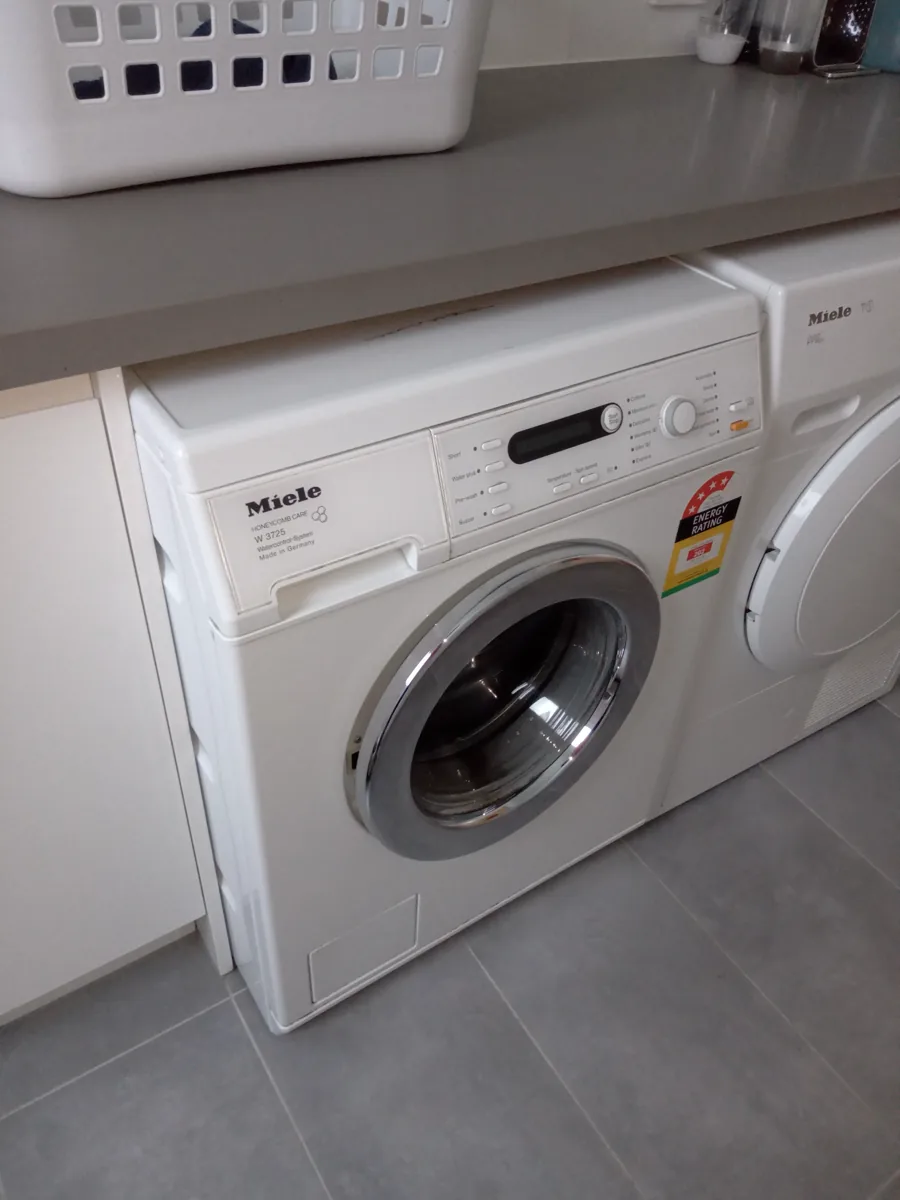
Water at the front. Door seal, usually — the door gasket or boot seal on front-loaders. Rubber, accordion-shaped, lines the door opening. Tears from a stray object in a pocket, or just degrades over time from mould and detergent build-up. A little water sitting in the folds after a wash is normal on most front-loaders. Water actually leaking out the bottom of the door is not.
Water at the back. Check the inlet hoses first, hot and cold, then the drain hose connection. Loose fitting, cracked hose, drain hose slipped out of the standpipe — all common, all cheap to fix.
Water pooling dead centre, underneath. Drain pump territory. Sometimes the pump hose, occasionally the outer tub itself. A cracked pump housing or a hose clamp that’s worked loose over years of vibration both show up this way.
Timing narrows it further. Leaks only during fill: inlet valve or hose connection. During wash or agitation: door seal, or a tub-to-pump hose. During drain or spin: the pump, its hoses, or the drain connection itself.
Front-Loaders and Top-Loaders Leak Differently
Front-loading machines are the ones most people picture when they think of a leaking washer, mainly because the door seal is such an obvious and visible part. But top-loaders leak too, just from different places. Without a door gasket to worry about, top-loaders more often leak from the water inlet valve, a cracked tub, or the transmission seal underneath the agitator. A top-loader pooling water is less likely to be a seal problem and more likely to be a hose, valve, or an internal seal that’s failed after years of use.
High-efficiency machines, whether front or top-loading, add another variable: they use less water per cycle by design, which means detergent residue and lint have less water to rinse away with. That residue builds up in hoses and around seals faster than it would in an older, higher-water-use machine, and it’s part of why HE machines benefit from an occasional empty hot cycle with a washer cleaner run through them.
Quick Reference Table
| Leak Location | Timing | Likely Cause |
| Front of machine | Any point in cycle | Torn or degraded door seal |
| Back of machine | Fill stage | Inlet hose or valve connection |
| Back of machine | Drain or spin | Loose or blocked drain hose |
| Centre, underneath | Drain or spin | Drain pump or pump hose |
| Anywhere, excessive suds visible | Wash stage | Too much detergent (oversudsing) |
What You Can Check Before Calling a Technician
- Ring the base of the machine with dry paper towels, run a cycle, then check which ones are wet first
- Look over the door seal for tears, trapped debris, or a stray sock caught in the folds
- Confirm the drain hose is properly seated in the standpipe and hasn’t kinked
- Check the inlet hose fittings, both at the wall and at the back of the machine, for drips
- Cut back on detergent if you’re seeing heavy suds, especially non-HE detergent in a front-loader
Why Some Leaks Need a Professional
A door seal swap is a fairly contained job. A drain pump or tub seal is different territory. Getting into either usually means partially taking the machine apart, and doing that wrong risks water reaching the electrics under the drum. Worth stopping use once you’ve confirmed it’s a genuine internal leak rather than a loose hose, particularly if you’re in an apartment and there’s a unit below you.
National Appliance Repairs carries drain pumps, seals, and hoses for all major brands in every van, so most washing machine repairs get sorted in one visit. Ruled out the seal and hoses already and it’s still coming back? Our guide to washing machines that won’t drain covers a fault worth checking at the same time. Every repair carries a 12-month parts warranty and 3-month labour warranty.
Why It’s Worth Acting Quickly
A leak that looks minor on day one rarely stays that way. Water finding its way under vinyl or timber flooring can cause swelling and warping within days, and if the laundry sits above a living space, ceiling staining and structural damage follow if it’s left running. Renters and apartment owners have an extra reason to move fast: water damage that reaches a neighbouring unit or common property can turn a simple repair into an insurance claim. None of that requires panic, just not putting off the diagnosis for a few more loads because the machine’s still technically working.
Keeping It From Coming Back
- Check hose fittings for drips every few months rather than waiting for a puddle to notice
- Replace rubber inlet hoses with braided stainless steel ones if yours are more than five years old. Rubber perishes; braided hoses last considerably longer
- Wipe down and inspect the door seal regularly, and leave the door open between washes so it dries out and doesn’t develop mould that accelerates wear
- Stick to the recommended detergent amount for your machine type, and switch to HE detergent if you’ve got a front-loader or HE top-loader
- Run an empty hot cycle with a washer cleaner every month or two to clear residue building up in hoses and around seals
Frequently Asked Questions
Is a bit of water in the door seal normal?
Yes, a small amount sitting in the folds after a wash is normal on most front-loaders. It’s there to keep the rubber from drying out. Water actually leaking out from under the door onto the floor is a different story and worth checking.
What’s the first thing to check if I find water under the machine?
Where it shows up and when. Front, back, or centre, and which stage of the cycle. That combination rules out most of the possibilities before you’ve called anyone.
Can too much detergent cause a leak?
Yes. Overdo it, especially non-HE detergent in an HE or front-loading machine, and you get oversudsing that pushes water out around the door or drum. Cutting back the amount often fixes it with no repair needed at all.
Should I keep using the machine if it’s leaking?
Stop until you know the source. A loose hose is generally fine to leave running a cycle or two. An internal leak from the pump or tub seal gets worse with continued use, not better.
What does it cost to fix a washing machine leak?
Depends on what’s actually leaking. A hose reconnection or a seal clean costs very little. A pump or tub seal replacement is a bigger job. Call 1300 434 380 for a ballpark before booking anything.
The Bottom Line
Water under the washer almost always comes down to the door seal, the hoses, or the drain pump, and where and when it shows up tells you which one. Nothing obvious turn up in your own check? Get in touch with National Appliance Repairs or call 1300 434 380 for a same-day assessment, subject to availability, across Melbourne, Sydney, Brisbane, Adelaide, and Perth.