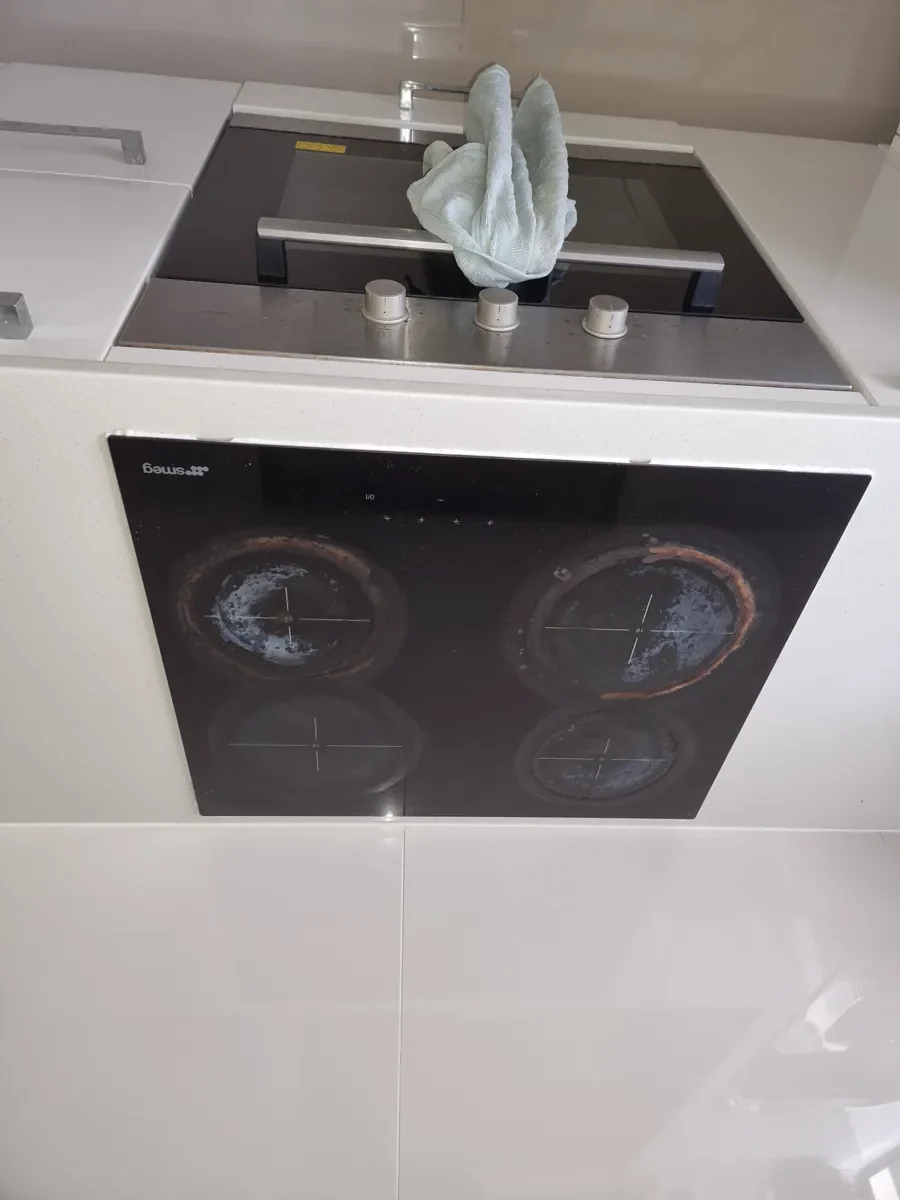
Induction cooktops fail in a way that looks alarming and usually is not. A zone shuts down mid-cook, a code appears, and everything else on the cooktop keeps working normally.
Most of those codes fall into two groups that cost nothing to fix. The third group is an actual repair. Telling them apart is the whole job, and almost nobody explains the difference. National Appliance Repairs services induction cooktops across Melbourne, Sydney, Brisbane, Adelaide and Perth.
First, the code itself will not tell you much
Unlike fridges or dishwashers, induction cooktops have no shared code convention. Bosch, Westinghouse, Smeg, Miele, Fisher & Paykel and Electrolux all use different letters and numbers for the same physical condition, and even different model years within one brand vary.
So treat any code table you find online with caution, check your own manual, and work from the behaviour instead. Behaviour is consistent across every brand, because the underlying physics is.
Need This Fixed Today?
Our licensed technicians repair this exact fault every week – fast, reliable, and backed by a workmanship guarantee.
- Licensed & insured
- Workmanship guarantee
- No fix, no fee
The three things that actually happen
| What you see | Cause group | Fix |
|---|---|---|
| Code or pan symbol appears the moment you put a pot down, or when you move to a different pot | Cookware | Change the pot. No cost |
| One zone works fine for 20 minutes then shuts down, and works again once cool | Heat and ventilation | Airflow or installation |
| Zone dead from switch-on, code appears with no pot on it, or repeats immediately after cooling | Power electronics | Technician |
Group one: the cookware
Induction works by inducing a current in the base of the pot. If the base will not respond, the cooktop has nothing to heat and reports that as a fault.
Three things cause it:
- The pot is not magnetic: Aluminium, copper, glass and most stainless steel will not work. Stick a fridge magnet to the base. If it does not grip firmly, that pot is the problem.
- The base is too small: Every zone has a minimum base diameter, and a small saucepan on a large zone may not be detected at all.
- The base is warped or not flat: Cheap pans warp over time, and a base that rocks loses contact with the surface.
This group accounts for a surprising share of the calls we take. It is worth two minutes with a fridge magnet before anything else.
Group two: heat and ventilation
An induction cooktop is a power electronics device sitting under a glass surface. The electronics generate heat of their own, and there is a cooling fan underneath moving air through the unit.
When that airflow is restricted, the electronics reach their temperature limit and shut the zone down to protect themselves. The zone works again once things cool, which is the giveaway.
Common causes, and most are installation, not failure:
- The ventilation gap is blocked: Induction cooktops need a specified clearance below and behind. An oven installed too close underneath, a drawer packed full, or insulation stuffed into the cavity will all do it.
- The cooling fan is clogged: Dust and cooking grease build up on the fan and the heat sink over years.
- Sustained high power: Running several zones on boost for a long stretch will reach the limit on some models by design.
- Something hot on the surface: A hot pan moved from an adjacent zone, or a tray resting on the glass, raises the surface sensor reading.
If your cooktop was recently installed or recently had an oven fitted beneath it, our guide to installation faults that look like breakdowns is the place to start.
Group three: the power electronics
This is the one that needs paying for, and it behaves differently from the other two.
Each zone is driven by its own power module containing switching transistors, commonly IGBTs. When one fails, that zone stops working entirely and usually reports a fault immediately at switch-on, with nothing on the surface.
Related faults in this group include a failed cooling fan, a cracked or failing touch control board, and supply voltage problems. Induction cooktops are sensitive to supply quality, and a cooktop in a home with other electrical oddities is worth mentioning when you call.
The tell is simple: cookware faults follow the pot, heat faults come and go with temperature, and electronics faults are constant.
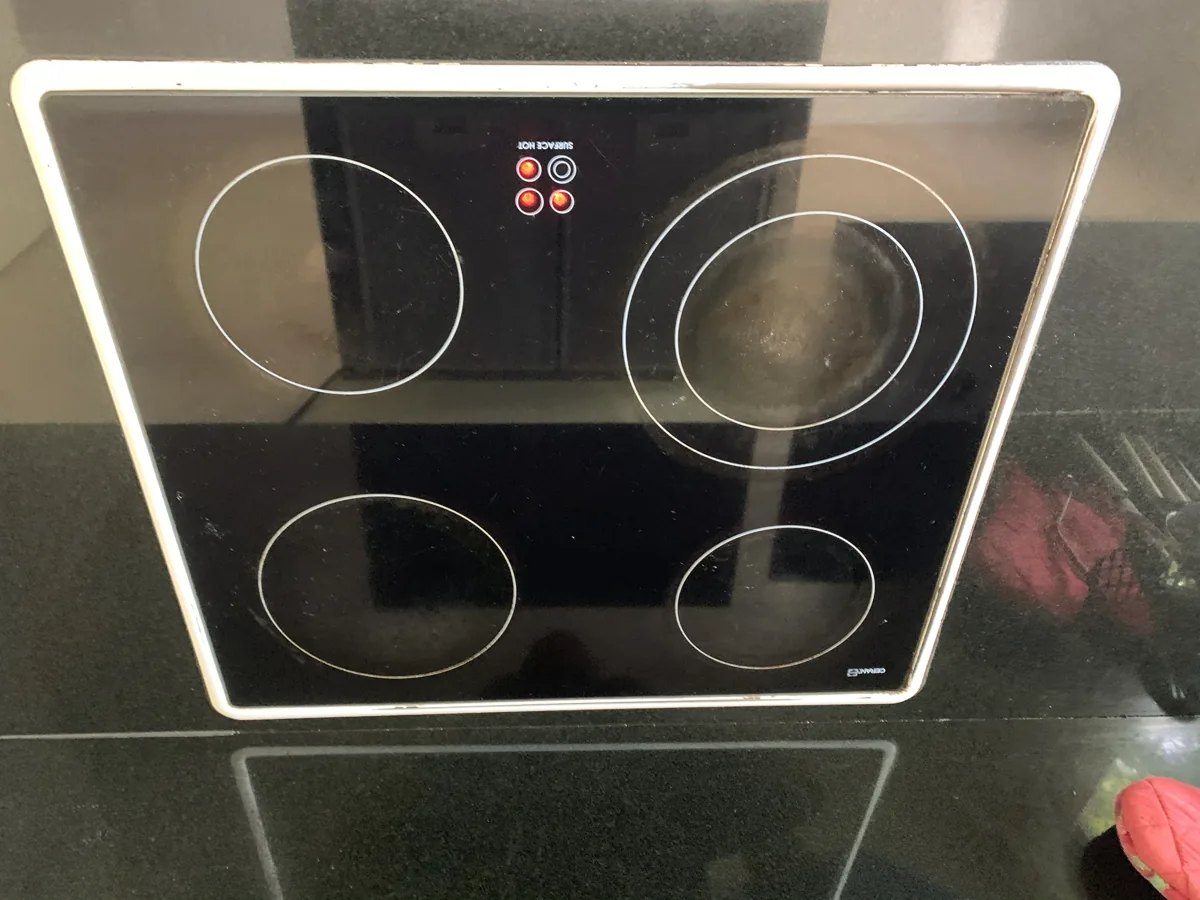
What to do before booking
- Test the pot with a fridge magnet: If it does not grip the base firmly, the cooktop is fine.
- Try the same pot on a different zone: Works elsewhere means the zone is at fault. Fails everywhere means the pot is.
- Try a different pot on the same zone: The reverse test, and between them they isolate it in a minute.
- Note whether it happens cold or after a while: Immediate is cookware or electronics. After twenty minutes is heat.
- Check underneath: Open the cabinetry below and look for anything blocking airflow. Listen for the cooling fan running.
- Clean the glass, dry it, and check nothing is resting on the controls: Spills on touch controls produce their own faults.
Do not remove the cooktop or open the underside. An induction cooktop runs on a dedicated high-current circuit and holds charge in its capacitors after disconnection.
When it needs a technician
Book if a zone is dead from cold with the right cookware, if the code appears with nothing on the surface, if the fault repeats immediately after cooling, if the glass is cracked, or if you can smell burning.
A cracked surface is not cosmetic. Liquid reaching the electronics underneath turns a glass replacement into a full unit replacement.
Our induction cooktop repairs sit alongside our broader oven and cooktop service, with upfront quoting, a 12-month parts warranty and a 3-month labour warranty.
Call:
- Melbourne 03 9123 0548
- Sydney 02 9621 5988
- Brisbane 07 3166 9770
- Adelaide 08 7123 4027 or,
- Perth 08 9470 4450.
Tell us the brand, the model number from the label underneath or in your manual, which zone, and whether it fails cold or hot. That last detail decides which parts the technician brings.
Frequently asked questions
Why does my induction cooktop show an error with a pot on it?
Usually the pot. Induction needs a magnetic base of adequate diameter sitting flat. Test it with a fridge magnet before assuming the cooktop has failed.
Why does one zone shut off after 20 minutes and then work again?
That is thermal protection. The electronics have reached their temperature limit, usually because airflow underneath is restricted or the cooling fan is clogged.
Do induction cooktop codes mean the same thing across brands?
No. There is no shared convention. Check your model’s manual, and diagnose from the behaviour instead of the code.
Can I use any stainless steel pan on induction?
No. Only magnetic stainless steel works. A fridge magnet is the test, and it takes a second.
Is a cracked induction cooktop worth repairing?
It depends on the model and parts availability, but stop using it immediately. Liquid reaching the electronics turns a repairable crack into a replacement.
The short version
Most induction cooktop codes are the cooktop refusing to heat something it cannot heat, or protecting itself from heat it cannot shed. A fridge magnet and a look at the ventilation underneath resolve a large share of them.
A zone that is dead from cold with the right pot on it is the one that needs a technician, and that is a power module, not anything you can reach. National Appliance Repairs services induction cooktops across five capitals with upfront pricing. Book online or call your nearest office.
Call Us:
or leave a message using the form below