You would think getting a technician into a Sydney high-rise to fix an appliance would be simple. Call someone. They show up. They fix it.
Not so much.
In reality, you are dealing with a building booking system. A freight lift that only runs at certain hours. A concierge who needs 24 hours' notice--minimum. And a strata by-law that nobody has read until suddenly the repair cannot happen because of some obscure rule.
Sydney's apartment population has been growing for years. More high-rises. More people. And with that, more complexity around getting tradies into buildings. Whether you are a tenant in a Pyrmont tower, an owner in Chatswood, or a property manager looking after buildings all over the CBD, figuring out building access ahead of time saves everyone a lot of frustration.
At National Appliance Repairs, our Sydney techs deal with high-rise access every single day. So here is what we have learned. What helps things go smoothly. And what almost always causes delays. Take notes. It will make your life easier.
Why High-Rise Access Is Different
In a freestanding house, a technician knocks on the door, brings in the tools, and gets to work. In a high-rise apartment building, there's a layer of building management between the street and the apartment. That layer exists for good reasons -- security, lift protection, noise control, and the safety of all residents -- but it requires planning.
The three main access considerations are:
Building entry and security systems
Lift access, particularly freight or service lifts
Building by-laws and strata rules that govern contractor access times and conduct
Building Entry and Security
Most Sydney high-rises have some kind of controlled entry. Could be a security intercom. A key fob system. A concierge desk. Or a mix of all three. The bottom line is that a technician cannot just walk in. Someone needs to let them in, or they need to be registered as a visitor.
Here is what you can do to make the process painless:
First, give building management or the concierge a heads-up. Tell them a tradesperson is coming. Give them the date and an arrival window. No surprises.
Second, if your building uses a visitor management system, see if you can pre-register the technician's name. Saves time on the day.
Third, be available to buzz them in. If you cannot be there, ask a trusted neighbour to help out.
Fourth, check if your building requires contractors to sign in and show ID at the concierge desk before they are allowed to head to the lift.
One more thing. Some of the larger buildings in the CBD and North Sydney have a stricter rule. The resident has to accompany the tradesperson for the entire visit. If that is your building, make sure you have factored that into your schedule. You cannot just let them in and disappear.
Freight and Service Lifts: What You Need to Know
The most common access delay in Sydney high-rises is the freight lift. Most residential towers with more than a handful of storeys have a dedicated service or freight lift, separate from the passenger lifts, and buildings typically require tradespeople with tools and equipment to use it rather than the passenger lift.
Key things to be aware of:
Freight lifts often have restricted hours. Many Sydney buildings only allow freight lift use during business hours on weekdays, with restricted or no access on weekends. If your appliance repair is urgent and the building's freight lift is unavailable outside business hours, that limits when the work can be done.
Bookings are frequently required. In larger towers -- particularly buildings in Barangaroo, Pyrmont, Green Square, and the CBD -- freight lift time may need to be booked through the building manager or concierge in advance. Same-day bookings are not always possible.
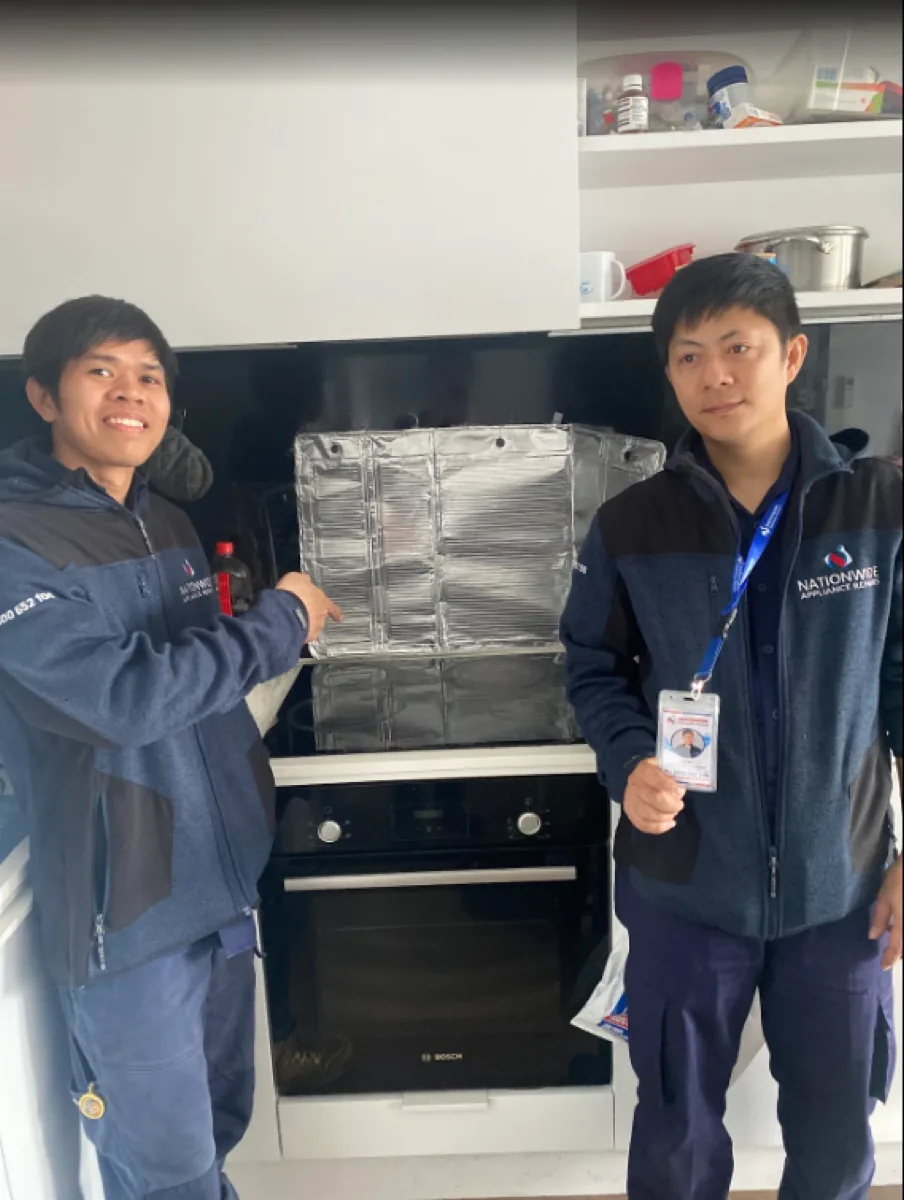
Lift protection may be required. Some buildings require felt or padding to be installed in the lift before any large items are transported. This is to protect the lift's internal surfaces. Check with building management whether this applies and who supplies the protection.
Passenger lifts are generally not to be used for equipment. Using the passenger lift with large toolboxes or appliance parts can result in the technician being turned away, which means rescheduling.
If you're arranging an appliance repair in a Sydney high-rise, one of the most useful calls you can make before booking the technician is to your building manager to confirm freight lift availability and any booking requirements.
Strata By-Laws and Contractor Rules
Here is something a lot of people do not realise. Under the Strata Schemes Management Act, owners corporations can adopt by-laws that regulate how work is carried out in the building. That includes setting rules for tradespeople who need to get in to fix things.
Some common by-law provisions that can affect an appliance repair are:
Permitted working hours. A lot of buildings restrict tradesperson access to weekday business hours. Usually 8am to 5pm, something like that. Weekend work often needs special approval from the owners corporation or strata committee.
Noise restrictions. Even within the allowed hours, noisy work might be limited to certain windows of time. So if the repair involves hammering or power tools, check first.
Contractor registration. Some buildings keep a list of approved contractors. Or they require tradespeople to submit their details--name, licence number, company--to the strata manager before they are allowed to attend.
Insurance requirements. Larger buildings sometimes require contractors to carry a minimum level of public liability insurance. Most reputable appliance repair companies have this as standard. But it is worth confirming before you book.
Waste removal. By-laws often say that the contractor has to take any packaging, removed parts, or waste off the premises. Do not assume the building's bins are an option.
By-laws are not always communicated clearly. Even to owners, let alone tenants. So do not guess. The best source of information for your building is the strata manager or the owners corporation secretary. You can also request a copy of the registered by-laws. Every owners corporation in NSW is required to maintain them. Get a copy. Read the relevant bits. Save yourself a headache.
How to Make a High-Rise Repair Run Smoothly
Preparation Step
Why It Matters
Contact building management to confirm access requirements
Avoids technician being turned away at the door
Check freight lift availability and book if required
Prevents delays on the day of the repair
Confirm permitted working hours under the building's by-laws
Avoids booking outside allowed hours
Provide the technician's name and company details to the concierge
Speeds up entry, especially in larger buildings
Be on-site or have a contact available to grant access
Technicians cannot enter without resident presence in most buildings
Confirm whether lift protection is required
Some buildings will not allow lift use without felt padding in place
When Access Problems Cause Delays
If a repair is genuinely urgent -- a broken oven with no alternative cooking, a washing machine that won't drain and is connected to the building's water supply -- the access constraints don't simply disappear. In practice, here's what to do:
Contact building management and explain the urgency; most reasonable buildings will make accommodation for genuine emergencies
Under Section 62 of the Residential Tenancies Act 2010 (NSW), a failure of essential laundering or cooking services is classified as an urgent repair, and the landlord is obligated to respond quickly regardless of access inconvenience
If the landlord is responsible for the repair and building access is preventing a timely response, document all communication in writing
Tips for Property Managers and Landlords
If you manage multiple apartments across different Sydney buildings, keeping a record of each building's access requirements -- freight lift booking contacts, permitted hours, contractor requirements -- saves significant time when urgent repairs arise. A simple spreadsheet per building prevents the scramble that happens when an oven element fails on a Friday afternoon.
We work with Sydney property managers regularly and are used to navigating building access protocols. When you call us for a repair, let us know the building name, floor level, and any known access requirements, and we'll plan around them as efficiently as possible.
FAQ
Do techs need to use the freight lift?
In most Sydney high-rises, yes. Passenger lifts are not for tradies with tools. Building management will point you to the service lift. Check your building's rules. Smaller buildings may not have a freight lift and will handle it differently.
Can a repair happen after hours?
Depends on the by-laws. Most buildings say weekday business hours only. Some allow weekends with strata approval. Need an urgent repair outside those hours? Call your building manager directly and ask.
What if the freight lift is broken when the tech arrives?
Usually means rescheduling. For a small job where parts fit in a bag, the building manager might allow the passenger lift temporarily. For big appliances or lots of gear? Reschedule.
Does strata have to let a tech into my apartment?
No. Strata does not control access to your lot. That is between you and the tech. Strata controls common property--lifts, hallways, and so on. That is why their rules apply to how the tech moves through the building.
Who do I call to find out the building's rules?
The strata manager. They have the by-laws. They can tell you about contractor access, freight lift bookings, and what hours are allowed.
Conclusion
Appliance repairs in Sydney high-rises are entirely manageable with the right preparation. The key is checking your building's access requirements before the technician arrives -- not after. Freight lift availability, permitted hours, and concierge registration can all affect timing, and a ten-minute call to building management in advance prevents the scenarios that lead to rescheduling.
When you're ready to book,National Appliance Repairs services apartments and high-rise buildings across Sydney. Our technicians are experienced in building access protocols and are happy to work within your building's requirements. Call 1300 434 380 to arrange a time.
Melbourne loves its old houses. Victorian terraces. Edwardian weatherboards. Californian bungalows. From Fitzroy to Surrey Hills, you’ll find homes built in the 1880s to 1930s that have literally not changed at all: the original electrical wiring done a century or so ago was still in place.
These old wirings can cause very real problems. Nuisance tripping. Poor performance. Faults that look like the appliance is broken when it is not. And in the worst case, they might even become fire hazards.
National Appliance Repairs sees this all the time in Melbourne. Not every appliance problem is actually the appliance. Here is what you need to know about what is behind your walls.
A Brief History of Melbourne's Domestic Wiring
Figuring out what you are dealing with in an old Melbourne home starts with one question. When was it built? Because wiring standards changed a lot over the years.
1880s to 1910s: Lead-sheathed cable
This was used in Melbourne homes and government buildings from the 1880s to about the 1910s. Inside the lead sheath? Copper conductors wrapped in bitumen and paper insulation. Sounds fancy. But after 120 years, the lead sheath breaks down and the insulation crumbles, leading to fire and electrocution risk. And if someone works on it, lead exposure is also a very real health concern.
1910s to 1950s: VIR and knob-and-tube
VIR stands for Vulcanised Indian Rubber. Rubber insulation over copper, wrapped in waxed cotton. You will find this in inner suburbs like Balwyn, Kew, and parts of Box Hill. Knob-and-tube was used from the 1850s into the 1940s. Porcelain knobs and tubes holding copper wire. Here is the problem with both: they have no earth conductor. That means they are not compatible with modern appliances or safety devices.
1940s to 1960s: TRS cable
Tough Rubber Sheathed. More common in post-war middle suburbs. Ashburton, Box Hill, Mount Waverley, Burwood, Glen Waverley. Safer than the older stuff, but still not up to today's standards. The rubber insulation degrades over time, and these cables were never designed for the loads a modern household draws.
Late 1960s onwards: TPS cable
Thermoplastic Sheathed – these are the modern standard. They come with colour-coded wires, have an earth, and most homes built or fully rewired from the late 1960s should have TPS. There’s just one catch: early versions of TPS can still have compliance issues compared to the current Australian Wiring Rules.
Here is what Energy Safe Victoria recommends: if your home was built before 1980, get a licensed electrician to inspect the wiring every five years. More often if you notice anything worrying--flickering lights, burning smells, breakers tripping for no reason. Do not wait.
Why Old Wiring Affects Modern Appliances
Modern kitchen and laundry appliances draw significantly more power than the appliances available when these homes were wired. A 1950s-era circuit might have been sized for a single overhead light and one or two power points drawing minimal current. A modern induction cooktop, a heat pump dryer, or a large-capacity washing machine is a fundamentally different electrical load.
The practical consequences for appliances include:
Nuisance circuit breaker trips -- the circuit can't carry the load a modern appliance demands, causing the breaker to trip repeatedly. This is often misdiagnosed as a fault in the appliance itself.
Voltage fluctuations -- degraded or undersized wiring causes voltage drops when large appliances are running, which can affect the performance of sensitive electronics in modern machines (control boards, sensors, motor drives).
Earth fault confusion -- many modern appliances test for a proper earth connection at startup. If the wiring lacks an adequate earth, the appliance may display fault codes, refuse to run, or behave erratically.
Overheating connections -- old or loose wiring connections at the socket or in the wall can overheat under the sustained load of a large appliance, which poses a fire risk over time.
A washing machine or dishwasher that keeps tripping its fault code in an older Melbourne home is often responding correctly to a genuine electrical anomaly -- not malfunctioning.
The RCD Requirement and What It Means
A Residual Current Device (RCD) -- also called a safety switch -- monitors the flow of electricity through a circuit and disconnects power in roughly 30 milliseconds if it detects current leaking to earth. It's the single most important safety device in a modern electrical installation, protecting against electrocution and reducing the risk of electrical fires.
According toEnergy Safe Victoria, all Victorian rental properties have been required since 29 March 2023 to have modern-style switchboards with circuit breakers and RCDs fitted to all socket outlet and lighting circuits. This requirement was introduced precisely because so many older Melbourne homes lacked adequate protection.
Owner-occupied homes are not subject to the same mandatory upgrade requirement, but the safety case is identical. A home without RCD protection on its circuits is significantly more vulnerable to electrical injury and fire -- particularly when modern high-load appliances are in regular use.
If your Melbourne home has an older ceramic or porcelain fuse board rather than a modern circuit breaker switchboard, it almost certainly lacks RCD protection, and any modern appliance on those circuits is operating in a less safe environment than it should be.
Signs That Wiring May Be Affecting Your Appliances
Watch for these warning signs in any older Melbourne home:
Lights dim or flicker noticeably when a large appliance (oven, washing machine, air conditioner) starts up
Circuit breakers trip repeatedly when running an appliance, even though the appliance itself appears to be functioning normally
The same power point or circuit trips consistently but not others
Appliances display error codes related to power supply or earth fault
Sockets or switches feel warm to the touch
You can see cloth-wrapped or rubber-sheathed wiring (rather than white or grey plastic-sheathed cable) on surface runs in the laundry, roof space, or sub-floor
Any of these warrants a call to a licensed electrician, not just an appliance technician.
Melbourne's Wiring by Era -- Quick Reference
Wiring Type
Era
Common Suburbs
Key Risk
Lead-sheathed cable
1880s--1910s
Inner city, government buildings
Deteriorated insulation; lead exposure
Knob-and-tube
1850s--1940s
Inner suburbs broadly
No earth; fire and shock risk
VIR cable
1910s--1950s
Balwyn, Kew, Box Hill
Degraded rubber insulation
TRS cable
1940s--1960s
Ashburton, Mt Waverley, Burwood
Aging insulation; limited capacity
Early TPS cable
Late 1960s--1980s
Widespread
May lack earth; limited capacity
Modern TPS
1980s onwards
Widespread
Generally compliant if maintained
What to Do Before Calling an Appliance Technician
If an appliance is behaving strangely in an older Melbourne home, it's worth running through this checklist before assuming the appliance itself is at fault:
Check whether the issue occurs on a specific circuit only
Check the switchboard -- does it have modern circuit breakers and RCDs, or ceramic fuses?
Try plugging the appliance into a different socket on a different circuit, if practical
Check whether the issue correlates with other high-load appliances running simultaneously
If you work through this and determine the wiring is the likely issue, a licensed electrician is the right first call, not an appliance repairer. Under the Electrical Safety Act 1998 (Vic), all prescribed electrical work in Victoria must be performed by a licensed or registered electrician, and any work carried out must be accompanied by a Certificate of Electrical Safety.
That said, if you've confirmed the wiring is in reasonable shape and the appliance is still malfunctioning, that's when an appliance technician can do their best work. We provideoven repairs,washing machine repairs, anddishwasher repairs across Melbourne, and our technicians are well-versed in distinguishing a genuine appliance fault from an electrical supply issue.
FAQ
How do I know if my period home has old wiring?
Get an electrician. That is the only sure way. Visual clues: ceramic fuse boards (not modern circuit breakers), cloth or rubber wiring in visible spots, two-pin power points with no earth. Inner Melbourne homes built before the mid-1960s are likely to have original or partially original wiring.
Can old wiring damage my appliances?
Yes. Voltage fluctuations and loose connections kill control boards and motors. Poor earthing causes electrostatic discharge that degrades electronics over time.
Does my appliance warranty cover bad wiring damage?
Almost never. Warranties cover product defects, not dodgy house wiring. If the problem is your electrical supply, that is on you. Fix the wiring before replacing the appliance.
Do Victorian rentals need RCDs now?
Yes. Since March 2023, all Victorian rentals must have circuit breakers and RCDs on every socket and lighting circuit. Landlords who have not done this are breaking the law.
My oven trips the breaker. Oven or wiring?
Could be either. One trip? Might be the oven--shorted element is common. Keeps tripping, especially with other large appliances on the same circuit? Probably the circuit is undersized or shot. Get an electrician to check the circuit first. Then an appliance tech for the oven.
Conclusion
Old wiring and new appliances don't always coexist smoothly. In Melbourne's period homes, the gap between the electrical infrastructure and the demands of modern living is real and worth understanding. A circuit designed in the 1950s for a kettle and a radio can't be expected to perform reliably for an induction cooktop, a heat pump dryer, and a connected dishwasher all running at once.
Getting a licensed electrician to assess the wiring in an older Melbourne home is a worthwhile investment -- for safety, for appliance longevity, and for peace of mind. When the wiring checks out and the appliance still has a fault, we atNational Appliance Repairs are ready to help. Our technicians service all major appliance brands across Melbourne, in period homes and new builds alike. Call 1300 434 380 for a free consultation.
Here is something we see all the time. A tenant in a Sydney apartment calls us because their dishwasher died or the oven will not heat. And the first thing they ask is not "can you fix it?" It is "who is supposed to pay for this?" Fair question.
The answer depends on three things. What the appliance is. Who actually owns it. And whether the fault is in common property or inside the lot itself. Mess that up and you might write a cheque for something the strata or the landlord should have covered.
Honestly, this is one of the biggest sources of confusion we deal with at National Appliance Repairs. Our guys service apartments all over Sydney. And the calls that take the longest to sort out are rarely the difficult repairs. They are the jobs where nobody can agree who should authorise the work. So let us break it down in plain English. This is how responsibility works in NSW. No legal jargon. Just who pays for what.
The Three Layers of a Sydney Apartment
Before we talk appliances, you need to understand the three parties in most Sydney strata buildings:
Tenant -- keeps the place clean, does not break things, reports problems fast
Landlord (lot owner) -- maintains everything inside the apartment that is not common property
Where is the line between "inside your lot" and "common property"? Not always clear. It depends on the strata plan, the by-laws, and sometimes whether the item was original to the building.
What the NSW Residential Tenancies Act 2010 Says
If you are renting in NSW, it’s crucial that you be familiar with the Residential Tenancies Act 2010 – this law governs a renter’s relationship with their landlord. Under that Act, your landlord is responsible for keeping the place in reasonable repair. That includes anything they provided for you to use.
Now, Section 62 is where it gets specific. It defines certain appliance failures as "urgent repairs”, which applies to:
You smell gas or there is a gas leak
A dangerous electrical fault
Flooding or serious flood damage
Storm or fire-related damage
The gas, electricity, or water supply to the property stops working
Any essential service breaks down--hot water, cooking, heating, cooling, or your washing machine
Something that makes the property unsafe or insecure (broken locks, damaged windows, etc.)
A burst water pipe or fitting
An appliance or fixture that uses water breaks and starts wasting a lot of water
Blocked or broken toilet
Serious roof leak
Under Section 64, if the landlord does not respond to an urgent repair in a reasonable amount of time, you can arrange the repair yourself – that’s fully protected by law. Then you can claim back up to $1,000. You need to give the landlord written notice and the receipts. They have 14 days to reimburse you. If the repair costs more than $1,000, you can apply to NCAT--that is the NSW Civil and Administrative Tribunal--for an urgent hearing.
Who Pays for What: A Practical Guide
Built-in or landlord-supplied appliances
The basic rule is simple: if the appliance came with the apartment--a built-in dishwasher, the oven that was already there, a rangehood that is connected--the landlord is responsible for fixing it. The only exception is if you caused the damage yourself.
For example:
Your oven stops heating: Landlord pays. That is an essential service for cooking. Under the law, that would probably be considered an urgent repair.
The dishwasher breaks: Landlord pays. As long as it was part of the property when you moved in.
The washing machine that came with the apartment dies: Landlord pays. The Act specifically says laundry services count as essential.
Tenant-owned appliances
Now, if you brought your own stuff--a freestanding washing machine you own, a portable air conditioner you bought, your fancy coffee machine--that is on you. You repair it or replace it. The landlord has no obligation to service equipment they did not provide.
Appliances damaged by the tenant
What if you broke it? Say you never cleaned the filter. Ever. It got clogged, the pump burned out, the appliance died. That is misuse or negligence. You are probably on the hook for that repair. The landlord is not required to cover damage caused by the tenant. But here is an important detail. The landlord still has an obligation to keep the repair cost reasonable. They cannot just run up a massive bill and hand it to you. They need to take reasonable steps to limit the cost.
Where Does Strata Come In?
The owners corporation only becomes relevant when the problem involves common property -- the shared infrastructure and spaces that all owners hold collectively.
In Sydney apartment buildings, common property typically includes the building's main water pipes and drains, electrical risers and shared wiring in walls, the roof, external walls and load-bearing structures.
Items inside your own apartment -- your kitchen appliances, bathroom tapware, internal plumbing and wiring within the lot -- are generally the lot owner's responsibility, not the owners corporation's.
However, there are grey areas. Pipework inside a wall shared between two lots, or electrical wiring that runs through a common wall, can fall under strata's jurisdiction depending on the strata plan. When a repair involves a shared or embedded service, it's worth requesting a copy of the strata plan from the owners corporation before arranging any work.
Responsibility at a Glance
Scenario
Responsible Party
Built-in oven stops heating (provided with tenancy)
Landlord
Tenant's own washing machine breaks down
Tenant
Dishwasher damage caused by tenant misuse
Tenant
Water pipe in shared wall causes damage
Owners corporation (likely)
Essential service failure (hot water, cooking, laundering)
Landlord -- urgent repair
Appliance on common property (e.g. building laundry room)
Owners corporation
Practical Tips for Tenants
Always report faults in writing (email or text) to your property manager, and keep copies
If the repair is urgent, state that clearly and reference the essential service affected
Do not arrange your own repairs without first giving the landlord a reasonable opportunity to respond -- unless you cannot reach them and the situation is genuinely urgent
Keep all receipts if you do arrange an urgent repair yourself; you'll need them for reimbursement
Maintain a list of qualified tradespeople you can deploy quickly for urgent situations
Check your strata by-laws -- some buildings have specific provisions about who is responsible for certain items within lots
If in doubt about whether something is common property, contact your strata manager before arranging or refusing repairs
FAQ
Is a broken washing machine considered an urgent repair in NSW?
Yes, it is. The Residential Tenancies Act specifically says a breakdown of an essential service for laundering counts as an urgent repair. So your landlord needs to respond quickly. If they do not, here is what you can do. Arrange the repair yourself. Keep the receipts. Give the landlord written notice. You can claim back up to $1,000.
Who pays if the building's water pressure damages my dishwasher?
This one gets tricky. If the problem comes from common property--say, a pressure surge in the shared pipes--the owners corporation may be on the hook. Start with the strata committee. See if they will sort it out. If not, go to NSW Fair Trading for mediation. And if that does not work, NCAT is the final stop.
Can a Sydney landlord just refuse to repair a built-in oven?
They can try. But it is risky. A built-in oven is an essential service under the law. If the landlord refuses or drags their feet, NCAT can order them to do the repair. And the tenant can also claim compensation for any losses caused by the delay. So most landlords are smart enough not to play that game.
What if the building has a shared laundry and a machine breaks?
Shared laundry machines are common property. That is not your problem. The owners corporation is responsible for repairing and maintaining them. Section 106 of the Strata Schemes Management Act 2015 makes that clear.
Who do I contact first when an appliance breaks down in my Sydney apartment?
Start simple. If you are renting, call your property manager. If you suspect the problem is building-wide--like water pressure or electrical supply--call your strata manager. If the issue is urgent and involves an essential service, do two things. Report it in writing immediately. Then follow up by phone. Do not just leave a message and hope. For the repair itself, call a qualified appliance technician. The sooner someone looks at it, the sooner you know what you are dealing with.
Conclusion
Appliance repairs in Sydney apartments sit right at the intersection of tenancy law, strata legislation, and plain old common sense. Most of the time, it breaks down like this.
The landlord handles built-in appliances and anything they supplied with the property.
The tenant handles their own equipment--and any damage they caused themselves.
The owners corporation handles faults in common property.
Now, when you actually need someone to come out and fix the thing--whether you are a tenant, a landlord, or a strata manager trying to arrange access for a building appliance--that is where we come in. National Appliance Repairs services all types of domestic and commercial appliances across Sydney. Call 1300 434 380 for a free consultation and a fast turnaround. No runaround. Just a technician who shows up and fixes it.
Your appliances are going to break down eventually. But how long they last depends mostly on what you do right now.
Brisbane's climate is harsh on appliances. Heat, humidity, hard water, power fluctuations. The environment works against your machines. But if you're intentional about maintenance, you can add years to every appliance's lifespan.
We've seen fridges last 15+ years and washing machines fail at 5 years. Same climate. Same water. Different maintenance.
The Core Principle Is Preventing Mineral Buildup
Hard water is the single biggest threat to Brisbane appliances. Mineral deposits clog everything. They insulate heating elements. They restrict water flow. They accelerate wear on pumps and motors.
Every major appliance that uses water needs regular descaling:
Washing machine: Run a cleaning cycle monthly with commercial cleaner
Dishwasher: Run a descaling cycle monthly with commercial descaler
Refrigerator (with ice maker): Flush the water line every 6 months
Hot water system: Flush annually
This takes 20-30 minutes per month across all appliances. It adds years to their lifespan.
Heat Management for Refrigerators
Your fridge is running harder in Brisbane's heat than anywhere else. Help it work less hard.
Recommended practices:
Clean the condenser coils every 3 months (not 6 like manufacturers suggest)
Keep 4 inches of clearance on all sides, especially the back
Don't place near oven, stove, or windows with direct sun
Set to 3-4°C and leave it (stop adjusting the thermostat)
Replace door seal every 8-10 years even if it looks fine
Thermal Cycling Management for Appliances
Brisbane's temperature swings create thermal stress. Every time an appliance heats and cools, materials expand and contract. Over years, this cracks components.
Minimize thermal cycling where possible:
Don't open your fridge constantly
Don't open your oven door repeatedly during cooking
Set oven temperature once and leave it
Run dishwasher full loads only
Use consistent water temperatures on washing machine
Avoid mixing hot and cold cycles
Electricity Management
Brisbane's electrical infrastructure has fluctuations. Power surges damage control boards. Voltage drops stress motors. Here’s how you can protect your appliance:
Use surge protectors for all appliances with electronic controls
Cost: $20-40 per protector (prevents $300-800 control board failures)
During storms or extreme heat, turn off unused appliances
Voltage fluctuations affect idle equipment too
Have a licensed electrician test home voltage if you live far from grid
Water Pressure Management
Brisbane's water pressure fluctuates throughout the day. This stresses inlet valves on washing machines and dishwashers.
Install a pressure regulator on your mains water supply if you're in an area with high pressure fluctuations (anything over 80 PSI peak).
Cost: $150-300 installed.
Benefit: Inlet valves last longer. Water hammer (the banging sound in pipes) stops. Your whole house benefits.
It's a worthwhile investment if you're keeping appliances long-term.
Proper Loading and Operation
Overloading is the fastest way to shorten appliance lifespan.
Loading guidelines:
Washing machine: Don't overstuff - overloading stresses the motor and pump
Dishwasher: Don't pack dishes too tightly - water needs to reach everything
Refrigerator: Don't block vents with food - air circulation is critical
Oven: Don't overload - air needs to circulate for even cooking
Dryer: Don't overstuff - clothes need room to tumble
Proper operation is free and adds years to your appliances.
Seasonal Maintenance Routine
Spring (September):
Clean fridge coils
Inspect all door seals
Test water pressure
Summer (December):
Run descaling cycles on washing machine and dishwasher
Check rinse aid levels
Inspect freezer for ice buildup
Autumn (March):
Clean fridge coils again
Descale appliances again
Check gas line connections for corrosion
Winter (June):
Flush hot water lines
Inspect inlet hoses for cracks or bulges
Test circuit breaker on surge protectors
This routine takes an hour or two per quarter. It prevents most major failures.
Know When to Replace vs. Repair
The 50% rule applies in Brisbane too. If repair costs exceed 50% of replacement cost and the appliance is more than halfway through its expected lifespan, replace it.
But in Brisbane's climate, appliances age faster. A 10-year-old fridge in the city is like a 12-year-old fridge elsewhere. A 6-year-old washing machine is like an 8-year-old elsewhere.
Appliance Type
Expected Lifespan (Ideal)
Brisbane Adjusted Lifespan
Recommended Replacement Timeline
Maintenance Priority
Refrigerator
13-15 years
10-12 years
Year 8-9
CRITICAL - coils, seals, condenser
Washing Machine
10-12 years
7-9 years
Year 6-7
CRITICAL - filter, seals, pump
Dishwasher
10-12 years
8-10 years
Year 7-8
CRITICAL - spray arms, heating element
Gas Cooktop
13-15 years
10-12 years
Year 9-10
HIGH - burners, igniters, valves
Electric Oven
10-15 years
8-12 years
Year 8-9
HIGH - heating element, seals
Dryer
10-13 years
8-10 years
Year 7-8
MEDIUM - venting, heating element
Adjust your lifespan expectations downward. Plan replacement budgets sooner.
FAQ
How often should I professionally service appliances?
Annually for refrigerators and washing machines. Twice yearly for dishwashers if you use them heavily. Quarterly for commercial equipment.
Is it worth upgrading to Energy Star appliances?
In Brisbane, yes. Modern appliances are 30-50% more efficient than 10-year-old models. Efficiency reduces heat generation and component stress. Plus energy savings add up. An Energy Star fridge saves $100-200 per year in electricity.
Should I install a whole-house water softener?
If you're keeping appliances long-term and water hardness is over 150 mg/L, yes. Cost is $1,500-3,000 but it extends appliance lifespan significantly.
Can I do all maintenance myself?
Some. Cleaning coils, changing filters, running descaling cycles, checking seals. You can do those. Don't attempt electrical work, gas work, or pump repairs. Professional help for those.
What's the most important maintenance task?
Monthly descaling. It prevents mineral buildup which is the biggest threat to Brisbane appliances. Everything else is secondary.
Plan Ahead
Appliances don't last forever. In Brisbane, they last shorter than they would elsewhere. But intentional maintenance adds 2-4 years to most appliances' lifespan.
Start a maintenance routine today. Schedule professional inspections. Budget for replacement sooner than you would in other climates. Plan descaling into your regular routine.
Your appliances will reward you with years of reliable service.
National Appliance Repairs provides maintenance plans and preventive servicing for Brisbane homes.
Call 1300 434 380 to set up a seasonal maintenance schedule.
Fridge compressor dead? Or your washing machine isn’t draining?
Invariably, every homeowner will have this question whenever something in their home fails: do I fix this, or just buy a new one?
This is the conversation that our technicians at National Appliance Repairs have with Brisbane homeowners every single day. And we’ll be direct with you -- lots of homeowners replace appliances that could have been economically repaired. But on the flip side, some people waste thousands attempting repairs on machines that should have been replaced years ago.
There's a decision framework that works, and in this article, we’ll walk you through it.
The 50% Rule (And Why It Actually Works)
The rule is rather simple. If a repair:
Costs 50% of the price of a new appliance
Your appliance is halfway through its expected lifespan
Then a replacement is the smarter choice.
Let’s take an example. Say your fridge is 5 years old and its compressor just gave out. For this sort of job, we’ll typically quote somewhere around $500. Meanwhile, a new fridge will run you $1,500.
Crunching the numbers, a repair is about 33% the replacement cost. And since you’ve got 5-10 years of life left… fix it.
But if your fridge is 13 years old? You’re spending $500 on an appliance that might die in 2 years. In that case, we highly recommend a replacement.
The 50% rule isn't perfect, but it catches most situations correctly.
Beyond Cost: The Hidden Expenses
In Brisbane, however, the cost isn’t the full picture.
Energy Efficiency Loss
New fridges are far more energy-efficient than a 10 or 15-year-old model. If you’ve a vintage fridge that’s been in the kitchen for a decade, a new replacement will be far more economical in the long run. A new fridge is usually two to three times more efficient and can save you $100-200 extra per year in power bills. Over 5 years, that adds up to $500-1,000 in extra electricity. Suddenly, a $1,500 replacement fridge starts looking cheap. It pays for itself through energy savings.
Same math applies to washing machines and dishwashers. Older models use dramatically more water and electricity.
So if your old appliance's annual energy cost is more than 10% of a new appliance's price, replacement often saves money within 5-7 years.
Repair Frequency Rising
If your appliance needed repairs last year and is breaking again now, you’re in a spiral. Each repair carries a service fee ($80-150) plus parts and labour, so if you've repaired the same appliance twice in 2 years, replacement is probably cheaper over the next 3-5 years.
Downtime Costs
This ties directly to the above. Your washing machine breaks, and you’re without laundry for days while waiting for repair. You hit a laundromat and it costs $20 to $30 a week.
If the washing machine only breaks down once every few years, it’s not that big of a deal. But if you’ve been having troubles on and off with it for months? Shop for a new one and save yourself the headache.
Water Damage Risk
Aging washers and dishwashers leak. A slow drip under the kitchen becomes water damage. That costs thousands in repairs.
Older refrigerators can leak water from failed seals or clogged drain lines. Water pooling around your fridge is a warning sign. Fix the seal or replace the fridge before it damages your floor.
Food Spoilage
A fridge that's borderline stops cooling efficiently when Brisbane summer hits. Milk goes off. Vegetables spoil. You lose money on groceries. One week of spoiled food can cost $50-100. Over a summer, that's $200-$400 in wasted groceries.
Age of the Appliance: The Primary Decision Point
Most major appliances have expected lifespans:
Refrigerators: 10-15 years
Washing machines: 8-12 years
Dishwashers: 9-12 years
Ovens: 10-15 years (gas), 10-18 years (electric)
Dryers: 10-13 years
Brisbane's climate accelerates wear. Add 1-2 years of accelerated aging to these numbers. A fridge that should last 13 years might show serious wear at 11 in Brisbane heat.
Sometimes, Brisbane Itself Is the Problem
Brisbane’s climate is a huge challenge for homeowners.
Heat stress: Your fridge compressor is working harder year-round. It's more likely to fail early. A $500 compressor repair on a 10-year-old Brisbane fridge is a gamble since the compressor might fail again in 2 years.
Humidity and seals: Door seals fail faster in humidity. Multiple seal replacements (fridge, washer, dishwasher) across multiple appliances in Brisbane means cumulative costs rise.
Hard water impact: Brisbane's hard water accelerates pump filter clogs, washer pump wear, dishwasher spray arm clogging, and hot water system issues (UrbanUtilities). Frequent repair needs pile up faster than in softer-water regions.
FAQ
Is it ever worth repairing an appliance that's more than 15 years old?
Rarely. If it's a minor repair ($50-100) on a beloved appliance with sentimental value, maybe. Otherwise, the appliance has lived its life. Let it go.
Should I buy an extended warranty on a new appliance?
Most extended warranties are poor value. If you're buying a good brand with a solid reputation, skip it. Invest in maintenance instead. If you're buying a budget brand, extended warranty might protect you.
Is replacement always more environmentally responsible than repair?
No. Repairing extends the appliance's life, which reduces waste. But replacing a 15-year-old inefficient appliance with an Energy Star model reduces energy consumption and environmental impact over time. The math is complicated, but both arguments are valid.
What if I can't afford replacement right now?
Repair the appliance. Use it for another 2-3 years while you save. Plan the replacement. This is totally reasonable if replacement cost is $1,500+ and it wasn't in your budget.
Bottom Line for Brisbane Homeowners
Brisbane's heat accelerates appliance wear. The climate makes energy efficiency matter more. The decision to repair or replace isn't theoretical. It affects your power bills, your repair costs, and your stress.
Use the 50% rule as a guideline. Check appliance age. Consider energy efficiency. Think about frequency of repairs. Then make the call.
If you need professional help making that decision, National Appliance Repairs can diagnose your appliance, tell you honestly what repair costs, and advise whether replacement makes sense for your specific situation.
Your washing machine is the same model as your mate's in the city. Same age. Same usage. But yours keeps breaking down and his doesn't.
Welcome to life in Brisbane's outer suburbs. It's not your imagination. Appliances do fail faster out here. And it's not because of poor quality or bad luck. It's infrastructure and water quality.
We service Ipswich, Toowoomba, the Gold Coast hinterland, and inland areas across Queensland. The pattern is unmistakable. Appliances in outer suburbs wear out faster than in Brisbane proper.
Hard Water Gets Worse the Further Out You Go
Brisbane city and coastal suburbs get treated water. It's still hard, but the water authority manages mineral content.
The further you travel inland or to outer suburbs, the harder the water gets. Ipswich's water has noticeably higher mineral content than Fortitude Valley's. The further west you go, the worse it gets.
Hard water does two things to appliances. First, it leaves mineral deposits inside pipes, pumps, and heating elements. Over time, these deposits restrict water flow. Your washer's pump has to work harder. Your dishwasher's heating element gets insulated by mineral buildup. Second, hard water reduces the effectiveness of detergents. You use more soap. That creates more buildup. It's a downward cycle.
A washing machine pump that lasts 8-10 years in Brisbane city might give up at 5-6 years in Ipswich. Not because the machine is different. Because the water is different.
Electrical Infrastructure Issues
Outer suburbs often have older electrical infrastructure. Power fluctuations happen more frequently than in the city.
This affects refrigerators, dishwashers, ovens, and anything with electronic controls. Power surges damage control boards. Voltage drops cause motors to strain. Over months and years, electrical stress degrades components faster.
We see more control board failures in outer suburbs than in inner Brisbane. Not because the appliances are cheaper or lower quality. Because the power supply is less stable.
Temperature Extremes Get More Extreme
Brisbane city has the moderating effect of the coast and urban infrastructure. It heats up but not as much as inland areas.
Outer suburbs experience more extreme temperature swings. Summer heat is more intense. Winter cooling is more pronounced. Appliances experience more thermal stress.
A fridge compressor in Ipswich runs harder and longer than one in the city during summer. A washing machine seal experiences more thermal cycling in an outer suburb than in town. Over years, this accelerates wear.
Humidity Patterns Are Different
Coastal Brisbane has consistent high humidity. Your appliances are used to it.
Inland and outer suburbs have more dramatic humidity swings. High humidity in summer, drier air in winter. These swings stress seals and electronics more than consistent humidity.
Door seals on fridges and washing machines fail faster in areas with extreme humidity swings than in areas with consistent high humidity.
Water Pressure Variations
Outer suburbs often have pressure fluctuations in the mains water supply. Peak times mean lower pressure. Off-peak times mean higher pressure. These variations aren't ideal for appliances designed for consistent pressure.
A washer's inlet valve experiences more stress if water pressure fluctuates between 40 PSI and 80 PSI throughout the day. Consistent pressure stress is manageable. Variable pressure stress accelerates valve failure.
What This Means for Your Appliances
If you live in an outer suburb, plan for earlier maintenance and shorter appliance lifespans. A dishwasher that lasts 12 years in the city might last 8-9 years out here.
This isn't a reason to buy cheaper appliances. It's a reason to maintain them more aggressively.
Maintenance improvements for outer suburbs:
Descale dishwasher and washing machine monthly instead of quarterly
Clean refrigerator condenser coils every 3 months instead of every 6 months
Replace water filters more frequently than recommended
Have appliances professionally inspected annually instead of every 2 years
Check water pressure and consider installing a pressure regulator
Ipswich, Toowoomba, and inland areas experience the most stress on appliances. Hard water is significantly higher. Temperature extremes are more pronounced. Electrical infrastructure is older.
Gold Coast hinterland sees similar issues. Tamworth area is harsh on appliances. Anywhere more than 30km west of Brisbane CBD experiences noticeably harder water and more appliance stress.
If you're in these areas, build in more aggressive maintenance. The investment in preventive care pays off.
FAQ
Can I test my water hardness myself?
You can buy hardness test strips at hardware stores for around $15. Test strips give you a rough idea. For definitive results, contact your local water authority. Most provide water quality reports online.
Will a water softener help my appliances last longer?
Yes. A whole-house water softener dramatically reduces mineral deposits in appliances. The initial cost is $1,500-3,000 installed. But if you're replacing washers and dishwashers every 6-8 years because of hard water damage, a softener pays for itself. Over 10 years, it probably saves you money.
Should I buy appliances rated for hard water areas?
Some brands specifically market for hard water regions. Generally, any quality appliance handles hard water fine with proper maintenance. The issue isn't the appliance. It's the water. Maintenance matters more than the brand.
Is it worth buying extended warranties in outer suburbs?
Extended warranties on appliances are usually poor value. But in hard water areas, you're more likely to need repairs. A warranty doesn't hurt if the cost is reasonable. Focus on maintenance first. A warranty is backup, not a substitute for care.
Do outer suburb appliance repairs cost more?
Sometimes. Service call fees might be slightly higher in remote areas because technicians travel further. But the actual repair costs are similar. You're not paying more for the repair itself.
Budget for Maintenance
If you live in an outer Brisbane suburb, budget for more frequent appliance maintenance than people in the city do. It's not optional if you want your appliances to last.
Monthly descaling for dishwashers and washing machines. Quarterly condenser coil cleaning for fridges. Annual professional inspections. These things cost money upfront but save thousands by extending appliance lifespan and preventing emergency repairs.
National Appliance Repairs services all outer Brisbane suburbs and surrounding areas. We understand the specific challenges your water quality and climate create.
Call 1300 434 380 to schedule a water quality inspection or annual maintenance check.