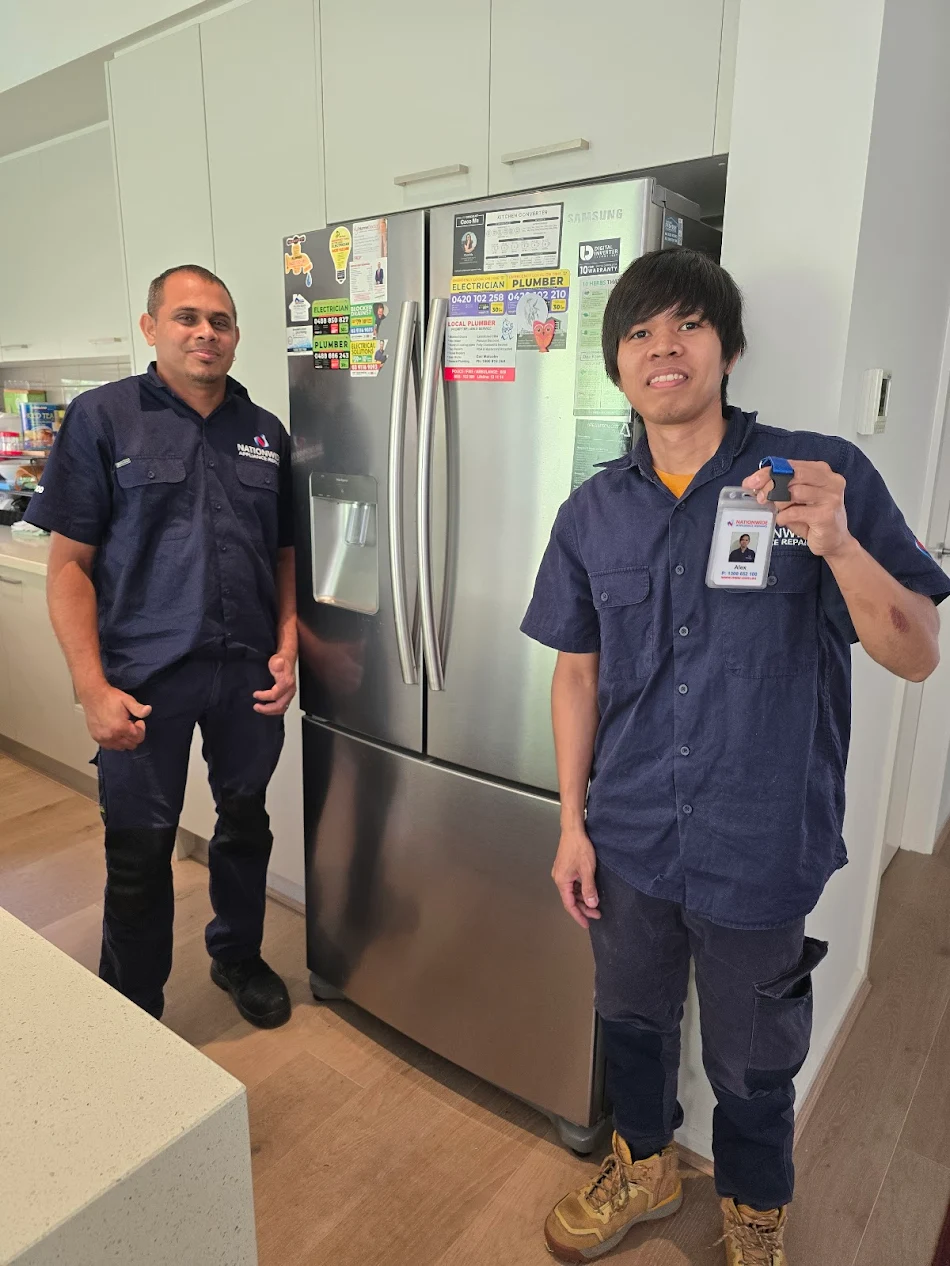
Here is something we see all the time. A tenant in a Sydney apartment calls us because their dishwasher died or the oven will not heat. And the first thing they ask is not “can you fix it?” It is “who is supposed to pay for this?” Fair question.
The answer depends on three things. What the appliance is. Who actually owns it. And whether the fault is in common property or inside the lot itself. Mess that up and you might write a cheque for something the strata or the landlord should have covered.
Honestly, this is one of the biggest sources of confusion we deal with at National Appliance Repairs. Our guys service apartments all over Sydney. And the calls that take the longest to sort out are rarely the difficult repairs. They are the jobs where nobody can agree who should authorise the work. So let us break it down in plain English. This is how responsibility works in NSW. No legal jargon. Just who pays for what.
The Three Layers of a Sydney Apartment
Before we talk appliances, you need to understand the three parties in most Sydney strata buildings:
- Tenant — keeps the place clean, does not break things, reports problems fast
- Landlord (lot owner) — maintains everything inside the apartment that is not common property
- Strata (owners corporation) — maintains and repairs common property. That is Section 106 of the Strata Schemes Management Act 2015.
Where is the line between “inside your lot” and “common property”? Not always clear. It depends on the strata plan, the by-laws, and sometimes whether the item was original to the building.
What the NSW Residential Tenancies Act 2010 Says
If you are renting in NSW, it’s crucial that you be familiar with the Residential Tenancies Act 2010 – this law governs a renter’s relationship with their landlord. Under that Act, your landlord is responsible for keeping the place in reasonable repair. That includes anything they provided for you to use.
Now, Section 62 is where it gets specific. It defines certain appliance failures as “urgent repairs”, which applies to:
- You smell gas or there is a gas leak
- A dangerous electrical fault
- Flooding or serious flood damage
- Storm or fire-related damage
- The gas, electricity, or water supply to the property stops working
- Any essential service breaks down–hot water, cooking, heating, cooling, or your washing machine
- Something that makes the property unsafe or insecure (broken locks, damaged windows, etc.)
- A burst water pipe or fitting
- An appliance or fixture that uses water breaks and starts wasting a lot of water
- Blocked or broken toilet
- Serious roof leak
Under Section 64, if the landlord does not respond to an urgent repair in a reasonable amount of time, you can arrange the repair yourself – that’s fully protected by law. Then you can claim back up to $1,000. You need to give the landlord written notice and the receipts. They have 14 days to reimburse you. If the repair costs more than $1,000, you can apply to NCAT–that is the NSW Civil and Administrative Tribunal–for an urgent hearing.
Who Pays for What: A Practical Guide
Built-in or landlord-supplied appliances
The basic rule is simple: if the appliance came with the apartment–a built-in dishwasher, the oven that was already there, a rangehood that is connected–the landlord is responsible for fixing it. The only exception is if you caused the damage yourself.
For example:
- Your oven stops heating: Landlord pays. That is an essential service for cooking. Under the law, that would probably be considered an urgent repair.
- The dishwasher breaks: Landlord pays. As long as it was part of the property when you moved in.
- The washing machine that came with the apartment dies: Landlord pays. The Act specifically says laundry services count as essential.
Tenant-owned appliances
Now, if you brought your own stuff–a freestanding washing machine you own, a portable air conditioner you bought, your fancy coffee machine–that is on you. You repair it or replace it. The landlord has no obligation to service equipment they did not provide.
Appliances damaged by the tenant
What if you broke it? Say you never cleaned the filter. Ever. It got clogged, the pump burned out, the appliance died. That is misuse or negligence. You are probably on the hook for that repair. The landlord is not required to cover damage caused by the tenant. But here is an important detail. The landlord still has an obligation to keep the repair cost reasonable. They cannot just run up a massive bill and hand it to you. They need to take reasonable steps to limit the cost.
Where Does Strata Come In?
The owners corporation only becomes relevant when the problem involves common property — the shared infrastructure and spaces that all owners hold collectively.
In Sydney apartment buildings, common property typically includes the building’s main water pipes and drains, electrical risers and shared wiring in walls, the roof, external walls and load-bearing structures.
Items inside your own apartment — your kitchen appliances, bathroom tapware, internal plumbing and wiring within the lot — are generally the lot owner’s responsibility, not the owners corporation’s.
However, there are grey areas. Pipework inside a wall shared between two lots, or electrical wiring that runs through a common wall, can fall under strata’s jurisdiction depending on the strata plan. When a repair involves a shared or embedded service, it’s worth requesting a copy of the strata plan from the owners corporation before arranging any work.
Responsibility at a Glance
| Scenario | Responsible Party |
|---|---|
| Built-in oven stops heating (provided with tenancy) | Landlord |
| Tenant’s own washing machine breaks down | Tenant |
| Dishwasher damage caused by tenant misuse | Tenant |
| Water pipe in shared wall causes damage | Owners corporation (likely) |
| Essential service failure (hot water, cooking, laundering) | Landlord — urgent repair |
| Appliance on common property (e.g. building laundry room) | Owners corporation |
Practical Tips for Tenants
- Always report faults in writing (email or text) to your property manager, and keep copies
- If the repair is urgent, state that clearly and reference the essential service affected
- Do not arrange your own repairs without first giving the landlord a reasonable opportunity to respond — unless you cannot reach them and the situation is genuinely urgent
- Keep all receipts if you do arrange an urgent repair yourself; you’ll need them for reimbursement
Practical Tips for Landlords and Owners
- Address reported faults promptly, particularly anything involving essential services
- Maintain a list of qualified tradespeople you can deploy quickly for urgent situations
- Check your strata by-laws — some buildings have specific provisions about who is responsible for certain items within lots
- If in doubt about whether something is common property, contact your strata manager before arranging or refusing repairs
FAQ
Is a broken washing machine considered an urgent repair in NSW?
Yes, it is. The Residential Tenancies Act specifically says a breakdown of an essential service for laundering counts as an urgent repair. So your landlord needs to respond quickly. If they do not, here is what you can do. Arrange the repair yourself. Keep the receipts. Give the landlord written notice. You can claim back up to $1,000.
Who pays if the building’s water pressure damages my dishwasher?
This one gets tricky. If the problem comes from common property–say, a pressure surge in the shared pipes–the owners corporation may be on the hook. Start with the strata committee. See if they will sort it out. If not, go to NSW Fair Trading for mediation. And if that does not work, NCAT is the final stop.
Can a Sydney landlord just refuse to repair a built-in oven?
They can try. But it is risky. A built-in oven is an essential service under the law. If the landlord refuses or drags their feet, NCAT can order them to do the repair. And the tenant can also claim compensation for any losses caused by the delay. So most landlords are smart enough not to play that game.
What if the building has a shared laundry and a machine breaks?
Shared laundry machines are common property. That is not your problem. The owners corporation is responsible for repairing and maintaining them. Section 106 of the Strata Schemes Management Act 2015 makes that clear.
Who do I contact first when an appliance breaks down in my Sydney apartment?
Start simple. If you are renting, call your property manager. If you suspect the problem is building-wide–like water pressure or electrical supply–call your strata manager. If the issue is urgent and involves an essential service, do two things. Report it in writing immediately. Then follow up by phone. Do not just leave a message and hope. For the repair itself, call a qualified appliance technician. The sooner someone looks at it, the sooner you know what you are dealing with.
Conclusion
Appliance repairs in Sydney apartments sit right at the intersection of tenancy law, strata legislation, and plain old common sense. Most of the time, it breaks down like this.
- The landlord handles built-in appliances and anything they supplied with the property.
- The tenant handles their own equipment–and any damage they caused themselves.
- The owners corporation handles faults in common property.
Now, when you actually need someone to come out and fix the thing–whether you are a tenant, a landlord, or a strata manager trying to arrange access for a building appliance–that is where we come in. National Appliance Repairs services all types of domestic and commercial appliances across Sydney. Call 1300 434 380 for a free consultation and a fast turnaround. No runaround. Just a technician who shows up and fixes it.
Call Us:
or leave a message using the form below