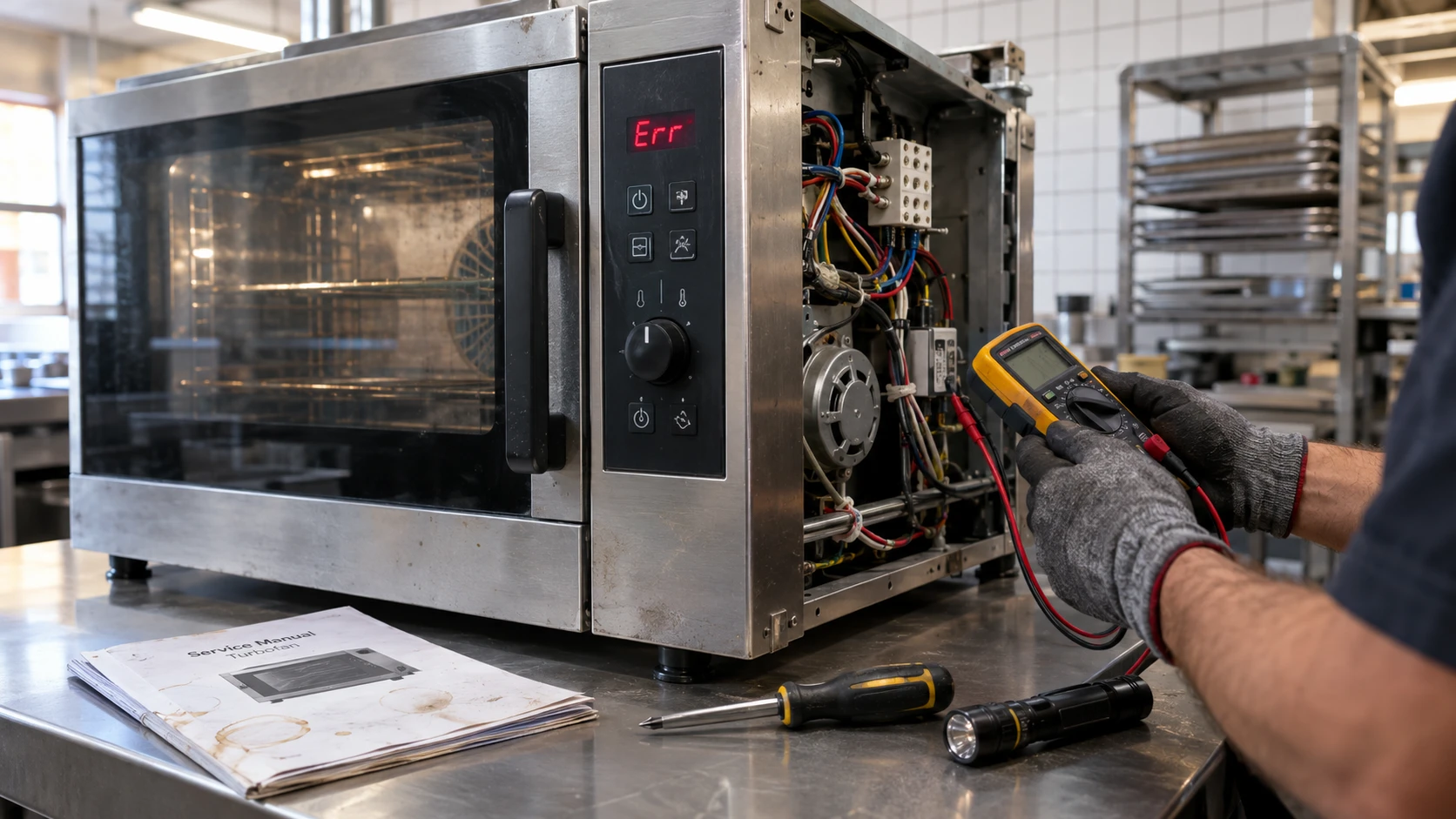


Westinghouse dishwashers communicate faults through a straightforward F-series code system – F1 through F9, each pointing to a specific subsystem. That means when something goes wrong, you’re not guessing. You know exactly which part of the machine to look at.
National Appliance Repairs services Westinghouse dishwashers across Australia, with same-day appointments available in Melbourne, Sydney, Brisbane, Perth, and Adelaide when a job needs more than a DIY fix.
How to Read a Westinghouse Dishwasher Error Code
The display will show a code between F1 and F9. Each maps directly to a subsystem – drainage, heating, water inlet, and so on – so there’s no ambiguity about where to start looking.
First, try switching the machine off at the power point, waiting 30 seconds, and turning it back on. Intermittent faults caused by power fluctuations or sensor glitches can clear this way. If the code reappears, the machine is telling you something genuinely needs attention – and this guide will walk you through each one.
Need This Fixed Today?
Our licensed technicians repair this exact fault every week – fast, reliable, and backed by a workmanship guarantee.
- Licensed & insured
- Workmanship guarantee
- No fix, no fee
Westinghouse Dishwasher Error Code Reference Table
| Code | Fault | Common Cause |
|---|---|---|
| F1 | Leak / Flood Switch Activated | Water in base pan – leak from hose, door seal, or internal component |
| F2 | Drain Fault | Blocked filter, clogged drain hose, or drain pump failure |
| F3 | Water Inlet Fault (Overfill) | Inlet solenoid failing to close properly |
| F4 | Flow Meter Fault | Faulty flow meter or failed inlet valve |
| F5 | Water Level Fault | Wash pump seized, foreign object in pump, or inlet valve fault |
| F6 | Temperature Sensor (NTC) Fault | Open circuit in NTC sensor wiring or failed NTC sensor |
| F7 | Over-Temperature Fault | Water exceeding 77°C – stuck heater relay or incorrect supply |
| F8 | Heating Fault | Heater not reaching temperature – element, NTC, or pressure sensor fault |
| F9 | Diverter Valve Fault | Foreign object in diverter or failed diverter valve motor |
F1 – Leak Error
The flood switch sits in the base pan precisely for moments like this – when water escapes the wash circuit and starts pooling where it shouldn’t. Tripping it locks the wash cycle immediately and keeps the drain pump running, which prevents further accumulation but won’t clear the fault on its own.
Start by pulling the machine slightly forward and checking for the leak source: door seals deteriorate over time and are a common culprit, as are loose hose clamps on internal connections and hairline cracks in the wash arm where pressure builds during a cycle. Repair the source, then dry the base pan out fully – a fan or placing the machine in a warm room speeds this up. The switch resets automatically once it stops detecting water.
F2 – Drain Fault
The machine wasn’t able to drain within the expected time window. Start by cleaning the filter at the bottom of the tub – food debris is the most common blockage. If the filter is clear, inspect the drain hose for kinks. The drain pump coil can be checked with a multimeter; it should read approximately 141 ohms. Running a hot empty cycle monthly reduces the chances of F2 occurring.
F3 – Water Inlet Fault (Continuous Fill)
Unlike a standard fill fault, F3 indicates the dishwasher is filling with water when it shouldn’t be. The inlet solenoid valve isn’t closing properly, causing water to keep entering the machine outside of the fill phase. This almost always requires the inlet valve to be replaced.
F4 – Flow Meter Fault
F4 tells you the PCB isn’t getting a signal from the flow meter during filling – but it doesn’t tell you why. The key diagnostic question is whether water is actually entering the machine when it should be.
Water entering but no flow meter signal: the meter itself has likely failed. No water entering at all: the inlet valve isn’t opening, and the flow meter has nothing to measure. Both are replaceable parts, but swapping one without confirming the cause first is an easy way to spend money on the wrong component.
F5 – Water Level Fault
The dishwasher reports no water during the wash phase. This can mean the inlet valve didn’t fill correctly, but it can also point to a seized wash pump. Westinghouse’s pump design on these models doesn’t include a motor tachometer, so the control board can’t tell whether the wash pump is running or jammed – a piece of glass can stop the impeller silently. Check whether the machine is filling by listening for the fill valve; if water is going in but F5 still appears, the wash pump needs inspection.
F6 – Temperature Sensor (NTC) Fault
The NTC temperature sensor circuit is open. Start by checking all connector plugs for loose connections. If connections are secure, measure the sensor resistance – at 25°C it should read approximately 47.2 kΩ (±800 Ω). A reading outside that range confirms the sensor needs replacing. If both the sensor and wiring check out, the main PCB is at fault.
F7 – Over-Temperature Fault
The water temperature has exceeded 77°C, or the NTC is reporting that it has. If the machine is correctly connected to cold supply and mains temperature is below 70°C, the sensor is likely giving a false high reading. If the heater relay on the PCB is stuck closed, it will keep heating regardless of actual temperature – a board-level fault.
F8 – Heating Fault
The water hasn’t reached target temperature within the allowed time. Work through likely causes in order: clean the filter (restricted circulation reduces heating), measure the heating element (27–31 Ω), measure the NTC sensor (47.2 kΩ at 25°C), and check the pressure sensor for correct operation. If all components are within range, replace the main PCB.
F9 – Diverter Valve Fault
The diverter valve, which directs water between the upper and lower spray arms, has a problem. Check for foreign objects first. If clear, measure motor resistance (should be around 10.5 kΩ ±5%). A reading outside that range means the valve needs replacing.
We do same-day repairs in Melbourne, Sydney, Brisbane, Adelaide and Perth.
- Melbourne (03) 9123 0548
- Sydney (02) 9621 5988
- Brisbane (07) 3166 9770
- Adelaide (08) 7123 4027
- Perth (08) 9470 4450
Frequently Asked Questions
What does F2 mean on a Westinghouse dishwasher?
F2 is a drain fault – the dishwasher couldn’t remove water within the required time. Clean the filter at the bottom of the tub first, then check the drain hose for kinks. If those are clear, the drain pump may need testing or replacement.
How do I reset a Westinghouse dishwasher error code?
Turn the dishwasher off at the power point, wait 30 seconds, and turn it back on. If the fault code returns, the underlying issue needs to be fixed.
What causes an F1 error on a Westinghouse dishwasher?
F1 means the flood switch in the base pan has been activated. This indicates a leak – common causes include a deteriorated door seal, a loose hose connection, or a cracked spray arm.
Can I fix a Westinghouse dishwasher error myself?
Codes like F2 and F5 can often be resolved by cleaning the filter and checking the drain hose. Codes involving the PCB, heating element, or inlet valve – F6, F7, F8, and some F4 and F9 cases – typically require a qualified technician.
How often should I clean my Westinghouse dishwasher filter?
At least once a week for daily use. Run an empty hot cycle with a cleaning tablet monthly to prevent F2 drain faults and maintain wash performance.
When to Book a Repair
Codes pointing to the PCB, heating element, NTC sensor, or inlet valve aren’t safely diagnosed or repaired without the right test equipment. If your Westinghouse dishwasher is showing a fault code that isn’t resolved after a filter clean and hose check, it’s time to bring in a professional.
National Appliance Repairs handles Westinghouse dishwasher repairs across all major Australian cities. Their technicians work with genuine parts and provide upfront pricing – call 1300 434 380 or book a time online.