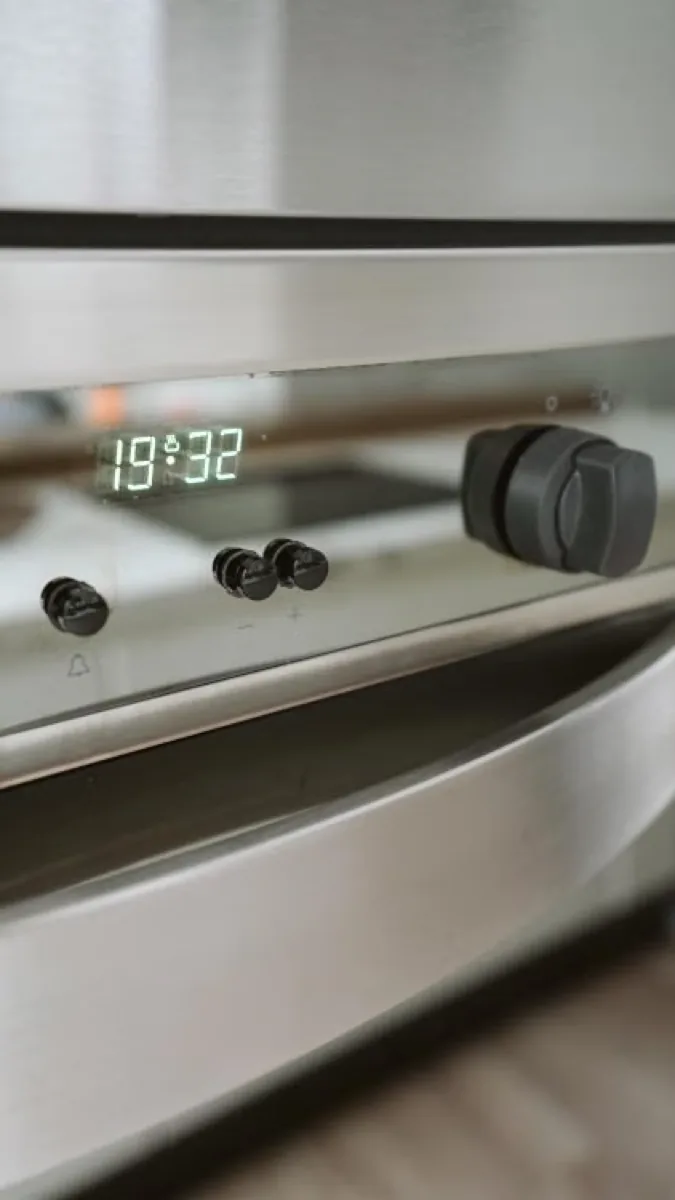
A code on a display screen looks like it's speaking a foreign language. It isn't. It's the appliance doing exactly what it was designed to do –telling you, as specifically as its sensors allow, which part of the system it thinks has failed.
The problem is that most people either ignore it and keep restarting the cycle, or panic and assume the worst. Neither gets the appliance fixed faster. What actually helps is understanding the handful of categories almost every fault code falls into, because that tells you in about thirty seconds whether you're looking at something you can check yourself or something that needs a technician.
This guide is built on how National Appliance Repairs technicians actually approach a code on site, before they've even opened the panel.
Why Codes Differ So Much Between Brands (and Even Between Models)
There's no universal standard here, which is the main reason searching "error code E3" turns up five different explanations depending on the appliance and brand. A code is defined by the manufacturer's own control board firmware, not by any shared industry convention. Some brands use a consistent numbering system across their entire range for years. Others change the code set with every new model generation. Older machines without a digital display often use flashing light patterns instead of a code at all, which is its own kind of code –just less obvious.
What that means practically: the fastest way to know what a code means is to check it against your specific appliance's model number, not just the brand. A model number is usually on a sticker inside the door, on the back panel, or occasionally in a manual sleeve. Keep it handy before you start searching –it's the difference between finding the right answer immediately and reading through several wrong ones first.
Same-day appointments available
Need This Fixed Today?
Our licensed technicians repair this exact fault every week – fast, reliable, and backed by a workmanship guarantee.
The Six Categories Almost Every Fault Code Falls Into
Regardless of brand, the overwhelming majority of error codes on washing machines, dishwashers, dryers, ovens, and fridges describe one of six underlying systems. Knowing which category you're looking at tells you most of what you need before you've even found the specific code definition.
1. Door or Lid Lock Faults
The appliance has detected the door isn't closed, isn't locked, or the lock mechanism itself has failed to engage or release. This is one of the most common code categories across washing machines and dishwashers specifically, because the lock is both a safety interlock and a moving mechanical part that wears with use.
Usually safe to check yourself: whether the door is genuinely latched, not just pushed to. Some machines won't register a full close if there's an obstruction –a stray sock, detergent residue –sitting in the door seal or latch area.
Usually needs a technician: if the door is confirmed properly closed and the fault persists, the lock mechanism or the sensor reporting its state has likely failed. Our guide on washing machines that won't turn on walks through this exact fault chain in more depth.
2. Water Fill or Supply Faults
The appliance expected water to reach a certain level within a certain time, and it didn't. Common on washing machines and dishwashers.
Usually safe to check yourself: is the tap actually open, is the inlet hose kinked, is there a blockage in the mesh filter where the hose connects. All three are genuinely common and all three are five-minute checks.
Usually needs a technician: a faulty water inlet valve, or a pressure sensor reporting an incorrect level.
3. Drainage Faults
The appliance expected water to drain out within a certain time and it didn't, or it detected water where there shouldn't be any.
Usually safe to check yourself: blocked filters, kinked drain hoses, or a drain hose that's slipped out of position. On dishwashers specifically, a blocked filter basket is by far the most common cause and takes two minutes to check.
Usually needs a technician: a failed drain pump, a blocked internal hose you can't reach, or –on washing machines –a fault in the drum-to-pump connection. See our guide on washing machines not draining for the full symptom breakdown.
4. Heating Faults
The appliance isn't reaching, or isn't maintaining, the temperature it's set to. Applies to ovens, dryers, dishwashers (wash and rinse temperature), and washing machines with heated cycles.
Usually safe to check yourself: very little, honestly –heating faults usually involve either mains-voltage electrical components or, in dryers and gas ovens, elements that reach dangerous temperatures during normal operation. The one exception is checking for an obvious external cause, like a blocked dryer vent restricting airflow enough to trip a safety cut-out –see our guide on dryers that won't heat for what that actually looks like.
Usually needs a technician: element failure, thermostat or thermistor faults, or –on gas appliances –an igniter or gas valve issue. Gas heating faults specifically should always go to a licensed technician.
5. Motor or Drive Faults
The motor isn't responding, isn't reaching expected speed, or the control board has lost communication with it.
Usually safe to check yourself: whether the drum or basket is physically obstructed and can turn freely by hand when the appliance is unplugged. An overloaded drum can sometimes trigger this category of fault without an actual component failure.
Usually needs a technician: anything beyond confirming the drum turns freely –motor diagnosis involves testing components under power and isn't a safe DIY step.
6. Communication or Control Board Faults
The appliance's internal components aren't communicating correctly with each other, or the control board itself is reporting a fault. These codes are often the least specific and the most likely to be misdiagnosed, because "the board can't talk to the motor" can mean the board has failed, the motor has failed, or the wiring between them has a loose connection –and those three have very different repair costs.
Usually safe to check yourself: unplugging the appliance for a few minutes can sometimes clear a transient fault, particularly after a power interruption. If the same code reappears once restarted, it's a genuine fault rather than a glitch.
Usually needs a technician, always: this is the category most likely to lead to an expensive, unnecessary part replacement if diagnosed by guesswork rather than proper testing. Swapping a control board when the actual fault was a corroded connector is a common and avoidable mistake.
Quick Reference: Code Category to Likely Action
Category
DIY-checkable?
Typical technician job if it's a real fault
Door / lid lock
Yes, partially
Lock mechanism or sensor replacement
Water fill / supply
Yes
Inlet valve replacement
Drainage
Yes, partially
Drain pump or hose replacement
Heating
Limited
Element, thermostat, or igniter replacement
Motor / drive
Limited
Motor, capacitor, or drive component diagnosis and repair
Communication / control board
No
Full diagnostic testing before any part is replaced
What a Technician Actually Does Differently From a Guess
The gap between "I looked up the code and it said replace the board" and a proper diagnosis is bigger than it sounds, and it's the difference between fixing the fault once and fixing it, then fixing it again a month later.
A proper diagnosis tests each component in the fault chain individually –checking resistance and continuity on the specific part the code points to, rather than assuming the code names the failed part directly. Plenty of codes describe a symptom rather than a cause. "Motor not responding" can be the motor, the motor controller, the wiring between them, or in some cases a completely unrelated fault tripping a safety cut-out that then reads as a motor fault. Only testing the actual chain tells you which –and it's exactly why two "motor fault" repairs can land at very different price points, as covered in our breakdown of what appliance repairs actually cost.
This is also why calling ahead with your code, brand, and model number genuinely speeds up a repair. It doesn't guarantee a diagnosis over the phone –that still needs hands-on testing in almost every case –but it lets a technician arrive with the parts that are actually likely to be needed, rather than making a second trip once the fault's confirmed on site.
Find Your Appliance
Codes are genuinely brand and model-specific, so the most useful next step is finding the guide for your actual appliance rather than a general list. Guides currently available, with more added regularly:
Can't find your specific brand and model listed yet, or the code isn't covered? Call 1300 434 380 with the code and your appliance's model number, and the team can advise over the phone whether it's worth checking yourself first or booking a technician.
Frequently Asked Questions
My appliance is showing a code with no manual and no model sticker I can find. What do I do?
Check inside the door frame, along the back or side panel, or under a lid or drawer first –that's where most manufacturers place it. If it genuinely can't be found, describe the appliance's brand, approximate age, and the code exactly as displayed when you call, and a technician can often narrow it down from there.
Can I just ignore a code if the appliance still seems to be working?
Depends on the category. A code from the communication or heating categories is worth acting on even if the appliance is still limping along, since both can indicate a fault that gets worse –or in the case of heating faults on dryers specifically, a genuine safety issue –the longer it runs. A door lock code that clears once you properly latch the door usually isn't a fault at all.
Why did the same code come back after I unplugged and restarted the appliance?
A code that clears temporarily after a restart but returns once the appliance runs again is a genuine fault, not a glitch. The restart clears the fault memory, not the underlying cause.
Does National Appliance Repairs carry parts for most fault codes on the van?
Yes, for the most common failure points across major brands –inlet valves, drain pumps, door locks, thermal fuses, and control boards among them –which is why most code-related callouts are resolved in a single visit rather than requiring a second trip once the part's identified.
Is it worth trying to fix a control board fault myself if I'm reasonably handy?
Not recommended. Control board and communication faults are exactly the category where a wrong guess is most expensive, and testing them safely requires equipment and knowledge beyond typical home troubleshooting.
The Bottom Line
An error code isn't a puzzle designed to confuse you –it's the most specific information the appliance is capable of giving about what's gone wrong, filtered through whatever sensors it has. Knowing the six categories above tells you almost immediately whether it's worth five minutes of your own checking or a call to a technician, and knowing your exact model number before you search saves you from reading through code definitions that don't apply to your machine at all.
National Appliance Repairs diagnoses and repairs fault codes across all major domestic and commercial brands, with genuine parts carried across the fleet for same-visit repairs where possible. Servicing Melbourne, Sydney, Brisbane, Adelaide, and Perth. Call 1300 434 380.
There's a piece of folklore that's cost a lot of people a lot of waiting: the idea that calling anyone other than the manufacturer will void your warranty.
It isn't true, at least not automatically, and believing it means people sit on a dead dishwasher for three weeks waiting for a manufacturer booking when someone qualified could have looked at it the next day.
The technicians at National Appliance Repairs hear this question on nearly every call, usually from someone who's already decided to wait it out before asking.
Two Different Things, Often Confused for One
An authorised service agent is a business the manufacturer has approved to carry out repairs under its brand, usually with access to the manufacturer's specific parts catalogue, technical bulletins, and training on that brand's quirks. It's a commercial arrangement between the repairer and the manufacturer – not a certification of superior skill, just a contract.
An independent repairer works across brands without that formal agreement. Plenty are just as qualified, often more broadly experienced because they see failure patterns across a dozen manufacturers rather than one, and many still use genuine or manufacturer-recommended parts. The lack of a badge on the van doesn't mean a lack of competence.
National Appliance Repairs sits in both categories at once – authorised for a number of major brands, and independent for everything else, including brands with no formal Australian agent network at all.
So Does Independent Repair Void the Warranty?
Short answer: no, not just for being independent.
Under Australian Consumer Law, a manufacturer can't void your statutory warranty simply because you used a repairer of your own choosing (ACCC). What can cause a problem is if a repair is done badly, uses incompatible parts, or causes damage that wasn't there before – the same risk that exists with a bad repair from anyone, authorised or not.
Where it gets more specific is with an active manufacturer warranty claim. If your appliance is genuinely still within its original warranty period and you want that specific repair covered under it, the manufacturer will usually want it actioned through their own authorised network – that's the condition attached to the free repair, not a blanket rule about who's allowed to touch the appliance at all. Get it, fixed independently while under warranty and paying out of pocket, and you haven't broken anything legally, but you have paid for something that might otherwise have been free.
Same-day appointments available
Need This Fixed Today?
Our licensed technicians repair this exact fault every week – fast, reliable, and backed by a workmanship guarantee.
Go through the manufacturer / authorised agent when:
The appliance is genuinely still within its manufacturer warranty period and the fault is one that warranty covers
The fault involves a proprietary component only the brand's network stocks, and lead time isn't a pressing issue
You specifically want the repair history to sit in the manufacturer's own system
An independent repairer is usually the better call when:
The manufacturer warranty has expired, or the fault isn't a warranty-covered issue
You want faster access – same-day or next-day, rather than waiting on a manufacturer's booking queue
Your household runs a mix of brands and you'd rather one technician who knows all of them than juggling different manufacturer contacts for the fridge, the washer, and the dishwasher
It's a commercial breakdown and downtime is costing more per hour than the convenience of staying "in network"
What "Genuine Parts" Actually Guarantees – and What It Doesn't
Worth being straight about this one, because it gets oversold both ways.
A genuine or manufacturer-recommended part means it's built to the appliance's original specification – correct tolerances, correct materials, designed to work with the rest of the system. That matters for safety-critical components especially: gas valves, heating elements, motor controllers.
What it doesn't guarantee is that the diagnosis was right. A genuine control board fitted when the actual fault was a loose connector is an expensive, correctly-sourced, completely unnecessary repair. The part quality and the diagnostic quality are two separate questions, and the second one depends entirely on the technician doing the work, not on whether they're wearing a brand's badge.
Questions Worth Asking Before You Book Either Way
Is the part they're fitting genuine or manufacturer-recommended, and can they explain why that part specifically?
What warranty covers the repair itself – separate from the appliance's own remaining warranty?
Have they actually diagnosed the fault, or are they quoting a replacement part based on the symptom alone?
For commercial equipment, do they carry experience with that specific class of equipment, not just the brand?
Frequently Asked Questions
Will using an independent repairer void my manufacturer warranty?
Not automatically, and not just for the fact of it being independent. It becomes relevant mainly when you want a specific repair covered under an active manufacturer warranty – that claim usually needs to go through the authorised network. Outside of an active warranty claim, your independent Australian Consumer Law rights aren't affected either way.
Is an authorised agent always more expensive?
Not necessarily, and it varies by brand and by job. What authorised status changes is parts access and brand-specific training, not automatically the price – check our pricing page for current call-out and labour rates rather than assuming.
What if my appliance's brand has no authorised agent in Australia at all?
More common than people expect, particularly with imported or discontinued brands. An experienced independent repairer is often the only realistic option, and can usually still source or fabricate parts through general suppliers.
Can an independent repairer work on gas appliances?
Yes, provided the technician holds the correct gas licensing – that's a legal requirement independent of authorised/independent status, and it's worth confirming for any gas cooktop or stove repair regardless of who you call. Our guide on gas cooktops that won't spark covers where that safety line actually sits.
Does National Appliance Repairs work on brands it isn't authorised for?
Yes. NAR holds authorised service agent status for a number of major brands and also carries out independent repairs across other domestic and commercial brands, with genuine or manufacturer-recommended parts stocked across the fleet.
The Bottom Line
The badge on the van tells you about a commercial relationship with a manufacturer, not about who's more qualified to find the fault. If the appliance is genuinely still under active manufacturer warranty and the fault is covered, going through the authorised network usually makes financial sense. Everywhere else – which is most repairs, most of the time – the deciding factors are speed, diagnostic quality, and whether the parts fitted are the right ones, not which name is on the technician's shirt.
National Appliance Repairs services major domestic and commercial appliance brands across Melbourne, Sydney, Brisbane, Adelaide, and Perth, as both an authorised agent and an independent repairer.
Call 1300 434 380 to check coverage for your appliance.
The fridge specs say 5°C. The logbook says 4°C, checked at open. Lunch service hits, the door's opening every ninety seconds for four hours straight, and by 1:30 the display cabinet is sitting at 7°C with nobody watching.
That's not a paperwork problem. It's an equipment problem wearing a paperwork disguise, and it's the single most common way a compliant-looking kitchen ends up with a genuine food safety issue.
It's also one of the more common callouts National Appliance Repairs gets from commercial kitchens – usually from an operator who assumed the equipment was fine because the morning reading always looked fine.
What the Standard Actually Requires
Under the Australia New Zealand Food Standards Code, Standard 3.2.2 sets the baseline: potentially hazardous food has to be kept at or below 5°C, or at or above 60°C. Below that, bacteria that cause food poisoning grow slowly enough to matter. Between 5°C and 60°C – the "temperature danger zone" – they multiply fast. Our fridge storage guide covers how this plays out on the domestic side, if you're weighing up a home unit against the same standard.
Standard 3.2.2A layers a record-keeping requirement on top for category one food businesses: cafés, restaurants, caterers, and similar operations handling unpackaged, ready-to-eat, potentially hazardous food. It requires businesses to be able to show, not just claim, that temperature control during storage is actually happening – typically daily temperature logs, kept for at least three months and ready to produce during an inspection.
None of that is new information to anyone running a commercial kitchen. What trips people up is the gap between what the fridge is rated to do and what it actually does under real service pressure.
Same-day appointments available
Need This Fixed Today?
Our licensed technicians repair this exact fault every week – fast, reliable, and backed by a workmanship guarantee.
A display or prep fridge that's spec'd correctly and was reading fine on Monday morning can still fail an inspector's spot check on Friday afternoon. The equipment isn't lying in the log – the log is just being taken at the wrong moment.
Door-opening frequency during service
Every open door lets warm kitchen air in and cold air spill out. A display cabinet with a door opening every couple of minutes through a lunch rush is under a completely different thermal load than the same cabinet overnight, and a single morning reading doesn't capture that.
Condenser fouling
Dust, grease, and kitchen airborne fat build up on the condenser coil over months. Airflow drops, heat rejection drops with it, and the compressor runs longer to hit the same setpoint – right up until it can't quite get there anymore. This is gradual, which is exactly why it's easy to miss between service intervals.
Overstocking blocking airflow
Commercial units rely on air circulating around stored product, not just cold air sitting in a box. Pack shelves solid against the back wall or in front of the evaporator fan, and the unit can be running perfectly while product at the front of the shelf sits several degrees warmer than the display reads.
Door seal degradation
A seal that's lost its compression – cracked, compressed flat, or with a torn corner – leaks cold air continuously, not just when the door's open. It's often invisible unless someone actually checks it, because the fridge still "closes."
Defrost cycle timing
Every fridge cycles into defrost periodically, and temperature climbs briefly during that cycle by design. A spot check that happens to land mid-defrost can look like a fault when it's actually normal operation – but if defrost cycles are running too frequently or lasting too long, that's a genuine fault, usually pointing to a sensor or timer issue.
Ambient kitchen temperature
A unit installed next to a griddle, an oven, or in a kitchen without adequate ventilation is fighting a much higher ambient temperature than its rated operating range assumes. The compressor works harder for the same result, and in extreme cases can't achieve the setpoint at all during peak heat.
The Question That Actually Matters: Broken, or Undersized?
This is the distinction most equipment retailers won't raise, because the answer sometimes points away from a sale.
A fridge that's drifting because of a genuine fault – a failing compressor, a degraded seal, a fouled condenser, a sensor reading incorrectly – is a repair job. Fix the fault and the unit holds temperature the way it's rated to.
A fridge that's drifting because it's simply too small for the door-opening frequency and stock volume it's being asked to handle is a different problem entirely, and no repair fixes it. A single glass-door display unit rated for a suburban café doesn't necessarily have the recovery capacity for a CBD lunch rush doing four times the covers. In that situation the honest advice is that the equipment needs to change, not that it needs fixing – and a technician who tells you that up front, even when it costs them the smaller job, is the one worth having on a maintenance contract.
Both scenarios produce the identical symptom on a temperature log: numbers drifting above 5°C during peak periods. Telling them apart takes someone who can watch the unit under real load, not just read a single reading off the display.
Quick Reference: Symptom to Likely Cause
What you're seeing
Most likely cause
Fault or capacity issue?
Fine at open, drifts up through service, recovers overnight
Door-opening frequency exceeding unit's recovery rate
Often capacity – reassess if this happens every service
Gradual upward drift over weeks or months
Condenser fouling
Fault – clean and reassess
Front-of-shelf product reads warmer than the display
Overstocking blocking airflow
Not a fault – restock pattern
Consistently 2-3°C above setpoint at all times
Failing seal, low refrigerant, or failing compressor
Fault – needs diagnosis
Temperature spikes at regular intervals, then recovers
Normal defrost cycling
Not a fault, unless spikes exceed a few degrees or last unusually long
Never reaches setpoint even overnight with no door activity
Undersized for ambient conditions, or a genuine major fault
Needs on-site assessment to distinguish
What to Do Before an Inspection, Not During One
Check and log temperatures at more than one point in the service day, not just at opening – a lunch-service reading tells an inspector (and tells you) far more than an 8am reading alone
Physically inspect door seals for compression loss or tears, not just a visual glance
Confirm the condenser coil has been cleaned within the manufacturer's recommended interval – this is a five-minute check that prevents the most common cause of drift
Check actual stock placement against the manufacturer's loading guidelines, particularly around evaporator fans
If a unit runs hot during every peak service without exception, treat that as a capacity conversation with a technician rather than something to keep logging and hoping improves
Frequently Asked Questions
What temperature should a commercial fridge actually run at?
Standard 3.2.2 requires potentially hazardous food to be kept at or below 5°C. Most commercial units are set to run at 1-4°C internally to build in a buffer for door-opening and service load, so the food itself stays under the 5°C threshold even during busy periods.
How often do I need to record temperatures under Standard 3.2.2A?
Category one businesses need to be able to demonstrate temperature control is being managed, with records kept for at least three months. Best practice – and the more useful habit regardless of the strict minimum – is checking and logging more than once a day, including during service, not just at open.
My fridge reads fine every morning but I suspect it's drifting during lunch. Is that worth investigating?
Yes, and it's a very common pattern. A morning-only reading misses exactly the period of highest thermal load. A mid-service check, or a short period of continuous logging, will usually confirm it one way or the other.
Can a fridge be food-safety compliant on paper but still fail in practice?
Yes – this is the core issue this article addresses. A logbook showing acceptable readings taken at a single point each day doesn't capture what happens during peak service, and a unit can be technically rated correctly while still being undersized for how it's actually being used.
Is this something National Appliance Repairs can assess as part of a maintenance contract?
Yes. Planned preventative maintenance for commercial B2B clients includes condenser cleaning, seal inspection, and performance checks under load, which is exactly the kind of assessment that catches drift before it becomes an inspection finding – see our maintenance checklist for café and restaurant kitchens for how this fits into a broader kitchen schedule, or get in touch to discuss a contract for your kitchen.
The Bottom Line
A fridge that's compliant on the spec sheet and compliant at 8am can still be the reason a kitchen fails an inspection at 1:30pm. Most of the causes – condenser fouling, seal degradation, overstocking, ambient heat – are preventable with routine maintenance rather than an expensive fix once they've already caused a problem. The harder judgement call, undersized versus faulty, is exactly why this is worth a technician's assessment rather than a guess.
National Appliance Repairs services commercial fridges, cool rooms, and blast chillers across Melbourne, Sydney, Brisbane, Adelaide, and Perth, including planned preventative maintenance for B2B clients.
Call 1300 434 380 to discuss a maintenance schedule for your kitchen.
Most kitchen maintenance schedules get built the wrong way round. Someone drafts a checklist organised by day – Monday: clean fryers, Tuesday: check seals – and six months later nobody's following it, because a kitchen doesn't run on a calendar. It runs on covers, and different equipment fails on different clocks depending on how hard it's worked.
This one's organised by equipment instead. Find your gear, see what your staff can handle and what needs a technician, and build your actual calendar around that rather than the other way round.
It's built on what the technicians at National Appliance Repairs actually see on commercial callouts – the equipment that fails, and how far in advance the warning signs usually show up.
Why This Matters More Than It Looks Like It Does
A breakdown during service doesn't just cost the price of the repair. It costs the covers you can't run, the reputation hit from a shortened menu on a busy night, and – depending on what's failed – sometimes a food safety incident on top of the equipment failure. Most of what causes a mid-service breakdown was visible days or weeks earlier, to someone who was looking for it.
Preventative maintenance splits into two tiers, and getting that split right is most of what makes a schedule actually work rather than just existing on paper:
Staff-level tasks: Cleaning, visual inspection, basic upkeep. No tools beyond what's already in the kitchen, no risk if done correctly, and genuinely effective at catching problems early.
Technician-level tasks: Anything involving refrigerant, gas lines, electrical components, or internal mechanical parts. This isn't staff being under-trusted; it's that getting these wrong risks safety, voids compliance documentation, and often costs more to fix after a bad DIY attempt than the original fault would have.
Below, equipment by equipment.
Same-day appointments available
Need This Fixed Today?
Our licensed technicians repair this exact fault every week – fast, reliable, and backed by a workmanship guarantee.
The most expensive single piece of equipment in most commercial kitchens, and the one where neglect shows up fastest in both energy bills and cook quality.
Staff can handle:
Daily boiler descale cycle if the unit has an automated one, or manual descale on the manufacturer's schedule – this is the single highest-impact task on this entire list for combi ovens specifically, because scale buildup in the steam generator is the leading cause of uneven cooking and premature boiler failure
Wiping door seals and gaskets clean of food debris after each service
Checking and clearing the drain at the end of each day
Visual check of the door seal for cracking or compression loss weekly
Needs a technician:
Boiler element inspection and descale beyond the automated cycle, typically quarterly depending on water hardness
Door seal replacement
Sensor calibration if temperature readings drift from actual cooking results
Steam generator servicing
Watch for: uneven cooking results across a batch, longer-than-normal preheat times, or steam not clearing properly from the cavity. All three usually trace back to scale buildup before they trace back to anything electrical.
High failure rate, mostly preventable, and one of the few pieces of equipment where a five-minute daily task genuinely extends service life by years. Covers both gas fryers and deep fryers – the maintenance logic below applies to either.
Staff can handle:
Daily oil filtering, ideally at the end of every service rather than every few days
Wiping down exterior surfaces and control panels
Checking oil level against the fill line before each service
Visual check of the basket lift mechanism, if fitted, for smooth operation
Needs a technician:
Thermostat calibration if oil temperature doesn't match the display reading – test with a calibrated thermometer, don't assume
Element inspection and replacement (electric fryers)
Burner and pilot inspection (gas fryers) – gas work always needs a licensed technician
Full boil-out and deep clean, typically monthly or per manufacturer schedule
Watch for: oil breaking down faster than usual, longer recovery times between baskets, or uneven heating across the vat. Oil that's degrading rapidly is sometimes an oil quality issue, but persistent early breakdown often points to a thermostat running hot.
Commercial Dishwashers, Warewashers and Glasswashers
The unglamorous workhorse, and the one most likely to be run into the ground because it "still washes" right up until it doesn't.
Staff can handle:
Cleaning wash arms and spray jets of debris daily – blocked jets are the single most common cause of poor wash results, and it's a two-minute daily check
Emptying and cleaning filters/strainers at the end of each service
Checking detergent and rinse aid levels and dosing
Descaling per manufacturer schedule if operating in a hard water area (see the separate guide on hard water and appliance wear for how much this varies by region)
Needs a technician:
Rinse temperature verification – Standard 3.2.2A record-keeping typically requires this to be checked and logged, and it needs to genuinely reach the rinse temperature specified for the machine, not just "feel hot"
Wash pump inspection
Door seal and gasket replacement
Descaling of internal heating elements and boiler components
Watch for: cloudy glassware or a film on dishes even straight out of the machine – very often a rinse temperature or dosing issue rather than a mechanical fault, and worth checking the simple causes before booking a callout.
Ice Makers and Ice Machines
Easy to forget because they run quietly in the background, which is exactly why they're often the most neglected piece of equipment in a kitchen.
Staff can handle:
Wiping the exterior and bin daily
Checking ice production visually against normal output
Keeping the area around the unit clear for airflow – ice machines are more airflow-sensitive than most people expect
Needs a technician:
Condenser coil cleaning, typically quarterly – a fouled condenser is the leading cause of reduced ice production and is often mistaken for a refrigerant fault
Water filter replacement per manufacturer schedule
Internal descale – mineral buildup on the evaporator plate directly reduces ice yield and is a common, preventable cause of "the machine's just not keeping up anymore"
Full sanitisation per manufacturer's schedule, which matters for compliance as much as performance
Watch for: ice output dropping gradually rather than suddenly, or ice coming out cloudy or with an odd taste – both usually point to scale or filter issues rather than a mechanical failure.
Blast Chillers and Freezers
Compliance-critical equipment, since blast chilling performance directly ties into the safe cooling requirements under Standard 3.2.2.
Staff can handle:
Daily visual check of door seals
Keeping the unit's airflow paths clear of overstocking
Logging cooling times against the required standard (60°C to 21°C within two hours, 21°C to 5°C within a further four)
Needs a technician:
Refrigerant system checks
Condenser cleaning, typically quarterly
Sensor and probe calibration
Door seal replacement
Watch for: cooling times gradually extending beyond the compliance window. This is a genuine compliance issue, not just a performance one, and it's worth acting on the first time it happens rather than after several near-misses.
The system most likely to be treated as invisible infrastructure right up until it becomes a fire risk or a council issue.
Staff can handle:
Cleaning or replacing grease filters per manufacturer schedule, typically weekly to fortnightly depending on volume
Wiping down accessible external surfaces
Needs a technician (or a licensed exhaust cleaning contractor):
Ductwork cleaning – grease accumulation inside ducting is a genuine fire hazard and is typically a regulatory requirement on a set schedule depending on your council and insurance requirements
Fan and motor inspection
Belt and bearing checks on ducted systems
Watch for: smoke or steam not clearing properly from the kitchen, unusual fan noise, or a burning smell – the last one is not a "monitor it" situation, it's a "stop and call someone today" situation.
Different failure pattern to the rest of this list – mineral buildup rather than mechanical wear is usually the dominant issue.
Staff can handle:
Backflushing daily per manufacturer procedure
Wiping steam wands after every use
Checking water filter status
Needs a technician:
Descaling the boiler and internal components on a schedule set by local water hardness – this varies significantly by city, and a fixed national schedule genuinely undersells how much more frequently this is needed in hard water regions
Group head servicing
Pressure and temperature calibration
Watch for: inconsistent extraction, longer heat-up times, or steam pressure dropping – all common early indicators of scale buildup well before a full failure.
Relevant for laundromats, hotels, and any hospitality venue running in-house linen – covering both commercial washing machines and commercial dryers.
Staff can handle:
Cleaning lint filters after every load, without exception – this is the single highest-value habit on this entire page for fire prevention, not just performance
Wiping down drums and door seals between loads
Checking detergent dosing systems are calibrated correctly
Needs a technician:
Vent and ducting inspection for dryers, checking for restriction along the full run, not just at the filter
Drum bearing and seal inspection
Motor and drive belt checks
Watch for: drying times gradually increasing – almost always a vent restriction issue, and worth acting on before it becomes a fire risk rather than after.
Building the Calendar Once You Know the Equipment
With the equipment-level detail above sorted, the calendar mostly writes itself:
Daily (staff): filter cleaning across fryers, dishwashers, and rangehoods; wash arm and jet checks; wiping and visual inspections across the board; temperature logging where required.
Weekly (staff, with occasional technician input): deeper cleaning tasks, grease filter changes, descale cycles where the schedule calls for weekly rather than daily.
Monthly to quarterly (technician): condenser cleaning across all refrigeration equipment, calibration checks, and the deeper servicing tasks listed under each equipment type above.
Annually or per manufacturer schedule (technician, sometimes with a licensed specialist): ductwork cleaning, full descale of boiler systems, and anything involving gas or refrigerant work that has its own regulatory servicing interval.
A Note on Planned Preventative Maintenance Contracts
Everything above can be run as a staff-managed checklist with periodic technician callouts booked as needed. The alternative – a formal PPM contract – puts the technician-level tasks on a fixed schedule rather than a reactive one, which matters most for equipment where failure is expensive, urgent, or compliance-relevant: refrigeration, gas equipment, and anything tied directly to a food safety standard.
For multi-site operators or venues where downtime has a direct revenue cost, a PPM contract also usually means priority scheduling if something does fail between visits – worth weighing against the cost of an ad-hoc callout during a Friday dinner service.
Frequently Asked Questions
How often should commercial kitchen equipment actually be serviced by a technician?
It varies significantly by equipment type and usage volume – a CBD venue running double the covers of a suburban café will need more frequent servicing on the same equipment. As a general starting point, refrigeration and ice-making equipment benefit from quarterly technician attention, while gas equipment and combi ovens often follow the manufacturer's own schedule more closely due to safety and warranty requirements.
What's the most commonly skipped maintenance task in commercial kitchens?
Condenser coil cleaning, across almost every category of refrigeration equipment. It's not visible during normal operation, it doesn't cause an immediate symptom, and by the time performance drops enough to notice, the compressor has often already been working overtime for months.
Can staff really be trusted with daily maintenance tasks, or does it need to be a technician?
The tasks listed as staff-level in this guide are genuinely safe and effective when done consistently – the value comes from consistency, not complexity. The risk isn't staff capability, it's a checklist that exists on paper but isn't actually followed under service pressure.
Does a maintenance contract actually reduce breakdowns, or is it just a cost?
For refrigeration and gas equipment specifically, yes – most of the failure modes covered in the equipment sections above (condenser fouling, scale buildup, seal degradation) are gradual and preventable, which is exactly the kind of fault a scheduled visit catches before it becomes an emergency callout.
Who do I call if a piece of equipment needs technician-level attention?
National Appliance Repairs services commercial kitchen and laundry equipment across Melbourne, Sydney, Brisbane, Adelaide, and Perth, including planned preventative maintenance programs for B2B clients with discounted rates for ongoing service.
The Bottom Line
The equipment that breaks down mid-service is almost never the equipment that failed without warning. It's the equipment where the warning signs – a slowly fouling condenser, a scale-choked boiler, a filter nobody's cleaned in three weeks – were sitting there the whole time. A schedule built around what each machine actually needs, rather than a generic calendar, is what turns "we'll get to it" into something that actually happens.
An oven that suddenly refuses to cooperate mid-recipe is stressful enough without a cryptic code flashing at you from the display. Bosch and Samsung both build fault detection into their ovens, and in both cases a code showing up doesn't necessarily mean something expensive has broken. Quite often it's a simple reset, or a control panel that just needs a wipe down.
Here's what we see most often with each brand, based on their own official troubleshooting guidance, and how to tell a quick fix from something that needs a technician.
Same-day appointments available
Need This Fixed Today?
Our licensed technicians repair this exact fault every week – fast, reliable, and backed by a workmanship guarantee.
Bosch's own guidance is refreshingly simple. If you see an "E" followed by a number on the display, press any key to stop the beeping, then reset the oven by switching it off at the breaker, waiting around 30 seconds to five minutes depending on the model, and turning it back on. In most cases that clears the fault and the oven returns to normal.
If the code comes back after a reset, that's the signal it's a genuine fault rather than a temporary glitch.
E011 is one of the most common Bosch oven codes, and it's specifically a control panel issue. According to Bosch's own troubleshooting steps, the fix is to clean the control panel and wipe it completely dry, then power off at the breaker for around five minutes before restoring power. Moisture, grease, or food residue on the touch controls is the usual trigger, so a quick wipe-down after cooking goes a long way toward preventing it from showing up again.
Beyond E011, Bosch's broader guidance is consistent across the range: note the exact code, reset the oven, and if it returns, contact Bosch support or a technician rather than continuing to reset it repeatedly. Different codes point to different internal systems, from the temperature sensor to the door lock on self-cleaning models, but Bosch doesn't publish a single universal table that applies to every oven generation. Your model's manual, or a technician who works on Bosch ovens regularly, is the most reliable way to pin down exactly what a specific code beyond E011 means for your unit.
C-d0 appears when a button has been pressed and held for an extended period, and it usually means moisture or residue is sitting on or around the buttons. Clean them thoroughly, make sure they're dry, then turn the oven off and try again.
C-20, C-21, and C-22 all relate to sensor malfunctions. These show up when the oven's temperature sensor reports a reading outside expected limits, which can mean an actual sensor fault or the oven genuinely running hotter than it should. Turn the oven off and restart it first. If the code returns, switch off all power for at least 30 seconds before reconnecting. If it comes back a second time, this isn't one to keep resetting: an oven that's actually overheating is a safety issue, and it's worth having a technician check the sensor and control board rather than trying it again.
C-d1 means a door lock malfunction, most often seen on models with a self-clean function. Same process applies: turn off and restart, and if it persists, cut power for 30 seconds before reconnecting.
dC or dE shows up specifically on dual cook models, and it means the internal divider is in the wrong position for the mode you've selected. It needs to be in place for dual cook mode and removed for single cook mode. This one's genuinely just a setup issue rather than a fault.
C-F0, C-F1, and C-F2 all point to a communication problem between the oven's main and secondary control boards. These are the ones most likely to need a technician, since they involve the internal electronics rather than something user-serviceable.
Quick Reference Table
Code
Brand
What It Usually Means
E011
Bosch
Control panel issue, often moisture or residue on the buttons
C-d0
Samsung
Button held too long, or moisture on the controls
C-20, C-21, C-22
Samsung
Temperature sensor malfunction, or genuine overheating
C-d1
Samsung
Door lock malfunction
dC, dE
Samsung
Divider not in the correct position for the selected cook mode
C-F0, C-F1, C-F2
Samsung
Communication fault between control boards
What You Can Check Yourself
Clean the control panel thoroughly and make sure it's completely dry before using the oven again
Reset the oven at the breaker rather than just switching it off at the appliance, since a full power cycle clears more faults than the display's own reset
Note down the exact code before calling anyone. It saves time and helps a technician diagnose it faster over the phone
For Samsung dual cook models, double check the divider is correctly fitted or removed for the mode you're using
If a code clears after a reset and doesn't return, that's usually the end of it
When It's Worth Calling a Technician
A code that clears once and stays gone was almost certainly a temporary glitch. A code that keeps coming back, especially a temperature or overheating code, is a different matter, and it's not something to keep resetting and hoping it goes away. Repeated overheating puts real strain on the oven's internal components and, in the worst case, is a genuine safety risk.
National Appliance Repairs technicians work on both Bosch and Samsung ovens regularly, and carry genuine sensors, control boards, and door lock components for oven and cooktop repairs across both ranges. Most oven faults are diagnosed and fixed in a single visit, backed by a 12-month parts warranty and 3-month labour warranty. If your Bosch dishwasher is also giving you trouble, our guide on common faults with Smeg and Bosch dishwashers covers that separately.
Frequently Asked Questions
What does the E011 code mean on a Bosch oven?
It's a control panel fault, usually caused by moisture, grease, or food residue on the touch controls. Cleaning the panel thoroughly, drying it completely, and resetting at the breaker resolves it in most cases.
What does C-21 mean on a Samsung oven?
It's a temperature sensor malfunction, which can mean the sensor itself has failed or the oven is genuinely running hotter than the set temperature. Restart the oven first, and if the code returns, it's worth having a technician check it rather than continuing to reset it.
Why does my Bosch oven show a different code than the ones listed here?
Bosch doesn't publish one universal code table that applies across every oven generation, and the meaning of a given number can vary by model. Your owner's manual, or a technician familiar with your specific range, is the most accurate way to confirm what it means.
Is it safe to keep using my oven if a code keeps coming back?
Not if it's a temperature or sensor-related code. An oven that's actually overheating is a genuine safety concern, and repeated resets don't fix the underlying fault, they just delay dealing with it.
How much does it cost to fix an oven showing an error code?
It depends entirely on the fault. A control panel clean costs nothing. A sensor, control board, or door lock replacement is a bigger job. Call 1300 434 380 for a free phone consultation and ballpark pricing before booking.
The Bottom Line
Most Bosch and Samsung oven codes clear with a proper clean and a full power reset. The ones worth taking seriously are the ones that keep coming back, particularly anything related to temperature or the sensor. Still showing a code after trying the basics?