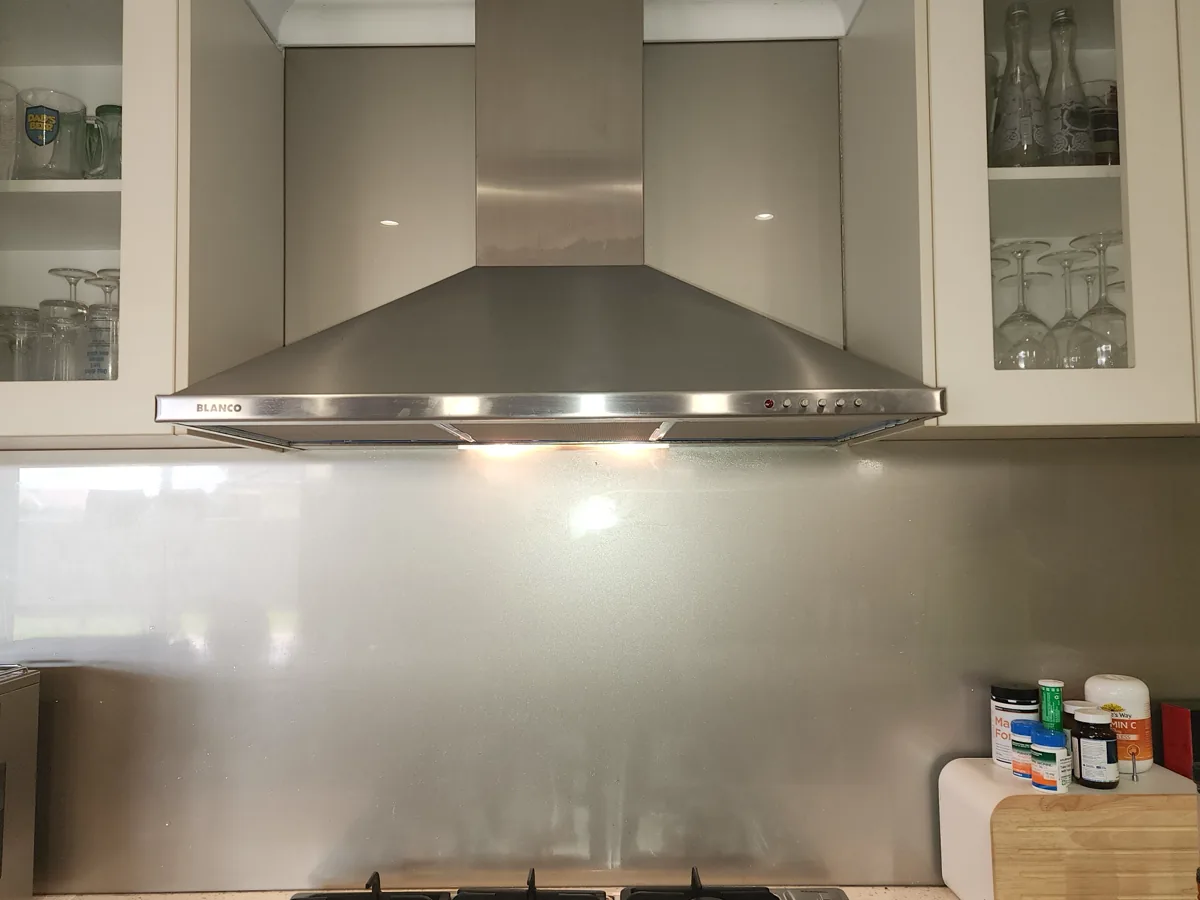
650mm, for a new installation. That is the minimum clearance from a gas cooktop to the lowest point of a rangehood under the current Australian standard, and it has applied since 30 March 2023.
A great deal of what you will read online still says 600mm. That figure has not disappeared, but it now applies only in specific situations. National Appliance Repairs installs and repairs cooktops and rangehoods across Melbourne, Sydney, Brisbane, Adelaide and Perth, and this change catches people out most often in the middle of a renovation.
What changed in 2023
Gas installations in Australia are governed by AS/NZS 5601.1, the gas installations standard. The 2022 edition raised the minimum overhead clearance for new cooktop installations, and Energy Safe Victoria, Tasmania’s CBOS, the WA Government and South Australia’s Gas Bulletin 59, along with Master Builders Queensland, all published guidance on the change.
In short:
| Situation | Minimum clearance to a rangehood |
|---|---|
| New gas cooktop in a new kitchen | 650mm |
| Kitchen renovation with new cabinetry and a new rangehood | 650mm |
| Gas cooktop replaced in an existing kitchen, nothing else changed | 600mm, unless the manufacturer specifies more |
| Exhaust fan above a gas cooktop | 750mm |
| Any overhead surface, in any situation | Never less than 450mm |
Need This Fixed Today?
Our licensed technicians repair this exact fault every week – fast, reliable, and backed by a workmanship guarantee.
- Licensed & insured
- Workmanship guarantee
- No fix, no fee
Where you measure from
For new installations under the 2022 standard, the clearance is measured from the top of the trivet, the surface the pots sit on, up to the lowest point of the rangehood. That point is higher than the burner itself, so measuring from the burner gives you a figure that looks compliant when it is not.
For a replacement cooktop in an existing kitchen, regulator guidance measures from the highest part of the highest burner.
If you are unsure which situation you are in, measure from the trivet. It gives the more conservative answer.
The manufacturer can require more
The standard sets a minimum. Both the cooktop’s and the rangehood’s installation instructions can specify a greater clearance, and when they do, the greater figure applies.
Some high-output wok burners and some rangehoods call for more than 650mm. Check both sets of instructions before anyone fixes a rangehood to the wall.
The renovation trap
This is where most problems start.
Suppose your existing gas cooktop sits 620mm below its rangehood. Under the old rule that was fine. You replace the benchtop, the cabinets and the rangehood, and the gas point stays exactly where it was.
Because you now have new cabinetry and a new rangehood, the 650mm rule applies. The rangehood has to go up, or the installation is non-compliant, even though the cooktop has not moved at all.
It works the other way too. Replacing only a worn-out cooktop, in a kitchen you are otherwise leaving alone, is a replacement, and 600mm applies unless the new cooktop’s instructions say otherwise.
Other surfaces above the cooktop
The rangehood is not the only thing that matters.
- Exhaust fans need 750mm, a larger clearance than a rangehood.
- Combustible surfaces facing downward, such as the underside of a cabinet or shelf, must be protected if they sit within the clearance zone.
- Nothing overhead can be closer than 450mm, protected or not.
There are also horizontal clearances between the burners and nearby walls and splashbacks. Combustible side surfaces too close to a burner must be protected. Your gasfitter will check those as part of the installation.
What about electric and induction cooktops?
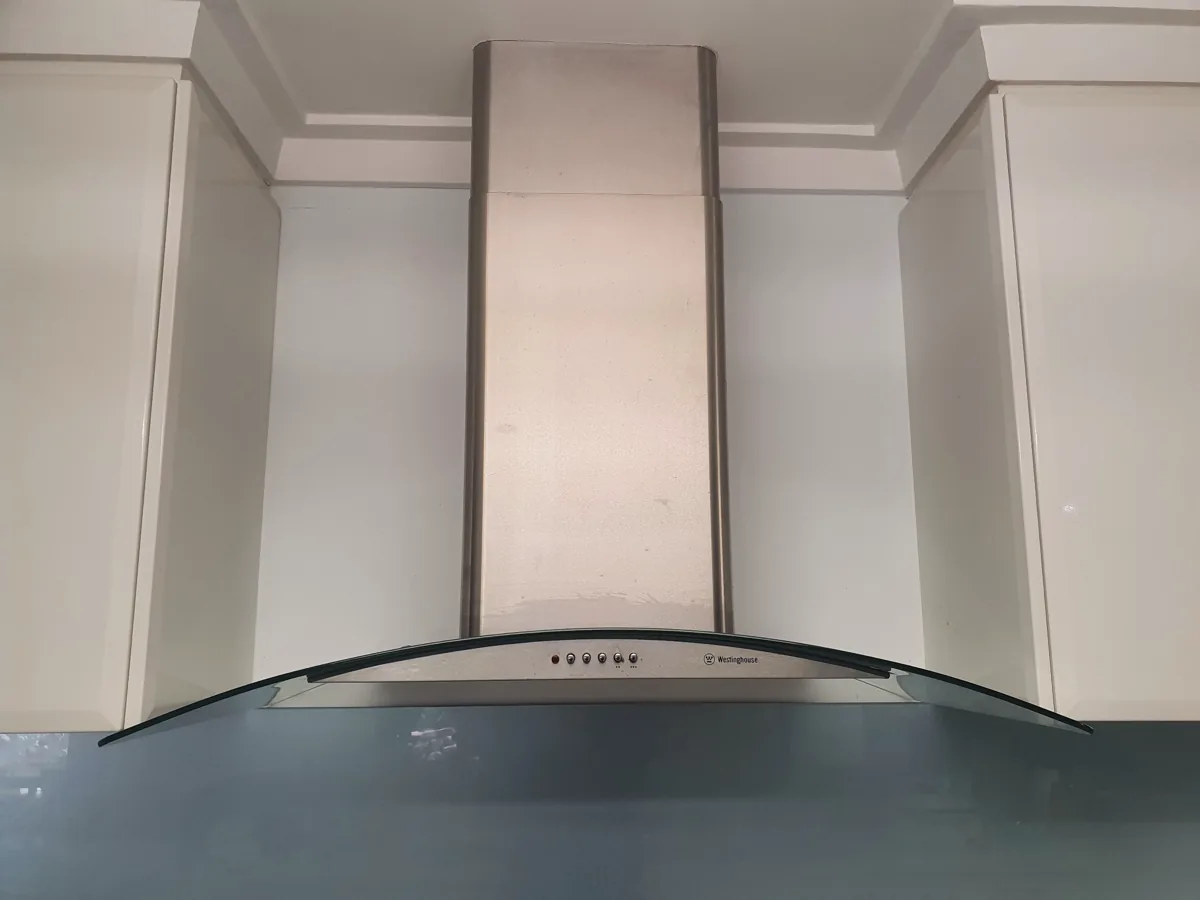
AS/NZS 5601 covers gas. For electric, ceramic and induction cooktops, the clearance to the rangehood is set by the manufacturers’ installation instructions, for both the cooktop and the rangehood.
That does not mean anything goes. Manufacturers specify a minimum for safety and a recommended height for performance, and fitting a rangehood too low over any cooktop exposes it to heat it was not designed for.
Why higher isn’t automatically better
Once you are above the minimum, height becomes a performance question. Steam, smoke and grease rise and spread as they go, so every extra centimetre between the pan and the rangehood lets more of them escape into the kitchen.
The best result is usually the lowest compliant height the manufacturer recommends. A rangehood mounted well above that will run, make noise, and capture very little.
If your rangehood is now too low
You have three realistic options, depending on the kitchen:
- Raise the rangehood. Often the simplest fix for a canopy rangehood with a chimney cover that can be shortened or adjusted.
- Choose a different rangehood. An undermount unit sits differently in the cabinet, so the lowest point may change.
- Rethink the cooktop. Switching to induction removes the gas clearance requirement, although it brings its own electrical requirements, and the manufacturer’s clearances still apply. Our guide to induction cooktop error codes covers what induction needs to run properly.
Whichever you choose, the gas connection must be made by a licensed gasfitter, and every gas installation should come with a compliance certificate. That certificate covers the clearances. If it cannot be issued because the rangehood is too low, the problem needs fixing before the cooktop is used.
Getting it installed properly
Our rangehood installation and gas cooktop installation services check the clearances before anything is fixed in place, with gas connections made by licensed gasfitters and certified. They are part of our wider appliance installation service.
Call:
- Melbourne 03 9123 0548
- Sydney 02 9621 5988
- Brisbane 07 3166 9770
- Adelaide 08 7123 4027 or,
- Perth 08 9470 4450
Tell us the cooktop and rangehood models and whether you are renovating or just replacing.
Frequently asked questions
How high should a rangehood be above a gas cooktop in Australia?
At least 650mm for a new installation, measured from the top of the trivet to the lowest point of the rangehood, under AS/NZS 5601.1:2022. If a manufacturer specifies more, the greater figure applies.
Is 600mm still allowed?
Yes, when a gas cooktop is replaced in an existing kitchen and nothing else changes, unless the manufacturer specifies more. New kitchens and renovations with new cabinetry and a new rangehood need 650mm.
When did the rangehood clearance change?
The 2022 edition of AS/NZS 5601.1 raised the minimum for new installations, effective from 30 March 2023.
How far should an exhaust fan be above a gas cooktop?
At least 750mm.
Do induction cooktops have the same rangehood clearance?
No. The gas standard does not apply to induction. The cooktop and rangehood manufacturers’ installation instructions set the minimum height.
The short version
- New gas installation or renovation: 650mm from the top of the trivet to the rangehood.
- Replacing only the cooktop in an existing kitchen: 600mm.
- Exhaust fans: 750mm.
- Nothing overhead closer than 450mm.
And if either manufacturer asks for more, they win.
Check the height before the rangehood goes up, not after. National Appliance Repairs installs rangehoods and gas cooktops across five capitals, with the clearances checked first. Book online or call your nearest office.
Call Us:
or leave a message using the form below