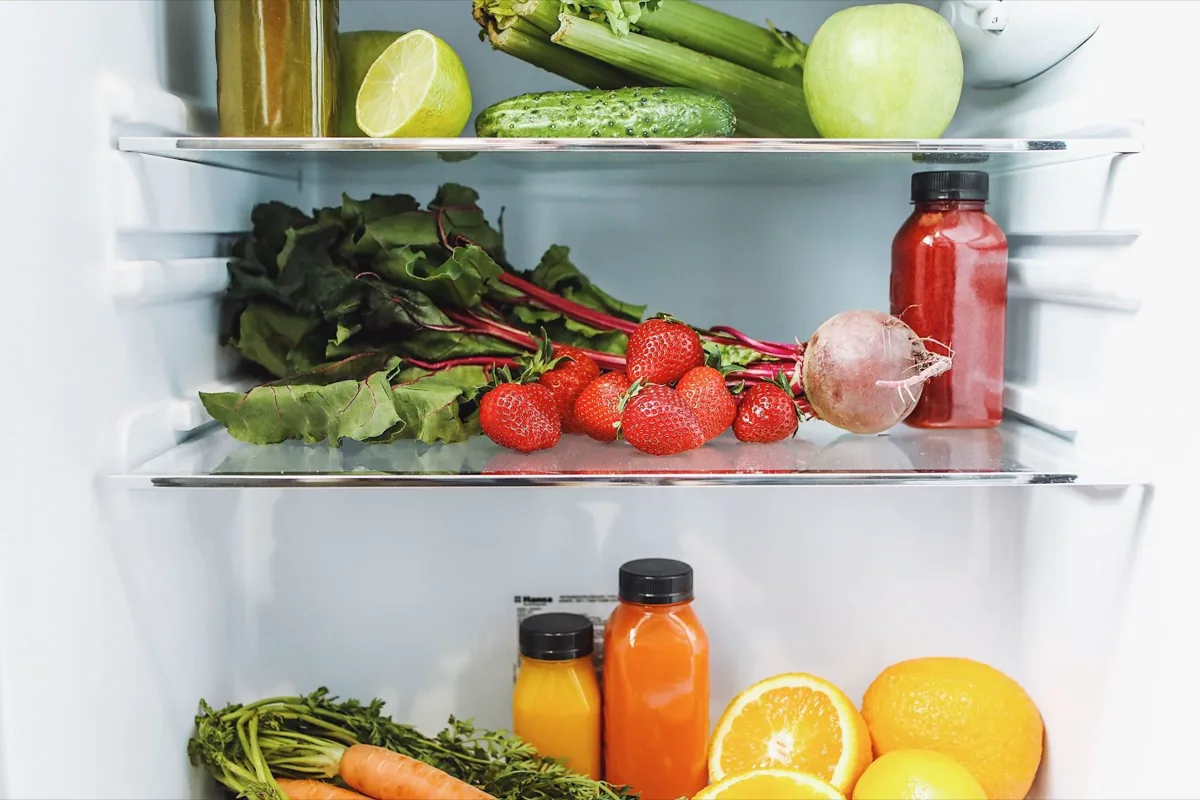

Frozen lettuce, milk with ice crystals in it, a jar of sauce stuck to the back wall. A fridge that’s too cold is the opposite of the problem most people worry about, and it’s usually easier to fix.
Most of the time it comes down to the setting, where the food is sitting, or where the fridge is standing. National Appliance Repairs repairs fridges across Melbourne, Sydney, Brisbane, Adelaide and Perth, and this guide draws on Samsung’s published guidance, which applies well to most modern fridges.
What temperature should a fridge be?
Samsung’s guidance is to set the fridge compartment to 3°C to 5°C. That keeps food fresh without freezing it, and setting it lower than necessary uses more energy and raises the risk of freezing.
For food safety, the important number is the upper limit. Food Standards Australia New Zealand identifies 5°C as the point above which food-poisoning bacteria start to multiply. So the target is cold enough to stay at or below 5°C, and no colder than you need.
The common causes
| Cause | What you notice | Fix |
|---|---|---|
| Setting too low | Food freezing all through the fridge | Raise the setting to 3°C to 5°C |
| Food against the back wall or vents | Items at the back freeze, the front is fine | Keep food clear of the vents and back wall |
| Wet, high-water foods in the coldest spot | Lettuce, herbs and fruit freeze first | Move them to the crisper, away from the back |
| Fridge packed tight | Patchy cold spots | Leave space for air to circulate |
| Fridge in a cold room | Freezing in winter whatever the setting | Move it somewhere warmer |
| A rapid-cooling mode left on | Everything suddenly much colder | Switch it off |
Food against the back wall
In many fridges the coldest surface is the back wall, where the cooling system sits behind the panel. Samsung notes that this surface can get very cold while the fridge is running. Food pressed against it freezes, even when the rest of the fridge is at the right temperature.
Samsung’s guidance is to keep food clear of the vents, by about 5 cm. Blocked vents also stop cold air spreading evenly, which creates cold spots elsewhere.
High-moisture food
Food with a lot of water in it freezes most easily: lettuce, leafy herbs, berries, cucumber, and drinks. Samsung singles out high-moisture food as the most likely to freeze. Keep it in the crisper drawers and away from the back of the fridge.
Too much in the fridge
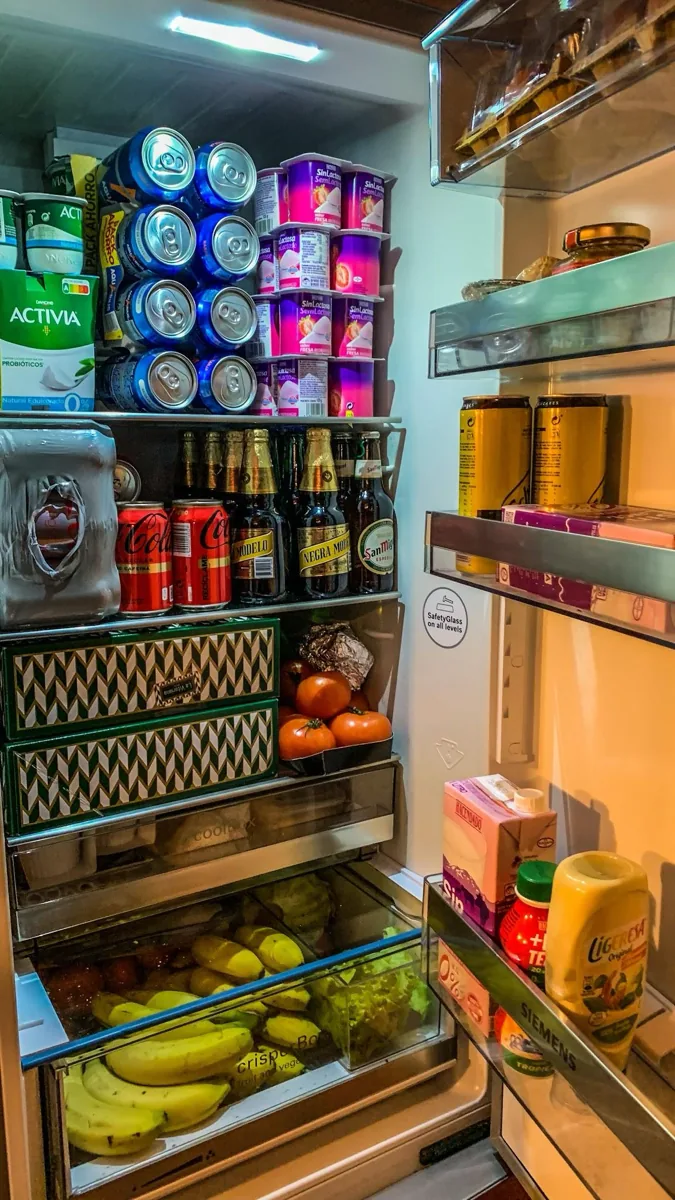
A fridge packed shelf to shelf can’t move air properly. Some areas run warm and others run too cold. Leave gaps between items.
A cold room
This one surprises people. Samsung notes that a fridge installed somewhere too cold, such as outdoors or in an unheated space in winter, can freeze food regardless of the temperature setting. Fridges are designed to work within a range of room temperatures, and when it gets too cold around them, the cabinet can drop below its set point.
That’s worth knowing if your second fridge lives in the garage. Check the manual for its rated room temperature range.
A rapid-cooling setting
Many fridges have a rapid-cooling function, sometimes called Power Cool or Fast Cool, for bringing a big shop down to temperature. If it’s left on, or switches on accidentally, the fridge runs colder than normal. Check the display and switch it off.
After a power cut
If the freezing started after a power outage, check the temperature setting. A fridge that lost power may come back running on a different setting, or working hard to recover. Set it back to 3°C to 5°C and give it a day to settle.
Quick checks
- Check the setting is between 3°C and 5°C.
- Move food away from the back wall and vents.
- Put wet produce in the crisper drawers.
- Leave gaps between items so air can move.
- Switch off any rapid-cooling mode.
- Put a thermometer in a glass of water on a middle shelf overnight, and compare it with the display.
When it’s a fault
If the setting is right, the vents are clear, the room is warm enough and food still freezes all through the fridge, something in the temperature control isn’t working properly. The usual suspects are a temperature sensor giving the wrong reading, the damper that controls how much cold air flows into the fridge compartment, or the control board.
Those are technician jobs, because they sit behind the internal panels.
On the other hand, if your fridge is warm, not too cold, our guide to fridges that won’t cool with the light on is the one to read. And if there’s water pooling inside, see our guide to fridges leaking water.
When to book
Book if food keeps freezing with the setting at 3°C to 5°C, the vents clear and the fridge in a normal room, if the display shows a different temperature from a thermometer inside, or if the fridge shows any error code.
Our fridge repair service covers all major brands across all five capitals, with same-day appointments subject to availability, upfront quoting, and a 12-month parts warranty with a 3-month labour warranty.
Call:
- Melbourne 03 9123 0548
- Sydney 02 9621 5988
- Brisbane 07 3166 9770
- Adelaide 08 7123 4027 or
- Perth 08 9470 4450
Tell us the brand, the setting, and where in the fridge the food is freezing.
Frequently asked questions
Why is my fridge freezing food?
Usually the temperature is set too low, food is pressed against the back wall or vents, or the fridge is in a cold room. Check those first.
What temperature should my fridge be set to?
Samsung recommends 3°C to 5°C for the fridge compartment. FSANZ identifies 5°C as the upper limit for safe chilled storage.
Why does food freeze at the back of my fridge?
The back wall is often the coldest surface. Keep food about 5 cm clear of the vents and back wall.
Can a cold garage make my fridge freeze food?
Yes. Samsung notes that a fridge in a location that’s too cold can freeze food regardless of the setting. Check the room temperature range in your manual.
Why are only my vegetables freezing?
High-moisture foods freeze most easily. Keep them in the crisper drawers and away from the back of the fridge.
The short version
Set the fridge to 3°C to 5°C, keep food off the back wall and vents, don’t overpack it, and keep wet produce in the crisper. Check that a rapid-cooling mode isn’t on, and that the fridge isn’t sitting somewhere too cold.
If it still freezes everything, the temperature control needs a technician. National Appliance Repairs repairs fridges across five capitals with upfront quoting. Book online or call your nearest office.
Sources to link at publish: Samsung support, “Why is food freezing in the Samsung refrigerator compartment?” (use the samsung.com/au equivalent) · FSANZ temperature control
Note for the editor: the “cold room” section mentions a garage fridge. If the live post about the second fridge in Perth covers garage conditions, add a link to it here.