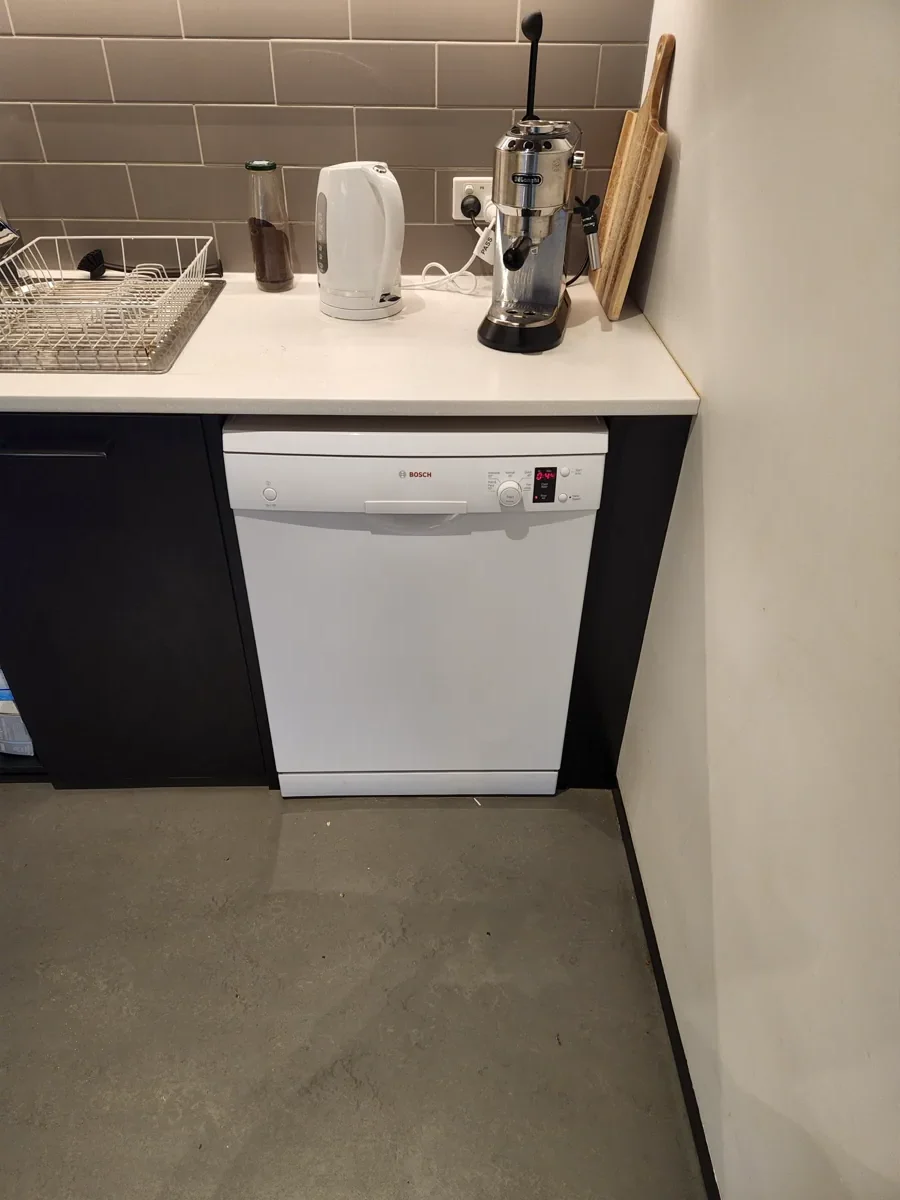
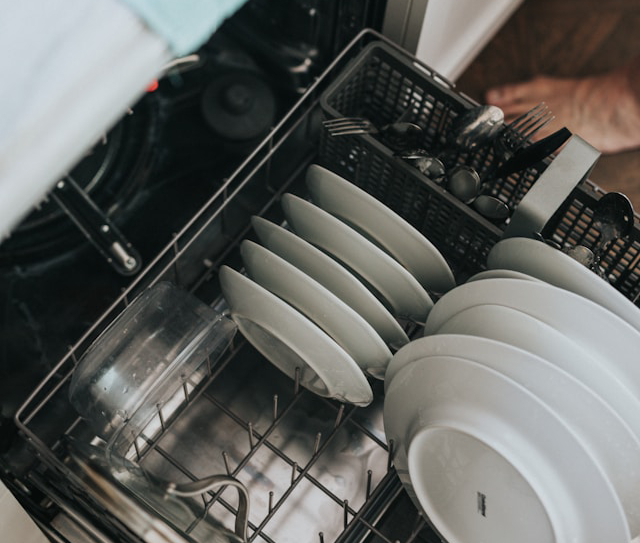

Dishes come out clean but dripping. You open the door and everything needs a towel. It’s one of those faults that feels bigger than it usually is — in a lot of cases, the fix costs nothing and takes two minutes.
This guide covers every cause in order of how likely it is, from the ones you can sort right now to the component failures that need a technician. If yours turns out to be the latter, National Appliance Repairs services all major dishwasher brands across Melbourne, Sydney, Brisbane, Perth, and Adelaide.
Two Drying Systems — Know Which One You Have
Your dishwasher dries one of two ways, and that changes which faults are even possible.
Heated drying runs an element at the base of the tub to warm the air during the dry cycle, then a vent or fan pushes moisture out. Dishes come out warm and dry. Most Electrolux, Simpson, Miele, and older Bosch dishwashers work this way.
Condensation drying skips the element entirely. The hot final rinse heats the dishes; moisture condenses on the cooler stainless-steel walls and drains off. Current Bosch models and several other European brands use this method. It works well on glass and ceramics — plastics always take longer because they shed heat quickly, and that’s normal rather than a fault.
If your machine uses condensation drying, it has no drying element to fail. A few of the faults below simply won’t apply to you.
Rinse Aid — Check This First
Empty or low rinse aid is the single most common cause of wet dishes, and it affects both drying systems. Rinse aid reduces water’s surface tension so it sheets off dishes rather than forming droplets that cling and dry as spots. Without it, even a perfectly functioning machine leaves things damp.
Check the rinse aid indicator next to the detergent dispenser. If it’s low, refill it. If you’ve been running all-in-one tablets without liquid rinse aid, add it back — most manufacturers are clear that tablets don’t fully replace it for drying performance.
In hard-water areas like Perth and Adelaide, rinse aid matters even more. The Australian Drinking Water Guidelines show significant mineral variation across Australian states, and higher-mineral water leaves more residue on dishes and demands more rinse aid to compensate.
If the dispenser is full but dishes are still wet, the dispenser flap mechanism may not be opening during the cycle. A technician can replace it cheaply.
Wrong Cycle
A lot of quick-wash and eco cycles skip or shorten the heated dry phase. If you’ve been defaulting to a short cycle, switch to a full heavy or intensive wash and make sure the heat dry option is selected. On Bosch condensation-drying models, the ExtraDry or Intensive setting adds a hotter final rinse specifically to improve drying results.
How the Racks Are Loaded
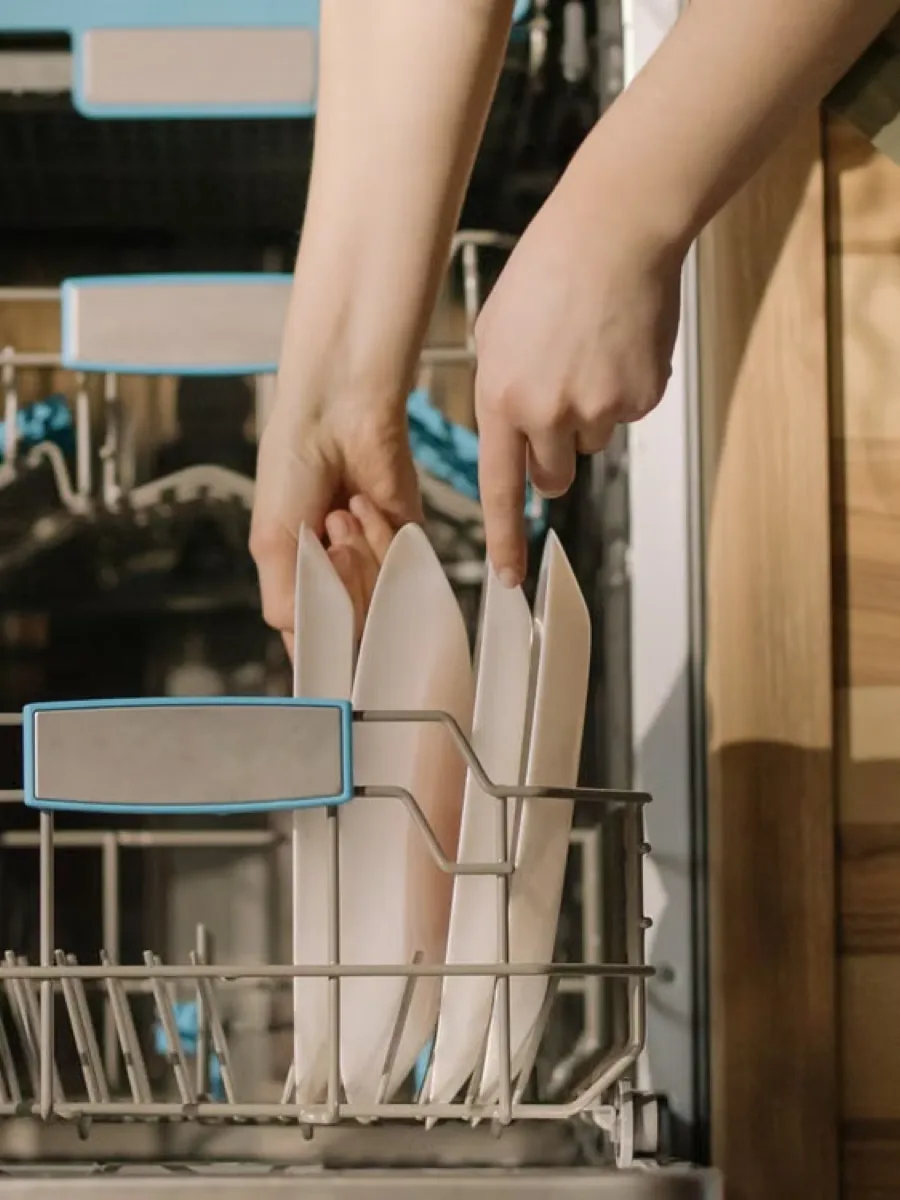
Dishes packed too close together trap moisture between surfaces and block airflow. Large flat items lying face-down on the bottom rack pool water in their centres. Cups and bowls need to face down and inward so water drains off rather than collecting.
Plastics on the top rack is a good rule regardless — they dry poorly anywhere, but the top rack keeps them away from the heating element on machines that have one.
Faulty Heating Element
On heated-drying machines, a failed element is the most common hardware fault behind wet dishes. When it goes, dishes come out clean, cold, and wet.
A quick test: run a sanitise cycle. If the sanitise light blinks rather than glowing steadily after the cycle, the element isn’t reaching the required temperature. You can also look at the circular element at the base of the tub — cracks, dark spots, or visible breaks are usually easy to see. A multimeter test for continuity gives a definitive answer.
Elements for most major brands cost $80–$150 in parts.
Faulty High-Limit Thermostat
The high-limit thermostat sits alongside the heating element and prevents the machine overheating. When it fails in the open position, it cuts power to the element before it can heat the air properly. The symptom looks identical to a failed element — clean but cold and wet — so a multimeter test is the only way to distinguish between the two.
Blocked or Faulty Vent Fan
Some machines use a vent and fan to actively push moist air out of the tub during drying. If the vent is blocked or the fan motor has failed, the moisture stays inside. You might notice the door interior unusually humid when you open it, or water beading on the inside of the door. The fan motor can be tested for continuity; the vent flap is visible and can be checked for debris.
Opening the Door at the Right Time
On condensation-drying machines, leaving the door closed after the cycle finishes allows steam to condense back onto the dishes. Cracking the door open by a few centimetres about 15 minutes after the cycle ends helps considerably. Many newer Bosch and Miele models now do this automatically.
What Each Fault Looks Like in Practice
| Cause | DIY Fix? | Rough Cost |
|---|---|---|
| Empty rinse aid | Yes | ~$8 for rinse aid |
| Wrong cycle selected | Yes | Free |
| Overpacked racks | Yes | Free |
| Broken rinse aid dispenser flap | Technician | $50–$120 parts + labour |
| Failed heating element | Technician | $80–$200 parts + labour |
| Failed high-limit thermostat | Technician | $50–$120 parts + labour |
| Blocked or failed vent fan | Technician | $80–$180 parts + labour |
A Note on Plastics
Even when a dishwasher is working perfectly, plastics come out wetter than glass or ceramic. Plastic doesn’t hold enough heat to keep evaporation going through the dry cycle. A quick towel-dry or 20 minutes with the door open usually does it. If your glasses and plates are dry but your Tupperware isn’t, the machine is fine.
FAQ
Why are my dishes wet even on heated dry?
If they’re cold and wet, the heating element or thermostat has likely failed. If they’re warm but slightly damp, check the rinse aid first — it’s the most common cause even on machines with a working element.
Do all-in-one tablets replace rinse aid?
Most manufacturers say no. Tablets contain some rinse aid agents, but not enough for consistent drying — especially in hard water. Using liquid rinse aid separately gives noticeably better results.
Why does my Bosch dishwasher leave dishes wetter than my old machine?
Current Bosch models use condensation drying rather than a heated element. It works well on glass and ceramics but less so on plastics. Using the ExtraDry setting and opening the door slightly at cycle end both help.
Can overloading really affect drying?
Yes. Water collects in any concave surface facing upward, and tightly packed dishes prevent airflow from reaching everything. Proper loading makes a real difference.
Should I book a repair if the dishwasher cleans well but doesn’t dry?
Try rinse aid and cycle settings first. If dishes are still cold and wet after that, the heating element or thermostat needs testing — that’s when to call a technician.
Conclusion
Most dishwasher drying problems are free to fix. Rinse aid, cycle selection, and loading cover the majority of cases. If dishes come out cold and wet after addressing those, a component has failed and needs testing. National Appliance Repairs carries heating elements, thermostats, and dispenser components for all major brands and can usually complete the repair on the same visit. Call 1300 434 380 or book online.