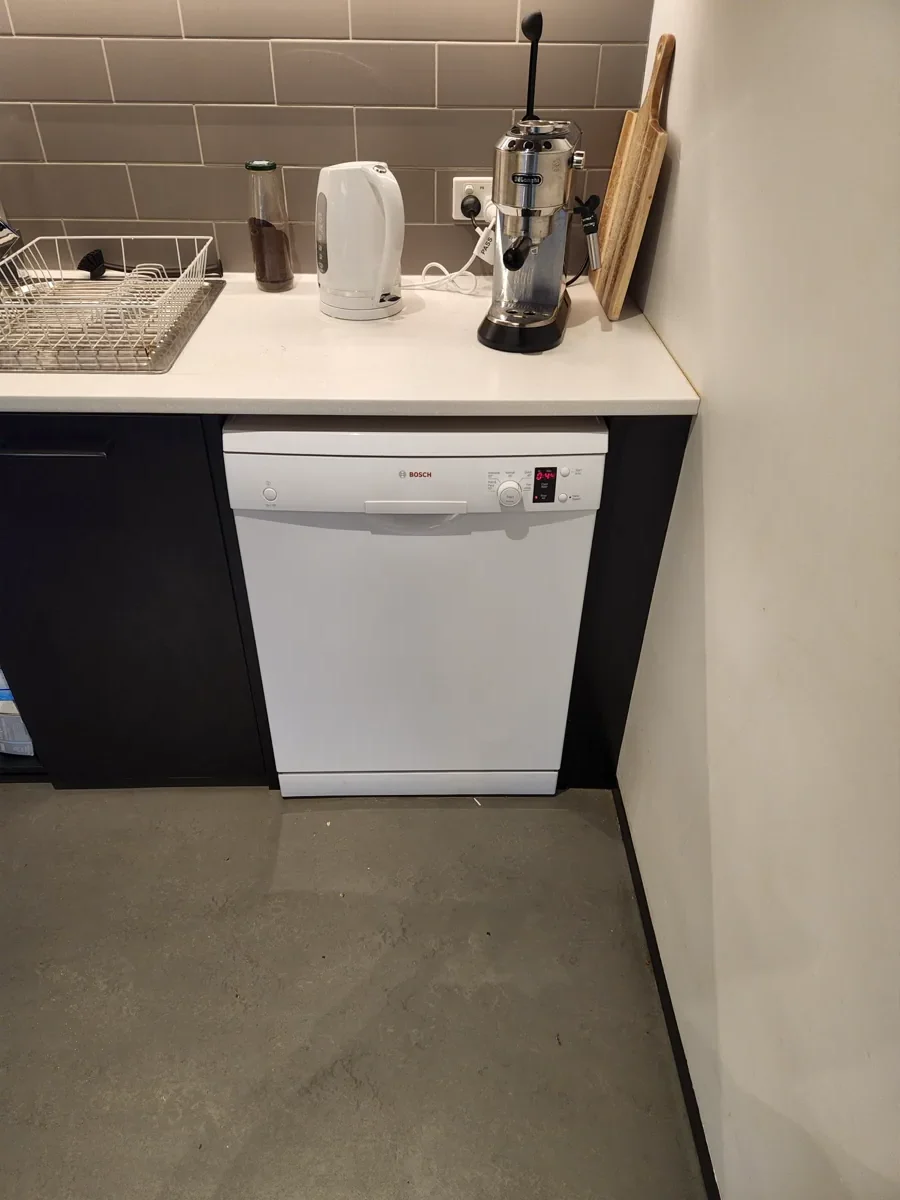

Two of the more popular dishwasher brands in Australian kitchens, and two quite different ways of telling you something’s wrong.
We see a lot of both at National Appliance Repairs, and the difference in how they communicate faults genuinely changes how you troubleshoot them. Bosch uses a fairly consistent E-code system across most of its range, so a given code generally means the same thing from one machine to the next. Smeg uses a set of flashing LEDs on the control panel instead, and what those flashes actually mean can shift depending on the model. Here’s what tends to go wrong with each, and how to read what they’re telling you.
Bosch: A Fairly Reliable Code System
Bosch’s own support documentation lays out its error codes clearly, and in our experience they hold up consistently across most of the current range, which makes troubleshooting a lot more straightforward than with some other brands.
- E15 means the safety switch has detected water in the base of the machine and triggered the flood protection system. This is usually caused by a leak somewhere, most often a worn door gasket, a loose hose connection, or excessive suds pushing water past a seal it shouldn’t. Clearing the code without finding the actual leak just means it comes back.
- E22 points to a blocked fine filter, one of the simplest and most common faults to show up. Pull the bottom rack, remove the filter, and give it a proper clean.
- E24 and E25 both relate to drainage, but for different reasons. E24 usually means the drain filter or drain hose is blocked, often alongside a missing high loop in the drain hose installation or a blocked garbage disposal connection. E25 points more specifically at the drain pump itself, whether that’s a jammed impeller from broken glass or bone fragments, or an actual pump failure.
- E09 relates to the heating element, and it typically shows up once the element reaches the end of its working life, usually somewhere around the six to eight year mark on a well-used machine.
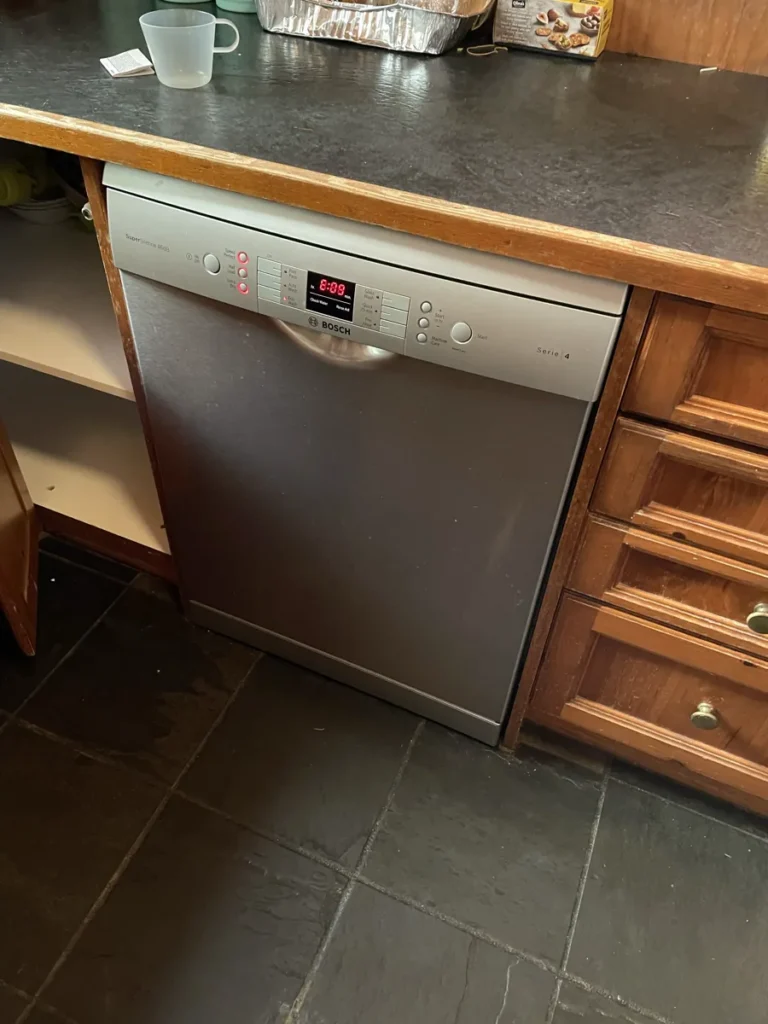
Smeg: A Different System, Model-Dependent Meanings
Smeg dishwashers typically use five LED indicators on the panel rather than a simple E-code readout, and a specific pattern of flashing and solid lights corresponds to a fault. The complication is that these patterns don’t map consistently across every Smeg model. A flash pattern that means one thing on one dishwasher can mean something else entirely on another, so treating any single code as universal across the whole range isn’t reliable.
That said, a few fault categories come up consistently regardless of the exact LED pattern on your specific model.
Flood or overfill protection is triggered when the machine detects more water than expected, often from a faulty inlet valve letting too much water in, or a blocked filter preventing proper drainage and causing the water level to rise instead. Drainage faults mean the dishwasher can’t clear water within the expected time window, generally pointing to a blocked filter, a kinked or blocked drain hose, or a pump that isn’t moving water the way it should. Heating faults are usually a defective heating element or a wiring fault between the element and the control board, occasionally showing up as the heater running with no water actually in the tub, which is a different problem from a heater that simply won’t switch on. And water inlet faults tend to come down to low water pressure, a kinked inlet hose, or a faulty inlet valve, all fairly easy to check before assuming anything electronic has failed.
Given how much the exact meanings shift between Smeg models, the fastest path to an accurate diagnosis is checking your specific model’s manual against the flash pattern you’re seeing, rather than assuming it matches a code table written for a different generation.
Quick Reference: What Each Fault Category Usually Means
| Fault Category | Bosch Code | Likely Cause |
|---|---|---|
| Leak or flood detected | E15 | Worn door gasket, loose hose, excessive suds |
| Fine filter blocked | E22 | Food debris, grease build-up |
| Drainage blocked | E24 | Blocked filter, kinked hose, disposal connection |
| Drain pump fault | E25 | Jammed impeller or failed pump |
| Heating element fault | E09 | Element worn out, typically after 6-8 years |
For Smeg models, match the LED flash pattern against your specific model’s manual, since the same pattern of lights can point to different faults on different generations.
What You Can Check Yourself
- Clean the filter thoroughly, checking both coarse and fine mesh sections if your model has them
- Check the drain hose for kinks, and confirm it has a proper high loop if it connects near a sink or garbage disposal
- Look at the door gasket for visible tears, warping, or trapped debris if a leak-related code is showing
- Try a power reset by switching off at the wall for a few minutes, then running a short test cycle
- Note down the exact code or LED pattern before calling anyone, since it saves time and speeds up diagnosis
When to Call a Technician Instead
Anything involving the heating element, the control board, or a pump that’s confirmed faulty rather than just obstructed is a repair job, not a DIY project. Both brands sit at the premium end of the market, and getting a fix wrong on either risks turning a straightforward repair into a much bigger bill.
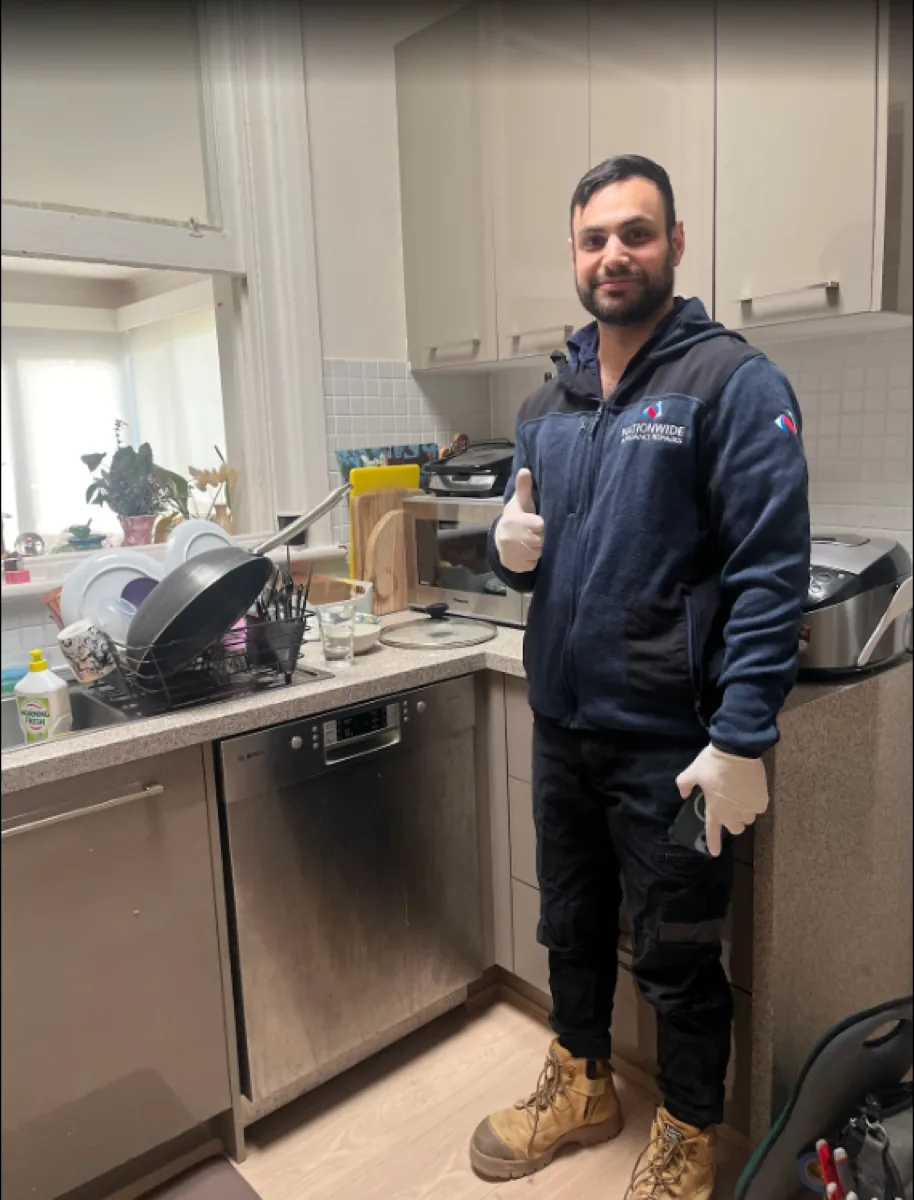
National Appliance Repairs technicians work on both Smeg and Bosch dishwashers regularly, and carry genuine filters, pumps, heating elements, and door seals for dishwasher repairs across both ranges. Most faults are diagnosed and fixed in a single visit, backed by a 12-month parts warranty and 3-month labour warranty.
Keeping Both Brands Running Well
- Clean the filter on a regular schedule, weekly if the dishwasher runs daily
- Wipe down the door gasket periodically to prevent the mould and residue build-up that eventually causes tears
- Avoid overloading the detergent dispenser, since excessive suds are a common trigger for flood protection codes on both brands
- Address a fault code as soon as it appears rather than resetting it repeatedly and hoping it clears on its own
Frequently Asked Questions
What does an E15 code mean on a Bosch dishwasher?
Water’s been detected in the base of the machine, triggering the flood protection system. It’s usually caused by a leak from the door gasket, a hose connection, or excessive suds, and resetting the code without finding the actual leak just means it returns.
Why do Smeg dishwasher codes seem to mean different things depending on who you ask?
Because they genuinely do vary by model. Smeg uses LED flash patterns rather than a universal number system, and the same pattern can indicate different faults across different generations of machine. Your specific model’s manual is the most reliable reference.
What’s the difference between a Bosch E24 and E25 code?
Both relate to drainage, but E24 usually points to a blocked filter or hose, while E25 points more specifically at the drain pump itself. It’s worth checking the simpler cause, the filter, before assuming the pump has failed.
Can I clean a blocked filter myself on either brand?
Yes, on both. Removing and rinsing the filter assembly under hot water with a soft brush is safe and straightforward, and it resolves a large share of both brands’ fault codes on its own.
What does it cost to repair a Smeg or Bosch dishwasher?
It depends entirely on the fault. A filter clean costs nothing. A heating element, control board, or pump replacement is more substantial. Call 1300 434 380 for a free phone consultation and ballpark pricing.
The Bottom Line
Bosch tells you fairly precisely what’s wrong through its E-codes. Smeg tells you something’s wrong and leaves the specifics to your model’s manual. Either way, the filter, the hose, and the door seal solve most faults before you need a technician. Still showing a code after those checks? Get in touch with National Appliance Repairs or call 1300 434 380 for a same-day assessment, subject to availability, across Melbourne, Sydney, Brisbane, Adelaide, and Perth.