
Most kitchen maintenance schedules get built the wrong way round. Someone drafts a checklist organised by day – Monday: clean fryers, Tuesday: check seals – and six months later nobody’s following it, because a kitchen doesn’t run on a calendar. It runs on covers, and different equipment fails on different clocks depending on how hard it’s worked.
This one’s organised by equipment instead. Find your gear, see what your staff can handle and what needs a technician, and build your actual calendar around that rather than the other way round.
It’s built on what the technicians at National Appliance Repairs actually see on commercial callouts – the equipment that fails, and how far in advance the warning signs usually show up.
Why This Matters More Than It Looks Like It Does
A breakdown during service doesn’t just cost the price of the repair. It costs the covers you can’t run, the reputation hit from a shortened menu on a busy night, and – depending on what’s failed – sometimes a food safety incident on top of the equipment failure. Most of what causes a mid-service breakdown was visible days or weeks earlier, to someone who was looking for it.
Preventative maintenance splits into two tiers, and getting that split right is most of what makes a schedule actually work rather than just existing on paper:
- Staff-level tasks: Cleaning, visual inspection, basic upkeep. No tools beyond what’s already in the kitchen, no risk if done correctly, and genuinely effective at catching problems early.
- Technician-level tasks: Anything involving refrigerant, gas lines, electrical components, or internal mechanical parts. This isn’t staff being under-trusted; it’s that getting these wrong risks safety, voids compliance documentation, and often costs more to fix after a bad DIY attempt than the original fault would have.
Below, equipment by equipment.
Need This Fixed Today?
Our licensed technicians repair this exact fault every week – fast, reliable, and backed by a workmanship guarantee.
- Licensed & insured
- Workmanship guarantee
- No fix, no fee
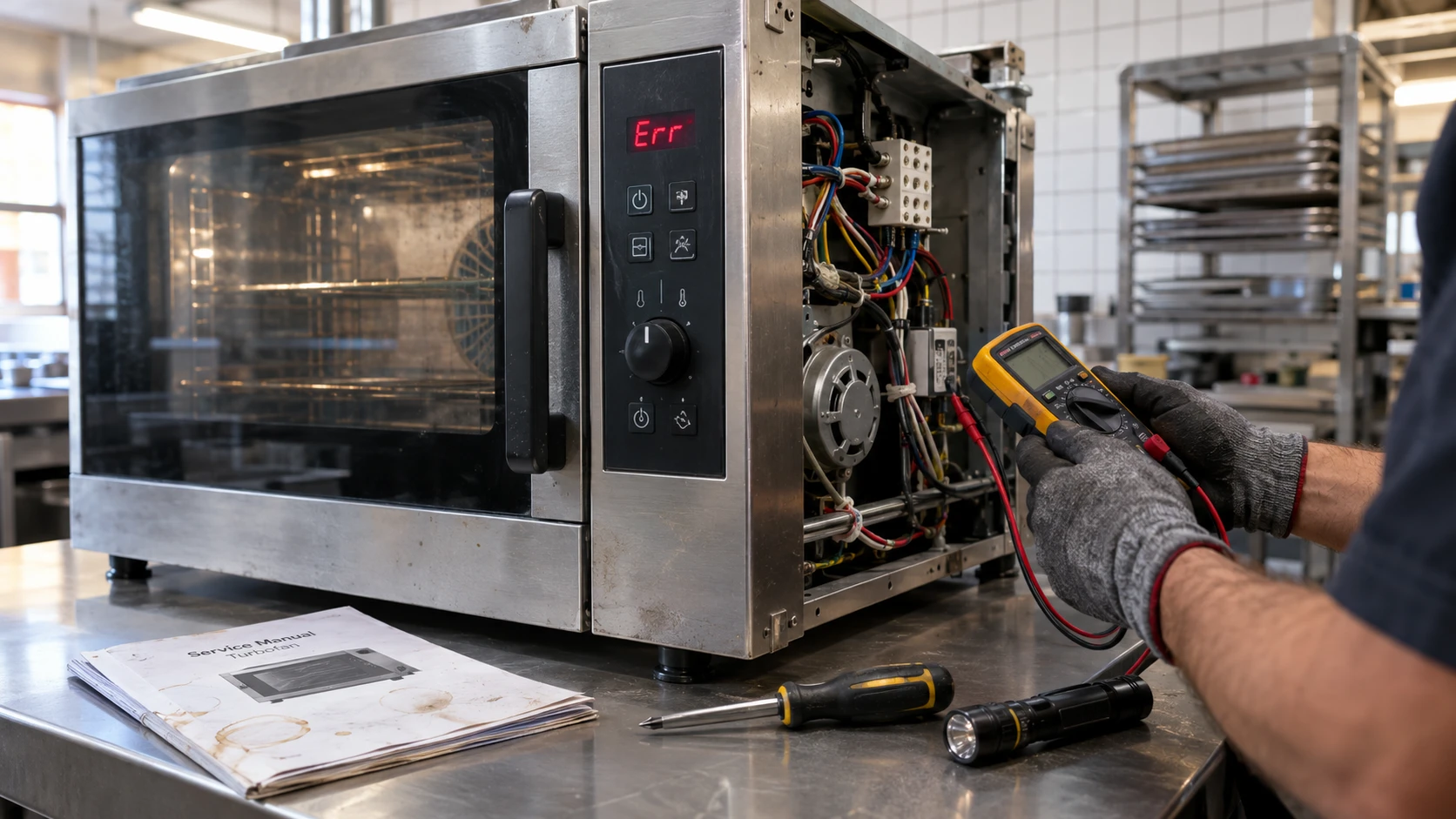
Combi Ovens
The most expensive single piece of equipment in most commercial kitchens, and the one where neglect shows up fastest in both energy bills and cook quality.
Staff can handle:
- Daily boiler descale cycle if the unit has an automated one, or manual descale on the manufacturer’s schedule – this is the single highest-impact task on this entire list for combi ovens specifically, because scale buildup in the steam generator is the leading cause of uneven cooking and premature boiler failure
- Wiping door seals and gaskets clean of food debris after each service
- Checking and clearing the drain at the end of each day
- Visual check of the door seal for cracking or compression loss weekly
Needs a technician:
- Boiler element inspection and descale beyond the automated cycle, typically quarterly depending on water hardness
- Door seal replacement
- Sensor calibration if temperature readings drift from actual cooking results
- Steam generator servicing
Watch for: uneven cooking results across a batch, longer-than-normal preheat times, or steam not clearing properly from the cavity. All three usually trace back to scale buildup before they trace back to anything electrical.
Fryers
High failure rate, mostly preventable, and one of the few pieces of equipment where a five-minute daily task genuinely extends service life by years. Covers both gas fryers and deep fryers – the maintenance logic below applies to either.
Staff can handle:
- Daily oil filtering, ideally at the end of every service rather than every few days
- Wiping down exterior surfaces and control panels
- Checking oil level against the fill line before each service
- Visual check of the basket lift mechanism, if fitted, for smooth operation
Needs a technician:
- Thermostat calibration if oil temperature doesn’t match the display reading – test with a calibrated thermometer, don’t assume
- Element inspection and replacement (electric fryers)
- Burner and pilot inspection (gas fryers) – gas work always needs a licensed technician
- Full boil-out and deep clean, typically monthly or per manufacturer schedule
Watch for: oil breaking down faster than usual, longer recovery times between baskets, or uneven heating across the vat. Oil that’s degrading rapidly is sometimes an oil quality issue, but persistent early breakdown often points to a thermostat running hot.
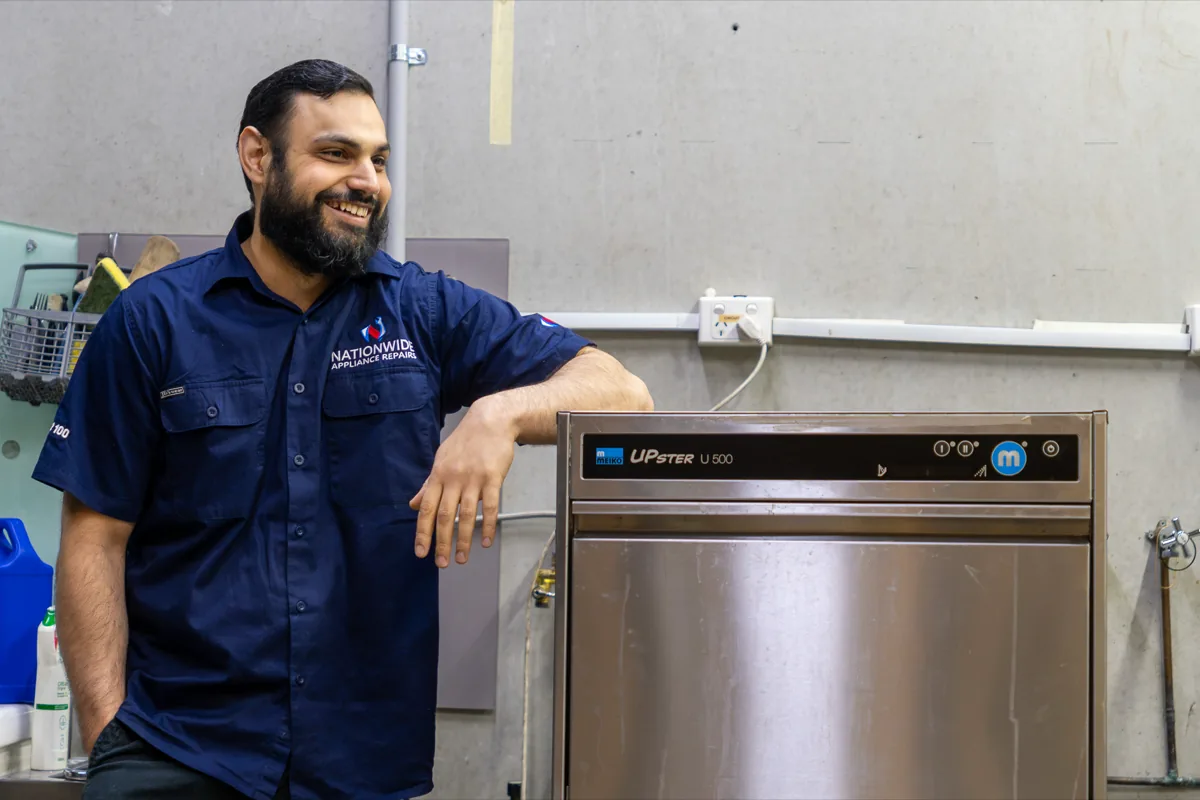
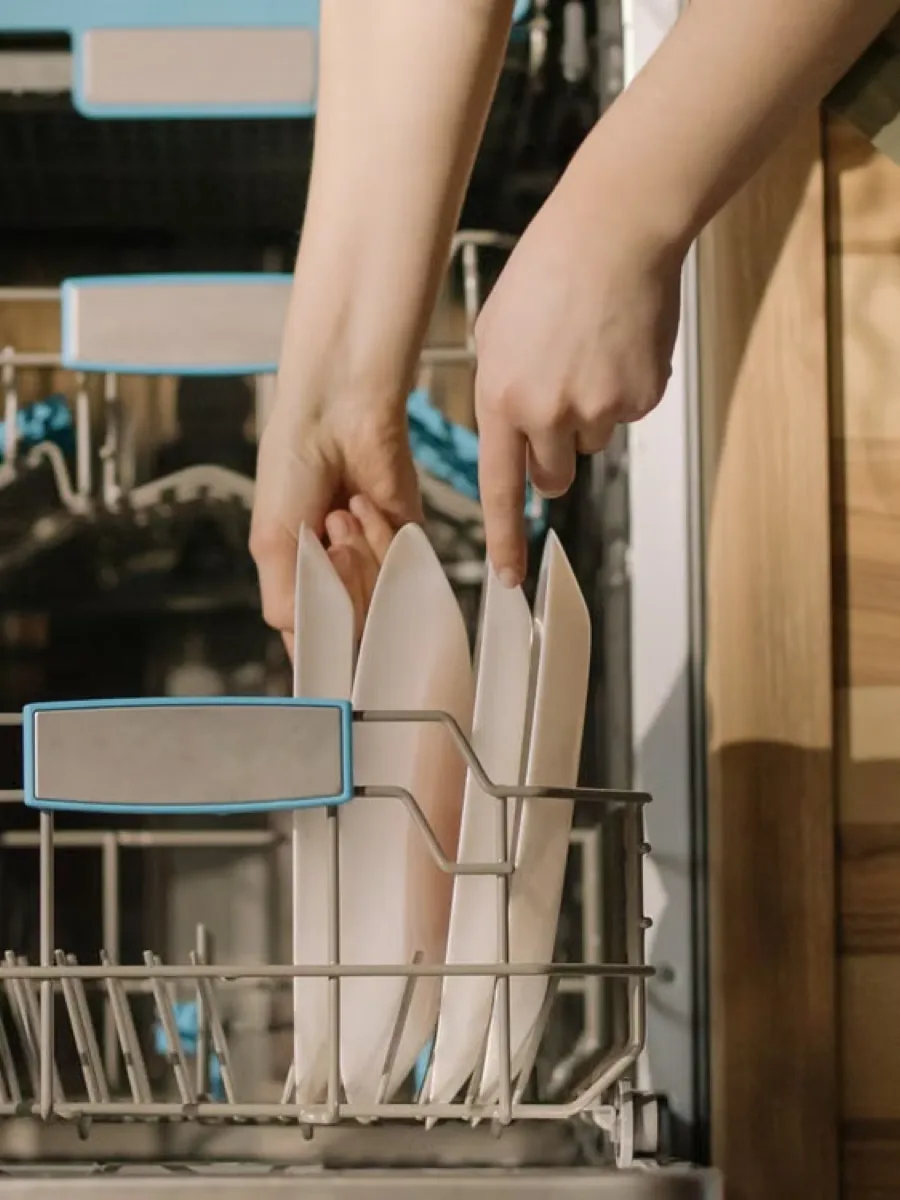
Commercial Dishwashers, Warewashers and Glasswashers
The unglamorous workhorse, and the one most likely to be run into the ground because it “still washes” right up until it doesn’t.
Staff can handle:
- Cleaning wash arms and spray jets of debris daily – blocked jets are the single most common cause of poor wash results, and it’s a two-minute daily check
- Emptying and cleaning filters/strainers at the end of each service
- Checking detergent and rinse aid levels and dosing
- Descaling per manufacturer schedule if operating in a hard water area (see the separate guide on hard water and appliance wear for how much this varies by region)
Needs a technician:
- Rinse temperature verification – Standard 3.2.2A record-keeping typically requires this to be checked and logged, and it needs to genuinely reach the rinse temperature specified for the machine, not just “feel hot”
- Wash pump inspection
- Door seal and gasket replacement
- Descaling of internal heating elements and boiler components
Watch for: cloudy glassware or a film on dishes even straight out of the machine – very often a rinse temperature or dosing issue rather than a mechanical fault, and worth checking the simple causes before booking a callout.
Ice Makers and Ice Machines
Easy to forget because they run quietly in the background, which is exactly why they’re often the most neglected piece of equipment in a kitchen.
Staff can handle:
- Wiping the exterior and bin daily
- Checking ice production visually against normal output
- Keeping the area around the unit clear for airflow – ice machines are more airflow-sensitive than most people expect
Needs a technician:
- Condenser coil cleaning, typically quarterly – a fouled condenser is the leading cause of reduced ice production and is often mistaken for a refrigerant fault
- Water filter replacement per manufacturer schedule
- Internal descale – mineral buildup on the evaporator plate directly reduces ice yield and is a common, preventable cause of “the machine’s just not keeping up anymore”
- Full sanitisation per manufacturer’s schedule, which matters for compliance as much as performance
Watch for: ice output dropping gradually rather than suddenly, or ice coming out cloudy or with an odd taste – both usually point to scale or filter issues rather than a mechanical failure.
Blast Chillers and Freezers
Compliance-critical equipment, since blast chilling performance directly ties into the safe cooling requirements under Standard 3.2.2.
Staff can handle:
- Daily visual check of door seals
- Keeping the unit’s airflow paths clear of overstocking
- Logging cooling times against the required standard (60°C to 21°C within two hours, 21°C to 5°C within a further four)
Needs a technician:
- Refrigerant system checks
- Condenser cleaning, typically quarterly
- Sensor and probe calibration
- Door seal replacement
Watch for: cooling times gradually extending beyond the compliance window. This is a genuine compliance issue, not just a performance one, and it’s worth acting on the first time it happens rather than after several near-misses.
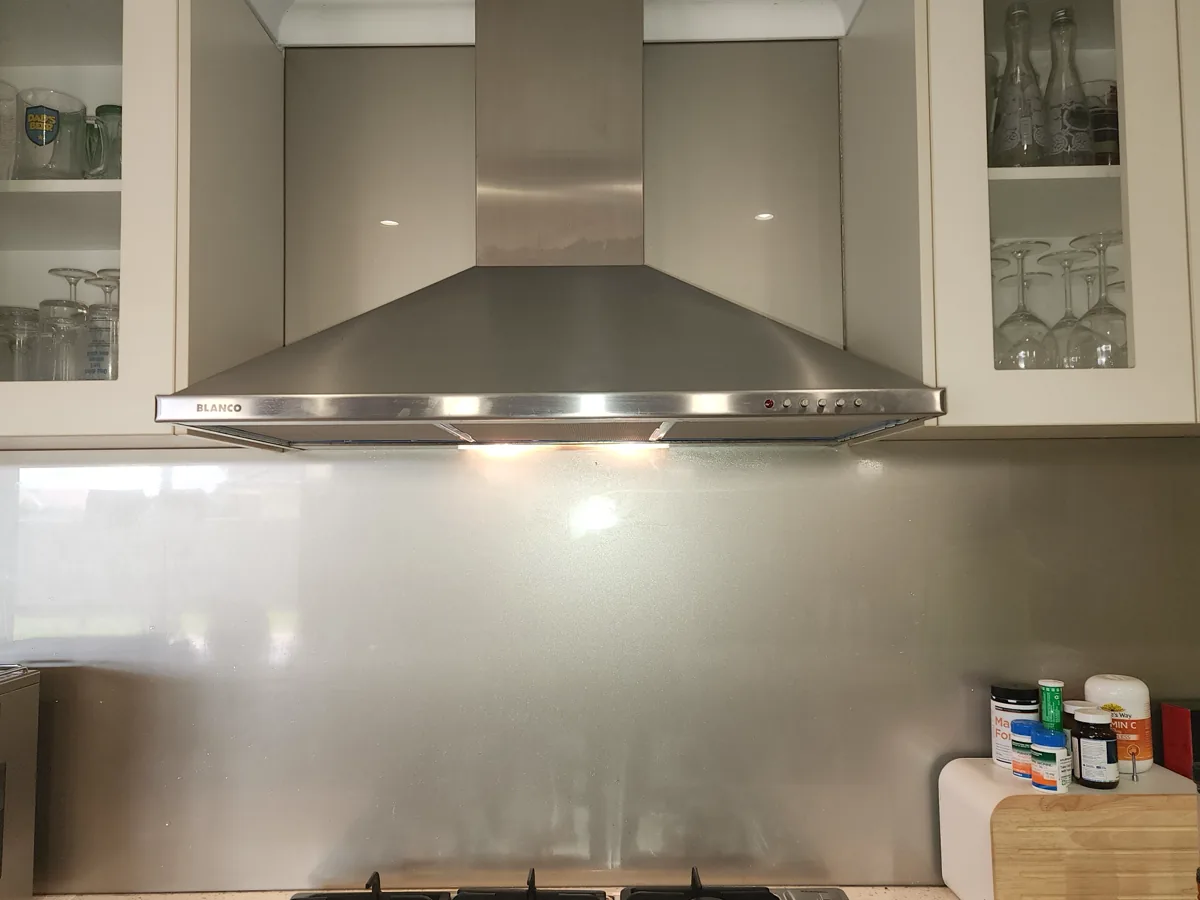
Rangehoods and Exhaust Systems
The system most likely to be treated as invisible infrastructure right up until it becomes a fire risk or a council issue.
Staff can handle:
- Cleaning or replacing grease filters per manufacturer schedule, typically weekly to fortnightly depending on volume
- Wiping down accessible external surfaces
Needs a technician (or a licensed exhaust cleaning contractor):
- Ductwork cleaning – grease accumulation inside ducting is a genuine fire hazard and is typically a regulatory requirement on a set schedule depending on your council and insurance requirements
- Fan and motor inspection
- Belt and bearing checks on ducted systems
Watch for: smoke or steam not clearing properly from the kitchen, unusual fan noise, or a burning smell – the last one is not a “monitor it” situation, it’s a “stop and call someone today” situation.
Commercial Coffee and Espresso Machines
Different failure pattern to the rest of this list – mineral buildup rather than mechanical wear is usually the dominant issue.
Staff can handle:
- Backflushing daily per manufacturer procedure
- Wiping steam wands after every use
- Checking water filter status
Needs a technician:
- Descaling the boiler and internal components on a schedule set by local water hardness – this varies significantly by city, and a fixed national schedule genuinely undersells how much more frequently this is needed in hard water regions
- Group head servicing
- Pressure and temperature calibration
Watch for: inconsistent extraction, longer heat-up times, or steam pressure dropping – all common early indicators of scale buildup well before a full failure.
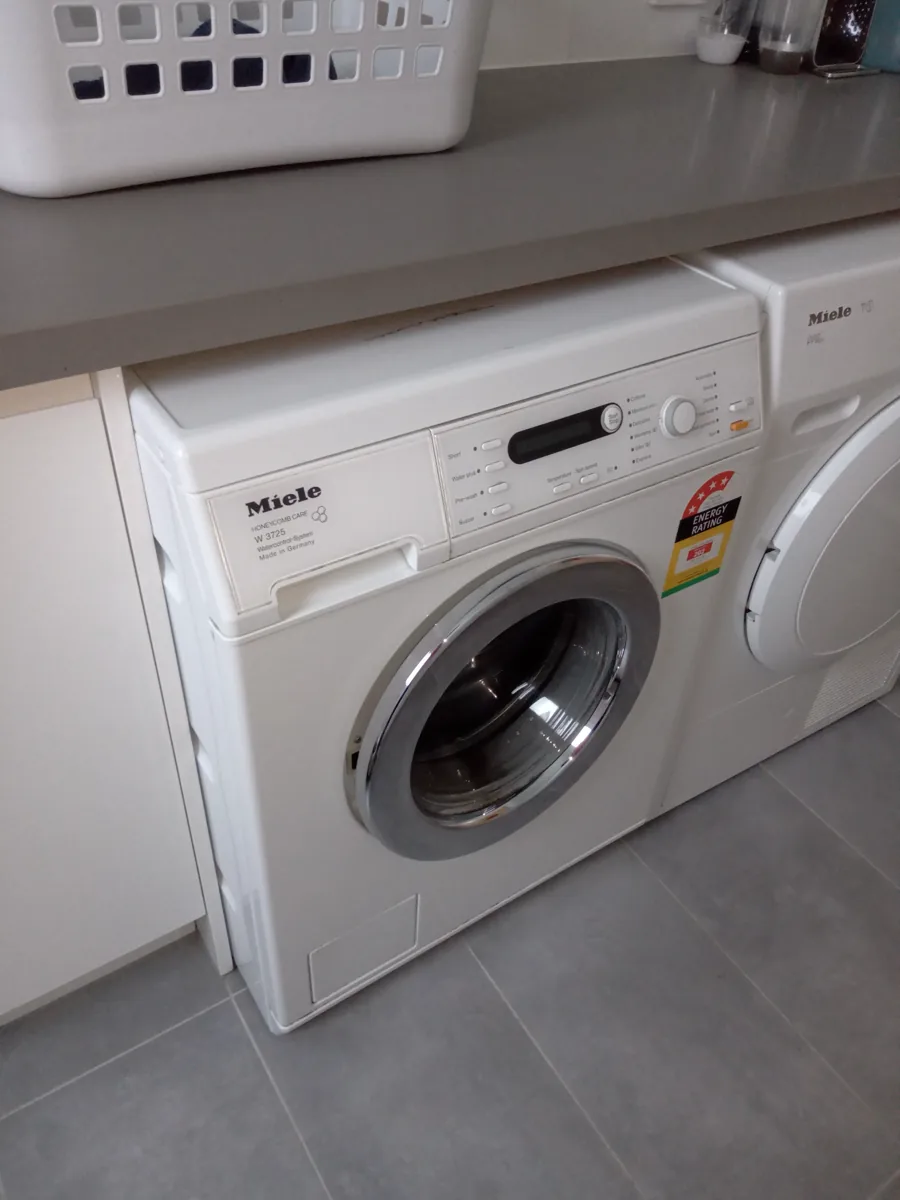
Commercial Laundry Equipment
Relevant for laundromats, hotels, and any hospitality venue running in-house linen – covering both commercial washing machines and commercial dryers.
Staff can handle:
- Cleaning lint filters after every load, without exception – this is the single highest-value habit on this entire page for fire prevention, not just performance
- Wiping down drums and door seals between loads
- Checking detergent dosing systems are calibrated correctly
Needs a technician:
- Vent and ducting inspection for dryers, checking for restriction along the full run, not just at the filter
- Drum bearing and seal inspection
- Motor and drive belt checks
Watch for: drying times gradually increasing – almost always a vent restriction issue, and worth acting on before it becomes a fire risk rather than after.
Building the Calendar Once You Know the Equipment
With the equipment-level detail above sorted, the calendar mostly writes itself:
- Daily (staff): filter cleaning across fryers, dishwashers, and rangehoods; wash arm and jet checks; wiping and visual inspections across the board; temperature logging where required.
- Weekly (staff, with occasional technician input): deeper cleaning tasks, grease filter changes, descale cycles where the schedule calls for weekly rather than daily.
- Monthly to quarterly (technician): condenser cleaning across all refrigeration equipment, calibration checks, and the deeper servicing tasks listed under each equipment type above.
- Annually or per manufacturer schedule (technician, sometimes with a licensed specialist): ductwork cleaning, full descale of boiler systems, and anything involving gas or refrigerant work that has its own regulatory servicing interval.
A Note on Planned Preventative Maintenance Contracts
Everything above can be run as a staff-managed checklist with periodic technician callouts booked as needed. The alternative – a formal PPM contract – puts the technician-level tasks on a fixed schedule rather than a reactive one, which matters most for equipment where failure is expensive, urgent, or compliance-relevant: refrigeration, gas equipment, and anything tied directly to a food safety standard.
For multi-site operators or venues where downtime has a direct revenue cost, a PPM contract also usually means priority scheduling if something does fail between visits – worth weighing against the cost of an ad-hoc callout during a Friday dinner service.
Frequently Asked Questions
How often should commercial kitchen equipment actually be serviced by a technician?
It varies significantly by equipment type and usage volume – a CBD venue running double the covers of a suburban café will need more frequent servicing on the same equipment. As a general starting point, refrigeration and ice-making equipment benefit from quarterly technician attention, while gas equipment and combi ovens often follow the manufacturer’s own schedule more closely due to safety and warranty requirements.
What’s the most commonly skipped maintenance task in commercial kitchens?
Condenser coil cleaning, across almost every category of refrigeration equipment. It’s not visible during normal operation, it doesn’t cause an immediate symptom, and by the time performance drops enough to notice, the compressor has often already been working overtime for months.
Can staff really be trusted with daily maintenance tasks, or does it need to be a technician?
The tasks listed as staff-level in this guide are genuinely safe and effective when done consistently – the value comes from consistency, not complexity. The risk isn’t staff capability, it’s a checklist that exists on paper but isn’t actually followed under service pressure.
Does a maintenance contract actually reduce breakdowns, or is it just a cost?
For refrigeration and gas equipment specifically, yes – most of the failure modes covered in the equipment sections above (condenser fouling, scale buildup, seal degradation) are gradual and preventable, which is exactly the kind of fault a scheduled visit catches before it becomes an emergency callout.
Who do I call if a piece of equipment needs technician-level attention?
National Appliance Repairs services commercial kitchen and laundry equipment across Melbourne, Sydney, Brisbane, Adelaide, and Perth, including planned preventative maintenance programs for B2B clients with discounted rates for ongoing service.
The Bottom Line
The equipment that breaks down mid-service is almost never the equipment that failed without warning. It’s the equipment where the warning signs – a slowly fouling condenser, a scale-choked boiler, a filter nobody’s cleaned in three weeks – were sitting there the whole time. A schedule built around what each machine actually needs, rather than a generic calendar, is what turns “we’ll get to it” into something that actually happens.
Call 1300 434 380 to discuss a schedule tailored to your kitchen with National Appliance Repairs.