
When Your Machine Needs Attention
Whether your Breville won’t heat up, your De’Longhi is leaking, or your Jura is flashing an error message, most coffee machine faults are fixable. Repair is usually more economical than replacement – if the repair quote falls under 70% of a new machine’s price, it’s typically the smarter financial call.
At National Appliance Repairs, we service all major brands at our Dandenong workshop, with a convenient pickup service available from the Mornington Peninsula. All repairs include a 12-month parts warranty and 3-month labour warranty.
Common Coffee Machine Problems
These issues account for most of what we repair:
| Symptom | Likely Cause |
| No power | Power supply fault, blown fuse, or internal electrical issue |
| Water leaking | Damaged seals, cracked hoses, or internal blockages |
| Not heating | Faulty heating element – results in cold or lukewarm coffee |
| Grinding issues | Noisy grinder, grinding failure, or inconsistent grounds |
| Weak coffee | Blockages, pressure issues, or grinder faults affecting extraction |
| Strange noises | Whirring, clunking, or hissing from internal mechanical fault |
| Blocked steam wand | Milk residue buildup preventing frothing |
| Error messages | Persistent codes requiring professional diagnosis |
Any of these issues can disrupt your morning routine. Most are repairable – the key is getting professional assessment early.
What’s Likely Causing the Problem
Understanding the cause helps when explaining the issue to a technician:
- Power supply issues – loose cord, tripped circuit breaker, or faulty outlet. Always check this first before calling a technician.
- Clogged components – coffee grounds, milk residue, and mineral deposits accumulate over time, causing leaks, poor extraction, and blockages.
- Mineral scale buildup – hard water deposits limescale in heating elements and water pathways. A primary reason machines stop heating properly. Regular descaling prevents this.
- Worn parts – seals, O-rings, pumps, and valves degrade over time, leading to leaks and pressure issues.
- Pump or heating element failure – a failed pump means no water flow; a faulty element means cold coffee.
- Sensor or control board malfunction – electronic issues cause error messages, erratic behaviour, or complete shutdowns.
- Internal leaks – cracked hoses or loose connections cause hidden leaks that eventually appear on your counter.
DIY vs. Professional: Knowing the Difference
Safe to try yourself:
- Regular cleaning of removable parts, drip trays, and external surfaces
- Descaling – if the machine isn’t heating or flow is restricted, a descaling cycle often helps. Check your manual before using vinegar – some machines are damaged by it
- Power check – confirm the cord is plugged in, the outlet works, and the circuit breaker hasn’t tripped
- Basic checks – full water tank, bean hopper not empty, steam wand cleared with a pin for minor blockages
Call a professional for:
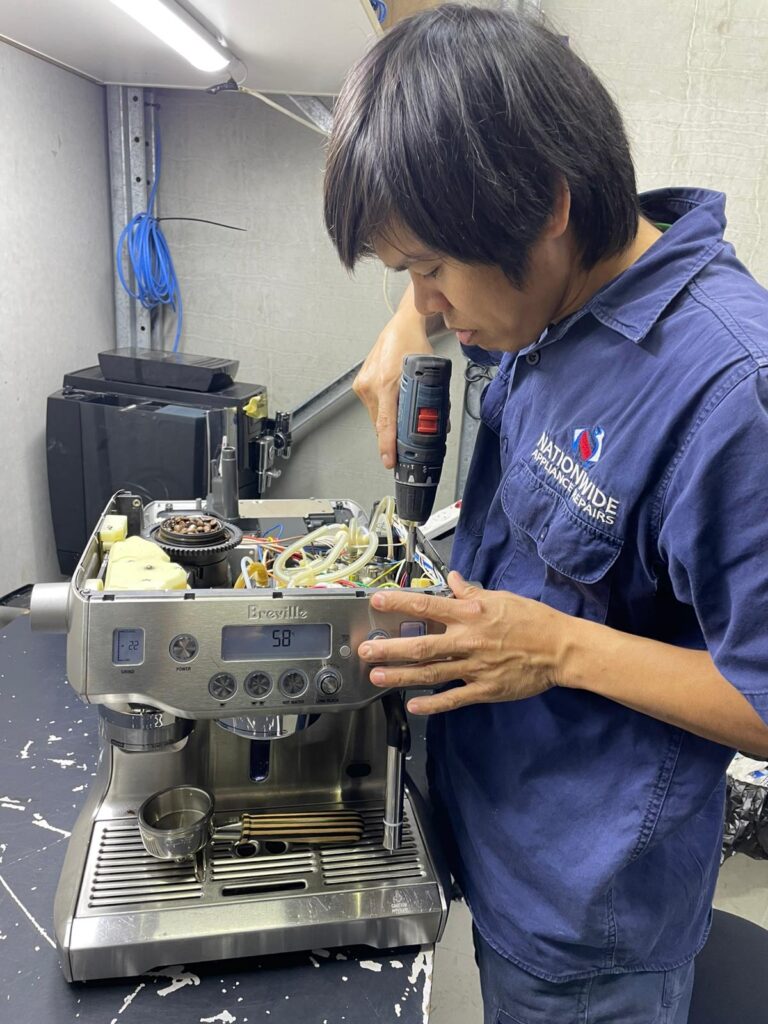
- Pump, heating element, internal wiring, or circuit board problems
- Sparks, burning smell, or intermittent power – unplug immediately and call
- Part replacement requiring genuine components
- Persistent leaks you can’t locate (likely internal)
- Water pressure problems or error codes requiring diagnostic tools
- Commercial machines, which should almost always be professionally serviced
Attempting complex repairs yourself can void warranties and create safety hazards.
What Types of Machines Can Be Repaired?
Most coffee machines, regardless of complexity, are designed to be repaired:
| Machine Type | What We Service |
| Domestic (auto, semi-auto, manual) | Leaks, heating problems, grinder faults |
| Commercial (cafes and offices) | Complex electrical and plumbing systems; fast turnaround prioritised |
| Built-in units | Careful access to internal components without damaging surrounding cabinetry |
| Manual espresso machines | Pressure gauges, group heads, and steam wands |
| Automatic bean-to-cup | Grinder, brew unit, milk frother, or internal sensor faults |
| Pod and capsule machines | Pump failures and water flow issues on higher-end models |
Brands We Service
Our technicians have extensive experience with dozens of brands, enabling faster diagnosis and more effective repairs:
| Category | Brands |
| Domestic | Breville, Jura, De’Longhi, Sunbeam, Gaggia, Rocket, ECM, Lelit, Philips, Bosch |
| Saeco | See our dedicated Saeco repairs page |
If you have a less common brand, contact us – our technical expertise covers most machines others won’t attempt.
The Repair Process
1. Drop-off or pickup – all domestic repairs completed at our Dandenong workshop. Pickup service is available from the Mornington Peninsula (pickup fee and inspection fee apply, communicated upfront).
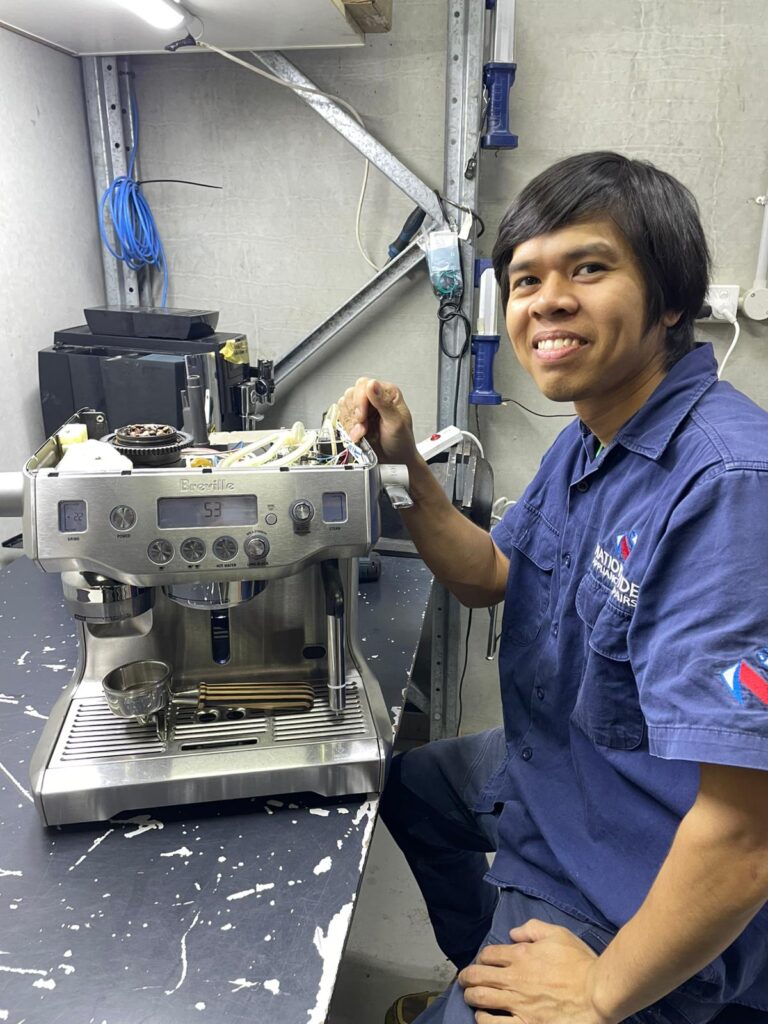
2. Diagnosis – thorough inspection to identify the exact fault.
3. Quote – after inspection (typically 7–10 working days), we provide a detailed quote. We don’t proceed without your approval.
4. Parts and repair – once approved, we order necessary components (typically 5–10 working days delivery) and perform the repair using genuine parts.
5. Testing – every machine is tested before return – function, pressure, and temperature verified.
Costs
| Service Type | Inspection (Drop-off) | Inspection (Pickup) | Typical Repair Range |
| Domestic | $90 + GST | Fees apply | $100–$250 all in |
| Commercial | $180 + GST | Fees apply | Varies by fault |
Most repairs complete within 2–3 weeks from drop-off. For full pricing, visit our Pricing Page.
Preventative Maintenance Tips
Regular maintenance extends lifespan and prevents most common repairs. The Mornington Peninsula’s water supply carries minerals that accelerate scale buildup – making these habits especially worthwhile in this area.
| Frequency | Tasks |
| Daily | Clean removable parts, drip tray, and external surfaces; rinse steam wand after use |
| Weekly | Deep clean brew unit and water tank |
| Monthly/Quarterly | Descale every 1–3 months using a manufacturer-approved solution |
| Annually | Professional service: internal inspection, seal replacement, calibration |
Frequently Asked Questions
How do I arrange pickup from the Mornington Peninsula?
When you contact us, we’ll arrange a pickup at a time that works for you. Pickup fees and inspection fees apply and are communicated upfront before any commitment. Once the machine reaches our Dandenong workshop, we keep you updated throughout the process.
How long does repair take for Peninsula customers?
The same as any workshop repair: 7–10 working days for inspection and quote, then 5–10 working days for parts (if needed), then repair and testing. Most repairs complete within 2–3 weeks from when the machine arrives at the workshop. We factor in pickup transit time.
Is my machine worth repairing?
If repair falls under 70% of a new machine’s price, it’s generally worth doing. Older machines are often more durably built than newer replacements. Our technicians provide an honest assessment during inspection – if repair doesn’t make sense, we’ll tell you.
Can you repair machines purchased from overseas or grey market?
Yes. We repair machines regardless of where they were purchased, including overseas models. Machine age and parts availability may affect repairability, but most machines – even those 10–15 years old – are still serviceable.
What if my machine can’t be fixed?
Rarely happens. Most faults are repairable – scale buildup, worn seals, failed pumps. If a repair isn’t viable, you’ve paid only the inspection fee. We’ll explore all options before suggesting replacement and give you an honest recommendation.
Getting Your Machine Fixed
Most machines are worth repairing. Transparent inspection, genuine parts, and solid warranties mean you know exactly what you’re getting – and your machine is protected afterward.
For more information or to arrange pickup from the Mornington Peninsula, call 1300 434 380 or contact us online.