A musty smell coming from the washing machine, or worse, laundry that smells off even straight out of a finished cycle, is one of the more common complaints we hear, and front-loaders in particular are prone to it. The good news is that in the vast majority of cases, it’s not a mechanical fault at all. It’s mould, mildew, or detergent build-up, and all three are genuinely fixable with a proper clean rather than a repair.
Here’s what actually causes it and how to sort it out.
Why Front-Loaders Are More Prone to This Than Top-Loaders
Front-loading washing machines use a rubber door gasket to form a watertight seal during the wash cycle, and that gasket is also the single most common source of washing machine odour. Water, detergent residue, and lint get trapped in its folds, and because the door stays shut for most of the wash cycle, that moisture doesn’t get the chance to evaporate the way it would in an open top-loader.
Front-loaders also tend to use less water per cycle by design, which is great for efficiency but means there’s less water to rinse detergent residue away. Combine that with a door that’s often left closed between washes, and you’ve got a genuinely ideal environment for mould and mildew to take hold.
The Usual Suspects
The door gasket
By far the most common cause. Pull back the rubber seal and check underneath it, since this is where hair, lint, coins, and general grime tend to collect out of sight.
Detergent and fabric softener build-up
Using more detergent than needed, or using a non-HE formula in a machine designed for high-efficiency detergent, leaves residue behind that doesn’t fully rinse away. Over time it builds up in the drum, the dispensers, and the gasket, and it smells exactly as unpleasant as it sounds.
A closed, damp drum between washes
Leaving the door shut after a cycle traps moisture inside, which is precisely what mould needs to grow. This is one of the simplest habits to fix and one of the most effective.
A clogged pump filter
Lint, hair, and small debris build up in the pump filter over time, and standing water left behind after a cycle can develop a sour or musty smell of its own, separate from anything happening at the gasket.
How to Actually Get Rid of It
Start with the gasket. Pull it back fully and check for any visible debris, wiping it out with a rag dipped in warm soapy water or a vinegar solution. Use an old toothbrush to get into the grooves and corners, since that’s usually where the worst of it hides. Rinse and dry the seal, then leave the door open so it can air out properly.
Next, run a hot cleaning cycle. Most front-loaders have a dedicated self-clean or tub-clean cycle, and it’s worth using it with either a washing machine cleaner or two cups of white vinegar in an empty drum. If mould is visibly present rather than just a lingering smell, chlorine bleach poured directly into the detergent compartment (not the bleach compartment, and never mixed with other cleaners) run on the hottest cycle setting is the more thorough option. Follow up with a rinse and spin cycle afterward to clear any remaining residue.
While you’re at it, pull out the detergent and fabric softener dispensers if they’re removable and wash them separately with warm soapy water, since sticky residue builds up there just as readily as it does in the drum.
Finally, check the pump filter, usually accessed from a small panel at the front base of the machine on front-loaders. Clean out any trapped debris and lint, since a filter that’s never been touched is a common, overlooked contributor to persistent smells.
Quick Reference Table
| Symptom | Likely Cause | Fix |
|---|---|---|
| Musty smell from the closed machine | Door gasket, closed drum between washes | Clean gasket, leave door open to dry |
| Laundry smells even after washing | Detergent build-up, or non-HE detergent in an HE machine | Reduce detergent, switch to HE formula, run a hot clean cycle |
| Visible black or dark spots on the gasket | Mould growth | Chlorine bleach cycle, then thorough gasket clean |
| Sour smell even with a clean gasket | Clogged pump filter or standing water | Clean the pump filter |
| Smell persists after all of the above | Possible drain hose or internal issue | Worth a technician’s assessment |
Keeping It From Coming Back
- Leave the door and detergent drawer open between washes so the machine can air dry properly
- Wipe down the gasket after particularly heavy or muddy loads rather than waiting for your next scheduled clean
- Use the correct amount of HE detergent for your machine, since more isn’t better here, it just means more residue left behind
- Run a hot cleaning cycle monthly, even if there’s no smell yet, as routine maintenance rather than a reactive fix
- Clean the pump filter every few months, more often in households doing frequent loads
When It’s More Than a Cleaning Problem
If you’ve worked through all of the above and the smell keeps coming back, or if it smells more like sewage than mustiness, that can point to a drain hose installed incorrectly or a partial blockage further along the drain line rather than anything inside the drum itself. Our guide on water pooling under a washing machine covers a related issue worth ruling out if you’re also noticing any dampness around the base of the machine.
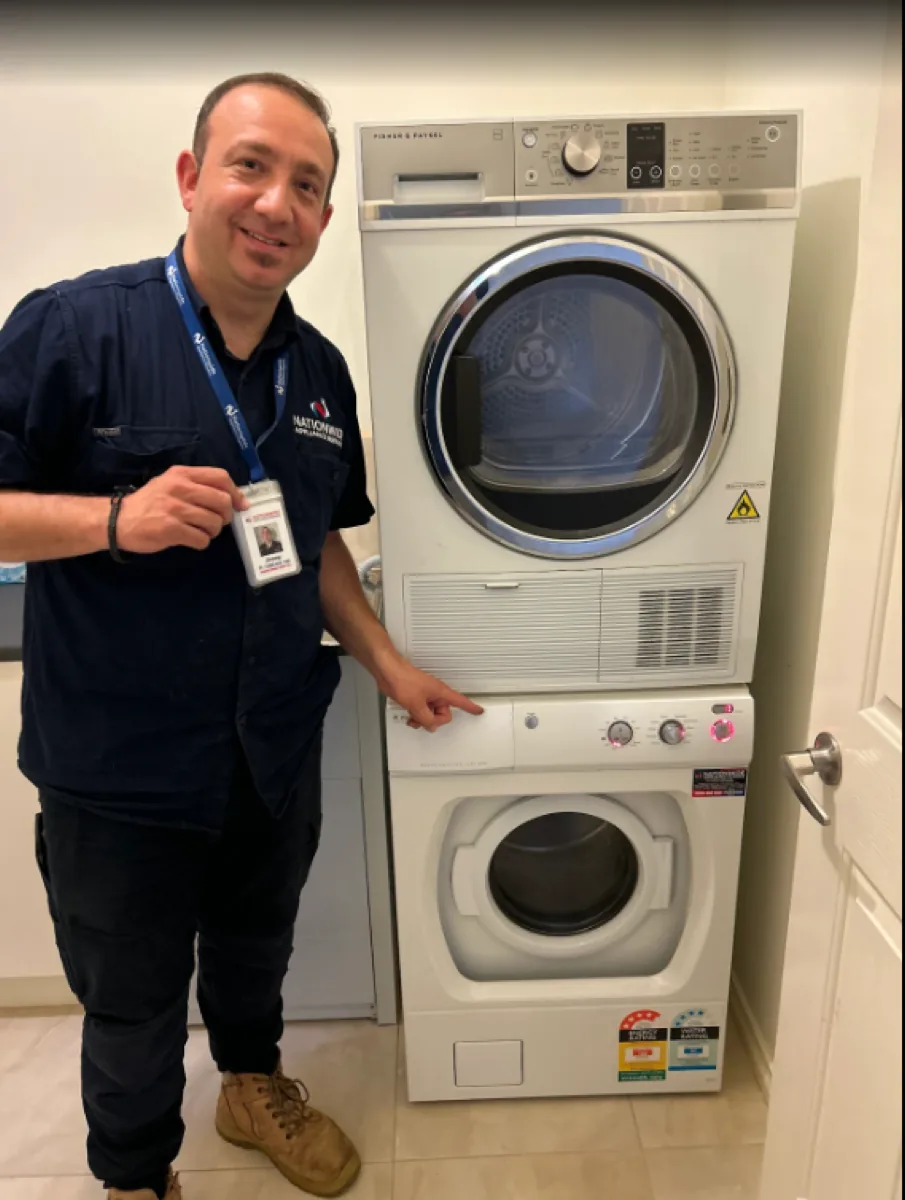
National Appliance Repairs technicians work on washing machine repairs across all major brands, and can identify whether a persistent smell is a cleaning issue or something mechanical that needs attention. If your machine is also showing an error code rather than just smelling off, our guides on Samsung and LG error codes cover that separately, and if it won’t turn on at all, see our guide on washing machines that won’t turn on. Every repair comes with a 12-month parts warranty and 3-month labour warranty.
Frequently Asked Questions
Why does my front-loading washing machine smell worse than my old top-loader ever did?
Front-loaders use a sealed door gasket and less water per cycle, both of which make it easier for moisture and detergent residue to linger rather than evaporate or rinse away. It’s a genuine design trade-off, not a fault with your specific machine.
Should I leave the washing machine door open between loads?
Yes. Leaving it open lets the drum air dry rather than sitting damp and sealed, which is one of the simplest and most effective habits for preventing mould and mildew from developing in the first place.
Can I use regular detergent in a front-loading washing machine?
It’s not recommended. Regular detergent produces more suds than an HE machine is designed to rinse away efficiently, which leaves residue behind and contributes directly to odour build-up over time.
How often should I run a cleaning cycle on my washing machine?
Roughly once a month is a reasonable routine for most households, using either a dedicated washing machine cleaner or white vinegar. Increase the frequency if you’re noticing smells more often than that.
When should I stop trying to fix the smell myself and call a technician?
If you’ve cleaned the gasket, run a hot cycle, and checked the pump filter and the smell persists, or if it smells like sewage rather than mustiness, it’s worth having a technician check the drain hose and connections rather than continuing to guess.
The Bottom Line
Most washing machine odours come down to the door gasket, detergent build-up, or a closed damp drum between washes, and all three are fixable with a proper clean and a few small habit changes. Still smelling off after that? Contact National Appliance Repairs or call 1300 434 380 for a same-day assessment, subject to availability, across Melbourne, Sydney, Brisbane, Adelaide, and Perth.
Call Us:
or leave a message using the form below