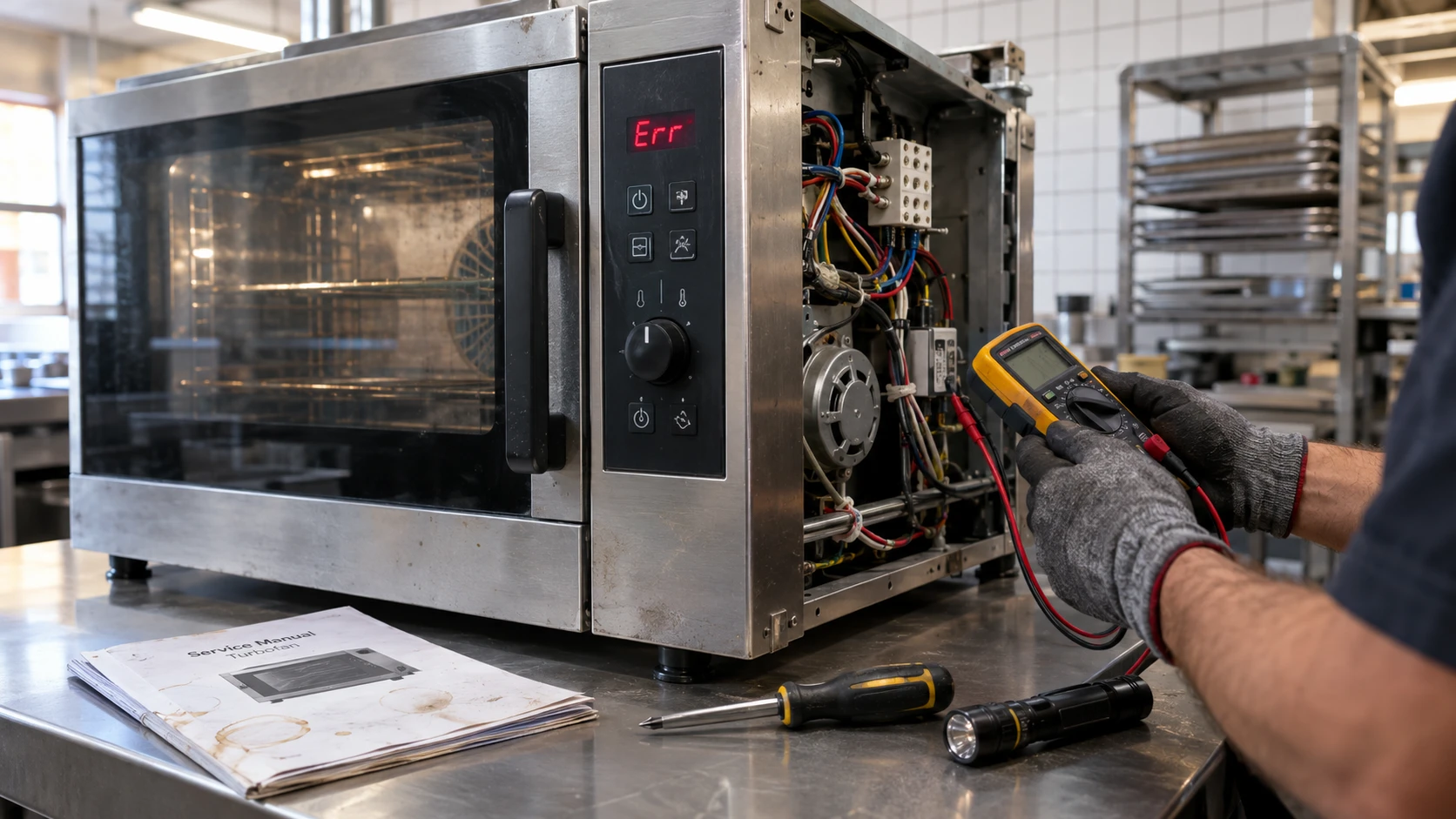
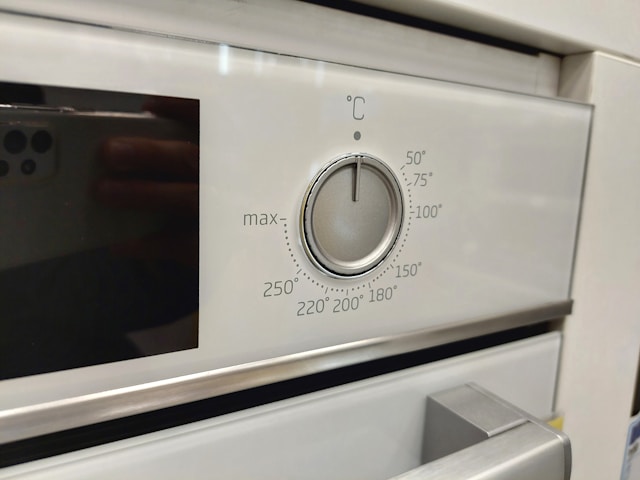

You set the temperature, wait, and the oven stays cold. Or it warms up a little but never gets where it needs to be — the preheat light eventually goes out but the cavity isn’t anywhere near hot. Fisher & Paykel ovens are generally solid, but when heating fails, it almost always comes down to one of a small number of components.
This guide works through each one in plain terms. For authorised repairs across Sydney, Melbourne, Brisbane, Perth, and Adelaide, National Appliance Repairs carries Fisher & Paykel parts and offers same-day availability.
Check These Before Anything Else
A handful of things can look like a heating fault but aren’t. Worth spending 60 seconds ruling them out.
- Is the clock set? Many Fisher & Paykel models won’t operate in cook mode until the clock has been set after a power interruption. If there’s been a recent outage, set the clock first and try again.
- Has the auto-timer been activated? The auto-timer function, if accidentally switched on, makes the oven appear completely unresponsive. Check the display for a timer or clock symbol indicating the oven is waiting for a scheduled start time.
- Has a circuit breaker tripped? Oven elements draw significant current. A tripped breaker at the switchboard cuts power entirely. Check the board before assuming the oven is faulty.
If all three are fine, the fault is inside the oven.
Bake Element
The bake element is the most common single failure point in Fisher & Paykel electric ovens. It’s the horizontal element at the base of the cavity on conventional models, or the circular rear element on fan-forced models. When it burns out, the oven either produces no heat at all, or only partial heat from whichever elements are still functional.
Signs it’s the element:
- The display and controls work normally, but there’s no heat
- One function works (grill, for example) while another doesn’t
- You can see a visible break, blister, or dark burn mark on the element
Disconnect power at the wall and at the switchboard before getting close to it. On most Fisher & Paykel models, the bake element is accessed by removing the back internal panel of the oven cavity — usually three or four screws. The element connects at two terminals at the rear wall. A multimeter test for continuity gives a definitive answer. No continuity means it needs replacing.
Heating element replacement typically runs $200–$400 in parts and labour. For an oven under ten years old, it’s almost always worth fixing.
Thermostat
The thermostat monitors internal temperature and controls when the elements activate to maintain the set level. When it fails, you lose temperature control. The oven might:
- Run continuously at maximum heat without cycling down
- Fail to heat at all because the thermostat circuit is permanently open
- Cut out too early, leaving the oven well below the target temperature
The call-for-heat indicator light on most Fisher & Paykel models cycles on and off during normal operation as the thermostat requests and releases heat. If that light stays permanently on or permanently off when it shouldn’t, the thermostat is a strong suspect.
Accessing the thermostat requires removing the oven and reaching the rear — behind the control panel fascia on most models. The BI602 is a well-documented example where the thermostat commonly fails; technicians familiar with Fisher & Paykel models treat it as a routine repair.
Temperature Sensor (Probe)
On many modern Fisher & Paykel ovens, a separate temperature probe feeds real-time cavity temperature data to the control board. If the probe gives a false or out-of-range reading, the board may restrict power to the elements based on incorrect information.
This tends to cause gradual rather than sudden symptoms:
- The oven reaches temperature eventually, but preheating takes far longer than it used to
- Temperatures are inconsistent across the cavity
- Some digital display models show an error code
A multimeter can measure the sensor’s resistance at room temperature. Fisher & Paykel sensors have a specified resistance value — a reading significantly outside that range points to a faulty probe.
Grill Element
If everything works except the grill function, the grill element has failed independently. It’s a separate component and can fail on its own without affecting the bake function at all. A visible break or burn mark is usually apparent; a continuity test confirms it.
Thermal Fuse
Fisher & Paykel ovens — particularly models with a self-clean function — have a thermal fuse or high-limit thermostat at the rear of the cavity. It’s a one-time safety device that cuts power permanently if the cavity reaches a dangerous temperature. Once tripped, it doesn’t reset.
If the oven stopped working after or during a self-clean cycle, a tripped thermal fuse is a strong candidate. It sits near the back of the cavity and a continuity test confirms whether it’s blown. Replacing it is straightforward, but it’s worth also checking the cooling fan — a failed cooling fan is usually what causes the overheating that blows the fuse in the first place.
Control Board
The control board manages everything: heating, timing, display, safety. Board faults can produce symptoms ranging from a single function not working to the oven being completely dead. Power surges are the most common cause of board damage in Australian homes.
Try disconnecting the oven for five minutes before assuming the board has failed — a cold reset occasionally clears electronic faults. If specific components (element, thermostat, sensor) all test fine and the oven still won’t heat, the board is the next step.
Control board replacement is expensive. It’s the last thing to confirm, not the first thing to replace.
Fault Guide
| What You’re Seeing | Most Likely Cause |
|---|---|
| Oven completely dead, display also off | Power supply — check breaker and clock setting |
| Display and fan work, no heat | Bake element failed |
| Heats in grill mode but not bake | Bake element failed; grill element intact |
| Won’t hold temperature, cycles irregularly | Thermostat or temperature sensor fault |
| Stopped after self-clean cycle | Thermal fuse blown |
| Slow to preheat, inconsistent temperatures | Temperature sensor (probe) fault |
| Runs at full heat with no regulation | Thermostat fault |
FAQ
Why did my Fisher & Paykel oven stop working after a self-clean cycle?
The self-clean cycle runs at very high temperatures. If the cooling fan wasn’t working properly, the thermal fuse may have tripped. Have the fuse tested and replaced, and get the cooling fan inspected at the same time.
My oven heats but takes much longer than it used to — what’s going on?
A temperature sensor giving a slightly inaccurate reading causes the control board to underpower the elements. It tends to degrade gradually, so you notice it over weeks rather than suddenly.
Can I replace a heating element myself?
With power fully isolated at the switchboard, the element itself is accessible and can be replaced by a careful DIY repair. Anything involving the thermostat connections, wiring harness, or control board should be done by a licensed technician to comply with Australian electrical standards.
Is it worth repairing rather than replacing?
For ovens under ten years old, almost always yes. A heating element repair at $200–$400 compares very favourably against the $1,500–$4,000 cost of a comparable new oven.
Does Australian consumer law apply to oven repairs?
Under the Australian Consumer Law, appliances must be of acceptable quality and last a reasonable time. If a heating element or thermostat fails unusually early, the manufacturer may be obligated to repair or replace it regardless of when the warranty period ended.
Conclusion
Fisher & Paykel oven heating failures nearly always trace back to the bake element, the thermostat, or the temperature sensor. Start by checking power is reaching the oven and the clock is set. After that, a technician can test the components and usually complete the repair on the same visit. National Appliance Repairs services Fisher & Paykel ovens across Australia with authorised technicians, same-day availability, and a 12-month warranty on all replacement parts. Call 1300 434 380 to book.