Inspection Fees: $90 + GST for domestic machines, $180 + GST for commercial machines
Service Options: Workshop drop-off or pickup (fees apply) for domestic machines; on-site repairs available for commercial machines in Melbourne, Sydney, Brisbane
Typical Turnaround: 2-3 weeks for most repairs (7-10 days inspection, then 5-10 days for parts)
Warranty Coverage: 12-month parts warranty, 3-month labour warranty
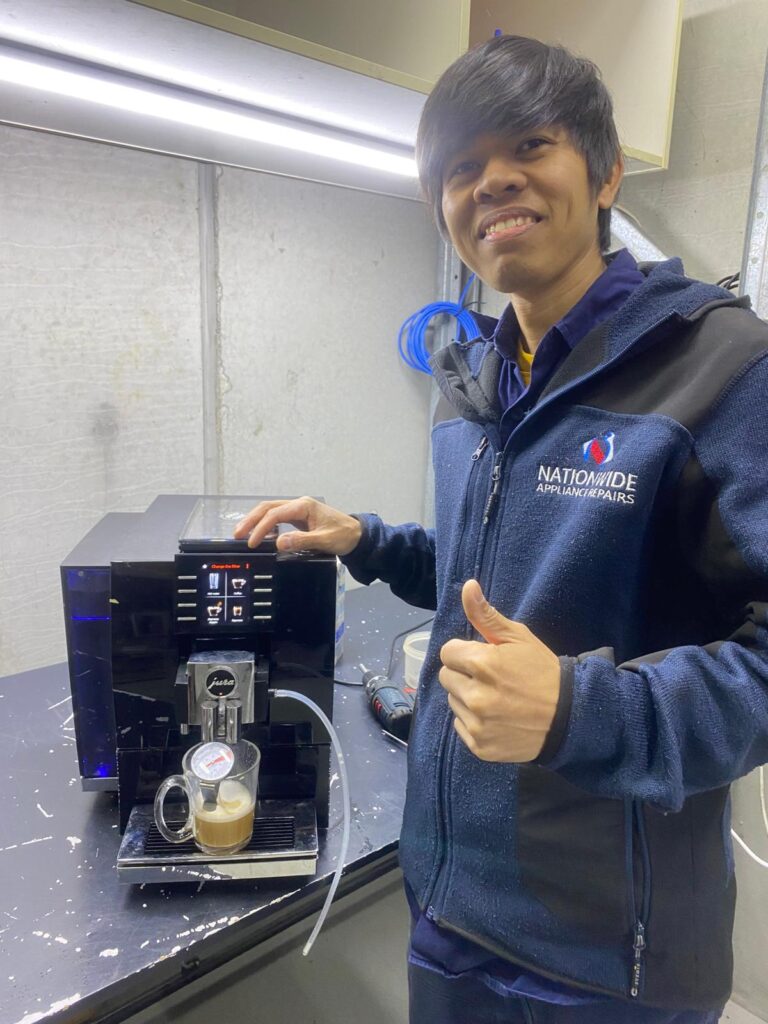
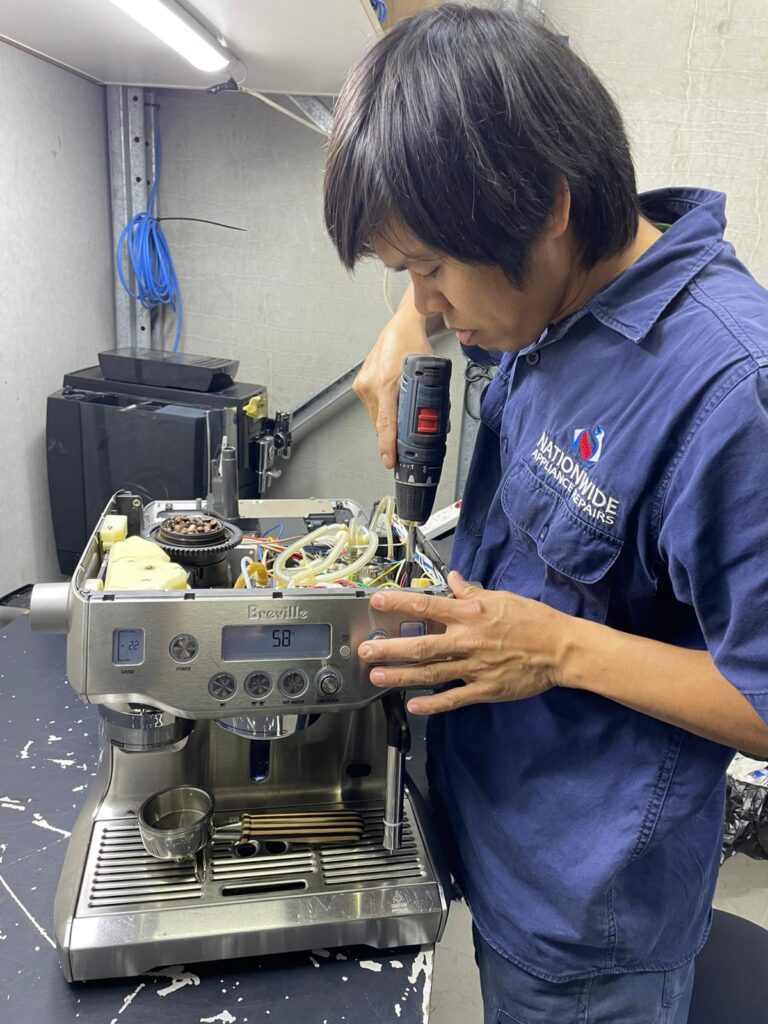
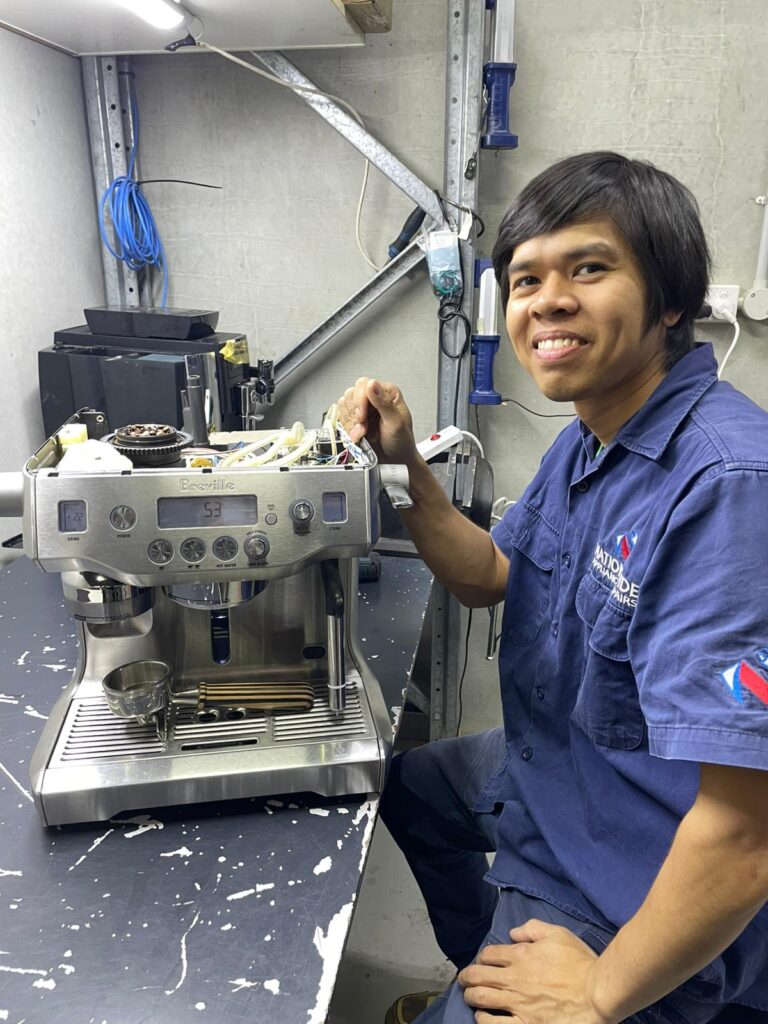
Brands Serviced: Breville, DeLonghi, Saeco, Jura, Sunbeam, Gaggia, and more
When to Call for Repairs:
Water leaking from underneath or through steam wand
Machine not heating water or producing steam
Espresso shots taking too long to brew
Strange noises or error messages appearing
Poor tasting coffee despite fresh beans
In Brunswick’s vibrant coffee culture, a broken machine is more than an inconvenience, it disrupts your entire morning. Whether you have a leaking Breville, a DeLonghi that won’t heat, or a Saeco with error messages, professional repair is often more economical than replacement.
In the appliance repair industry, repairs costing up to 70% of a new machine’s price are generally worth doing. With proper maintenance, your machine can deliver cafe-quality coffee for years. This guide will help you make an informed decision about restoring your beloved brewing equipment.
Common Signs Your Coffee Machine Needs Repair
When your reliable machine starts acting up, it’s natural to wonder if something’s seriously wrong. The good news is that most problems have warning signs. Catching these early can save you from more expensive repairs and get you back to enjoying your perfect brew sooner.
Warning Signs to Watch For
Your machine will often signal a problem before a complete breakdown. Look out for these red flags:
Water Pooling: Water underneath your machine or dripping from unusual places often indicates a worn seal, cracked hose, or internal blockage. This needs attention before it damages your countertop or the machine’s electronics.
Strange Noises: New grinding, clunking, or loud vibrating sounds are not normal. The grinder could be jammed, or the pump might be struggling to work.
Pressure and Steam Issues: A low pressure gauge, slow brewing times, or weak/absent steam from the milk frother all point to a pressure problem that affects the quality of your coffee.
Poor Taste or Temperature: If your coffee tastes burnt, bitter, or is lukewarm despite using fresh beans, it could be due to scale build-up, blocked filters, or a failing heating element.
Error Messages: Persistent error codes that don’t clear with basic troubleshooting are your machine’s way of asking for professional help.
For those with Breville machines experiencing these issues, our specialized Breville Coffee Machine Repairs service can address brand-specific problems.
When to Call a Professional for coffee machine repairs Brunswick
While DIY fixes can be satisfying, coffee machines are complex. Knowing when to call for coffee machine repairs in Brunswick professionals can save you time, money, and potential safety hazards. Call an expert if:
Basic Troubleshooting Fails: You’ve already tried cleaning, descaling, and checking for obvious blockages, but the problem persists.
You Suspect Electrical Problems: For your safety, any issues with power, exposed wiring, or internal circuitry should be handled by a professional.
There Are Internal Leaks: Leaks you can’t easily access can cause significant water damage to electrical components inside the machine.
Complex Parts Need Replacing: Swapping out pumps, heating elements, or circuit boards requires specialized tools and expertise. One wrong connection could create a bigger problem. If you own a sophisticated Jura machine, our Jura Coffee Machine Repairs team has the specific expertise to handle these intricate systems safely.
When in doubt, a quick phone call can help determine if it’s a simple fix or something that needs professional attention.
Understanding Coffee Machine Repair Services in Brunswick
When your coffee machine acts up, knowing what professional repair services involve can make the process less daunting. In Brunswick, specialists work on everything from basic home models to sophisticated commercial setups.
The process starts with a diagnostic service, where technicians use their experience and specialised equipment to pinpoint the root cause of the problem. This prevents unnecessary repairs and ensures you only pay for what needs fixing. If needed, part replacement is done using genuine, manufacturer-approved components to ensure your machine works properly and lasts longer.
Professionals also offer deep cleaning and descaling services that go far beyond regular home maintenance, reaching internal components to remove stubborn mineral deposits and coffee oils. This improves hygiene, taste, and machine efficiency. It’s important to distinguish between servicing (preventative maintenance) and repairing (fixing a specific problem). Regular servicing, recommended annually for home machines, involves a full check-up, cleaning, and calibration to prevent future breakdowns.
For espresso lovers, grinder calibration is another key service. Professionals can fine-tune your grinder to match your beans and brewing preferences, perfecting your shot. Services cater to both domestic and commercial machines. For businesses, where downtime means lost revenue, efficient repairs are critical. Learn more about our commercial services on our Commercial Appliance Repairs in Brunswick page.
Brands and Machine Types Serviced
A good repair service keeps up with the diverse world of coffee machines. At National Appliance Repairs, we work with an extensive range of brands and models.
Saeco: We have specialist knowledge for these sophisticated Italian automatic machines, handling common issues from brewing unit problems to milk frother malfunctions. Our dedicated Saeco Coffee Machine Repairs page has more information.
Breville: A household name in Australia, we frequently repair their popular machines for common grinder, pump, and heating element issues.
DeLonghi: We handle everything from basic descaling to complex electronic repairs on these versatile brewers, from budget to premium models.
Jura: These premium, Swiss-engineered machines feature sophisticated technology that demands expert attention and specialized knowledge.
Sunbeam: We get these reliable Australian machines back to their dependable selves, fixing common issues like leaks, temperature problems, and pump failures.
Gaggia: Whether it’s a manual Classic or an automatic model, we service the full range to ensure they continue producing an authentic espresso experience.
Beyond these, we also service Rocket, ECM, Lelit, Phillips, Electrolux, Isomac, and many others.
The machine types we handle are equally broad:
Automatic machines, which often have complex internal mechanisms, grinder, or electronic faults.
Manual and semi-automatic espresso machines, which typically need pump repairs, boiler servicing, or group head maintenance.
Pod and capsule machines, which can suffer from water flow issues, heating problems, and blockages.
Semi-commercial machines for small offices or serious home baristas.
Whatever you own, our goal is to get your machine back to brewing beautiful coffee as quickly and reliably as possible.
The Repair Process: Costs, Timelines, and Warranties
When your coffee machine breaks, you need to know the cost, timeline, and guarantees. We believe in being upfront about the entire process.
Typical Costs for coffee machine repairs Brunswick
Understanding the costs for coffee machine repairs in Brunswick helps you make an informed decision.
Service Arrangement
For domestic coffee machines and small appliances: All repairs are completed at our fully equipped Dandenong workshop. You can drop off your machine directly, or we can arrange pickup (pickup fee and inspection fee apply and are communicated upfront).
For commercial coffee machines: We offer on-site repairs in Melbourne, Sydney, and Brisbane only. Given their weight and size, we prefer to repair these machines on-site, though you’re welcome to drop them at our workshop if preferred.
Inspection and Diagnostic Fees
A diagnostic assessment is required before any repair. For domestic machines brought to our workshop, the inspection fee is $90 + GST. For commercial units, it’s $180 + GST. Pickup and delivery services are available with associated fees.
After inspection (typically 7-10 working days), we provide a detailed quote for parts and labour. We won’t proceed without your approval. Please note that some issues require repair before testing. For example, water leaks must be fixed first to confirm no additional leaks exist, as there’s no way to test without completing the repair.
What Influences the Final Cost?
The total repair price depends on the machine’s type and age, as well as the cost and availability of parts. High-end automatic or commercial machines involve more expensive components. A simple seal replacement costs far less than a new pump or boiler. We always recommend genuine manufacturer parts for optimal performance and will provide a clear, written estimate before starting any work.
For brand-specific information, such as for DeLonghi, visit our DeLonghi Appliance Repairs page.
Service Type
Cost
Includes
Notes
Workshop Inspection (Domestic)
$90 + GST
Full diagnostic assessment
Workshop Inspection (Commercial)
$180 + GST
Full diagnostic assessment
Pickup Service
Fees apply
Transport to workshop
Plus inspection fee
Typical Turnaround Time
We know you want your coffee back fast. Here are our typical timeframes:
Service Option
Estimated Time (approx.)
Notes
Workshop Drop-Off
2-3 weeks
7-10 days for inspection and quote, then 5-10 days for parts after approval
Commercial On-Site Repair (Simple)
Same day to 1-3 days
For commercial machines only – Melbourne, Sydney, Brisbane
Commercial Repairs
Priority service available
We understand business urgency
Once you approve the quote, we order any necessary parts (typically 5-10 working days for delivery) and complete the repair. Most repairs are completed within 2-3 weeks from drop-off, though simple fixes may be faster. We always provide a realistic timeframe upfront and keep you updated throughout the process. You can find more information on ourAreas We Service page.
Warranties and Guarantees
We are confident in our work and back it with solid warranties for your peace of mind.
12-Month Parts Warranty
Every genuine spare part we install comes with a 12-month warranty. If a component we replaced fails due to a manufacturing defect within a year, we’ll replace it at no cost.
3-Month Labour Warranty
Our workmanship is guaranteed for 3 months. If the same problem recurs within this period due to our repair, we will fix it without additional labour charges.
These warranties are our commitment to providing reliable coffee machine repairs in Brunswick residents trust. We’re not just fixing your machine for today; we’re ensuring it works for the long haul.
DIY Maintenance and Finding a Reliable Technician
Regular maintenance is key to your machine’s longevity and the quality of your coffee. While some tasks require a professional, there’s plenty you can do at home to prevent breakdowns.
Simple DIY Maintenance Tips
Incorporate these simple tips into your routine to reduce the need for coffee machine repairs in Brunswick.
Daily Cleaning: After each use, wipe the steam wand and exterior. Run a quick water flush through the group head of an espresso machine. Empty and rinse the drip tray and ground bin to prevent overflows and mold.
Weekly Group Head Cleaning: For espresso machines, use a brush to scrub away built-up coffee oils from the group head. Follow your manufacturer’s instructions for backflushing with a cleaning detergent.
Monthly Descaling: Limescale from hard water can damage your machine. Use a specialised descaling solution to remove mineral deposits from internal components. Always check your manual for specific instructions and recommended products, as some manufacturers advise against using vinegar.
Use Filtered Water: Using filtered water improves coffee taste and significantly reduces mineral build-up, prolonging your machine’s life.
Choose the Right Beans: Using high-quality coffee beans that are not excessively oily can reduce residue build-up in your grinder and brewing components.
How to Choose a Reputable Repair Service
When you need professional help, choosing a reliable repair service in Brunswick is essential. Here’s what to look for:
Google Reviews and Reputation: Look for services with a high average rating and numerous positive reviews. Comments on professionalism, communication, and repair effectiveness are telling. We are proud of our high Google Rating from thousands of satisfied customers.
Word-of-Mouth: Ask friends, family, or local cafes for recommendations.
Transparent Pricing: A reputable service will be upfront about inspection fees, call-out charges, and labour rates, providing a detailed quote before starting work.
Warranties: A solid warranty on both parts and labour is a sign of a confident, reliable service.
Brand Experience: Inquire about their experience with your specific machine brand and model. Authorised repair centres often have specialised training and direct access to genuine parts.
Convenience: Check if they offer on-site repairs (for commercial machines), a workshop drop-off, or a pick-up service. We offer various options across Melbourne to make the process seamless. Learn more about our extensive Areas We Service.
Frequently Asked Questions about Coffee Machine Repairs
Is it worth repairing an old coffee machine?
In most cases, yes. In the appliance repair industry, repairs costing up to 70% of a new machine’s price are generally worth doing. If your repair quote falls within this range, it’s typically a smart investment.
Here’s an important advantage many people don’t realize: older coffee machines were often built with superior materials and stronger components compared to many modern models. Repairing your existing machine means keeping equipment with more durable parts rather than replacing it with a newer machine that may have less robust construction.
We provide a transparent quote after diagnosis so you can make an informed decision. Other factors to consider include:
Age and Condition: A well-maintained machine under 5-7 years old can often be repaired for several more years of service.
Part Availability: Sourcing parts for very old or obscure models can be challenging, which we’ll advise you on upfront.
Environmental Impact: Repairing keeps appliances out of landfills.
Sentimental Value: We understand attachment to a beloved machine and will provide our professional opinion to help you decide.
For more on our repair philosophy, visit our page on Coffee Machine Repairs in Melbourne.
How often should I get my coffee machine professionally serviced?
We recommend having your coffee machine professionally serviced every 12 months. Regular professional servicing significantly reduces the likelihood of unexpected breakdowns and costly repairs.
Think of it like your car: service it on time, and you’ll get a much longer lifespan. More frequent servicing means fewer breakdowns.
The ideal frequency depends on usage:
Domestic Machines: For daily home use, professional servicing every 12 months is recommended. A technician can spot early wear, perform a deep clean, and calibrate settings.
Commercial Machines: In a busy cafe or office, service should be done every 3 to 6 months to prevent costly downtime and ensure consistent quality.
Hard water areas, common in Melbourne, may require more frequent servicing to manage mineral build-up. Regular servicing is cheaper than emergency repairs and extends your machine’s lifespan.
What’s the typical turnaround time for repairs?
After inspection (typically 7-10 working days), we provide a quote for your approval. Once approved, we order any necessary parts (typically 5-10 working days for delivery) and complete the repair. Most repairs are completed within 2-3 weeks from drop-off, though simple fixes may be faster.
For commercial machines requiring on-site repairs in Melbourne, Sydney, or Brisbane, simple fixes can sometimes be completed the same day, while more complex issues may take 1-3 days.
We always keep you informed throughout the process and provide realistic timeframes upfront.
Your Go-To Solution for Coffee Machine Repairs
In Brunswick, a working coffee machine is essential. When yours falters, you need a reliable, professional solution to get you back to brewing quickly.
At National Appliance Repairs, we provide expert coffee machine repairs to Brunswick residents and businesses. Choosing professional repair over replacement is a smart decision that extends your machine’s lifespan, ensures coffee quality, and prevents future headaches. Our skilled technicians spot potential issues before they become major breakdowns, saving you from unexpected failures.
Our team offers years of experience, transparent pricing, and comprehensive warranties for all major brands and machine types. Whether you’re in Brunswick or across Melbourne, we are equipped to handle your repair needs efficiently.
Don’t let a faulty machine ruin your day. Let us restore it to its former glory so you can get back to enjoying exceptional coffee.Ready to get started?Contact us todayto book your repair and explore ourCoffee Machine Repairs Melbourneservices.
In Melbourne's coffee culture, a broken commercial machine means lost revenue, frustrated customers, and disrupted operations. Every hour of downtime has a direct cost. This guide explains common commercial machine faults, what the repair process involves, how to choose a service provider, and how preventative maintenance reduces emergency callouts.
Quick reference:
On-site repairs
Melbourne, Sydney, and Brisbane
Workshop repairs
Dandenong facility (drop-off or pickup)
Inspection fee
$180 + GST (commercial, workshop drop-off)
Turnaround
2–3 weeks workshop; emergency on-site prioritised
Loan machines
Often available during extended repairs
Warranty
12-month parts · 3-month labour
Brands
La Marzocco, Sanremo, Wega, Rancilio, Jura, Breville, Gaggia, Expobar, and more
Common Commercial Coffee Machine Failures
Understanding common faults helps you spot trouble early and communicate clearly with your technician.
Weak or no coffee flow – often caused by clogged group heads, a worn water filter, or a failing pump. In Melbourne's hard water areas, missed descaling accelerates mineral buildup.
Temperature inconsistency or overheating – ruins coffee quality and can be a safety concern. Usually points to a faulty heating element, thermostat, or temperature sensor. Needs immediate professional attention.
Water leakage – puddles around or under the machine stem from cracked tanks, worn seals, or loose fittings. Leaks can damage electrical components and create slip hazards.
Grinder malfunctions – dull burrs or motor failure halt service immediately. Strange grinder noises or inconsistent grounds compromise coffee quality.
Unusual noises – grinding, banging, or whining often indicate a failing pump, motor issues, or heavy scale buildup. Address these before they worsen.
Poor coffee taste – bitter, sour, or metallic flavour points to dirty components, scale, or faulty parts requiring professional diagnosis.
Power failures – machine won't turn on or trips the circuit breaker. Electrical issues must be handled by a qualified technician.
Basic checks your staff can try first:
Confirm power supply is connected and the outlet works
Ensure the water tank is full and correctly seated
Clean group heads and portafilter baskets
Empty drip trays and waste bins
Try a power cycle to reset the machine
Consult the manual for error codes
If these don't resolve the issue, professional repair is needed. Attempting complex repairs without proper knowledge can void your warranty and cause more damage.
Service Options
We offer flexible repair options to suit your business needs.
On-site repairs – our technicians service commercial machines on-site in Melbourne, Sydney, and Brisbane. Given the size and weight of commercial equipment, on-site is the preferred option for plumbed-in machines. We carry commonly needed parts in service vans to complete many repairs in a single visit.
Workshop repairs – for locations outside our on-site areas, or for complex issues, machines can be brought to our Dandenong workshop or we can arrange pickup (fees applied and communicated upfront).
Emergency call-outs – we offer after-hours service and can often attend to urgent issues within 24 hours in our service areas. We're flexible with scheduling around your operating hours – early morning before opening, after service, or other arrangements.
Loan machines – to keep your business running during extended repairs, we can provide a temporary replacement machine on request.
All repairs use genuine parts and are backed by 12-month parts warranty and 3-month labour warranty.
The Repair Process and Costs
Step-by-Step
1. Initial assessment – on-site diagnosis for commercial machines in Melbourne, Sydney, Brisbane; or workshop inspection for all other locations.
2. Detailed quote – once the issue is identified, we provide a clear quote for parts and labour. Workshop inspection fee is $180 + GST for commercial machines. On-site call-out fees are quoted upfront. Note: some issues require partial repair before testing – water leaks, for example, must be fixed before we can confirm no secondary leaks exist.
3. Repair and turnaround – workshop repairs: 7–10 working days for inspection and quote, then 5–10 working days for parts delivery, then repair and testing (2–3 weeks total). On-site emergency repairs in Melbourne, Sydney, Brisbane are prioritised for same-day or next-day attendance where possible.
Years of hands-on commercial equipment experience; not just domestic knowledge
Certifications
Electrical licence; gas fitter certification where relevant
Customer reviews
Consistent positive feedback from other business owners
Response time
Same-day attendance for urgent commercial issues
Service area
Covers your suburb – we service all Melbourne, CBD to outer suburbs
Preventative Maintenance
Think of preventative maintenance as a business cost that prevents much larger ones. Regular servicing catches problems before they become downtime.
Key benefits:
Extends equipment lifespan – proper care adds years to your machine's working life
Maintains coffee quality – clean components and calibrated pressure are essential for Melbourne's coffee standards
Prevents costly breakdowns – minor issues caught before they escalate into emergency callouts
Ensures workplace safety – regular checks of electrical and high-pressure components
Improves energy efficiency – a well-maintained machine runs more efficiently, lowering energy bills
Recommended Maintenance Schedule
Frequency
Who
Tasks
Daily
Staff
Backflush group heads, purge and wipe steam wands, clean drip trays and portafilters
Weekly
Staff
Deep clean group heads and shower screens; soak portafilters in cleaning solution; clean grinder burrs
Monthly
Staff
Descaling cycle if required; check all external fittings for tightness
Every 6–12 months
Staff / Professional
Replace water filters; professional descaling – critical given Melbourne's hard water
Annually (minimum)
Professional
Full internal inspection, worn seals/gaskets replaced, pressure and temperature calibration, safety feature testing
High-volume operations – busy cafes and restaurants – benefit from professional servicing every 3–6 months rather than annually.
Frequently Asked Questions
What commercial coffee machine brands do you service?
We have extensive experience with all major commercial brands, including:
Italian machine specialists: La Marzocco, San Remo, Wega, Rancilio, Gaggia, Expobar Super-automatic and bean-to-cup: Jura, Saeco, DeLonghi Popular domestic-commercial crossover: Breville, Sunbeam
Whatever brand powers your business, our technicians have the knowledge to diagnose and repair it efficiently.
What qualifications should a commercial coffee machine technician have?
Key qualifications include:
Electrical licence to work safely on commercial appliances
Manufacturer-specific training for brand expertise
20+ years hands-on experience (our senior technicians)
Food safety compliance knowledge for kitchen equipment
Are emergency or after-hours repairs available?
Yes. For commercial machines in Melbourne, Sydney, and Brisbane, we offer on-site emergency repairs and prioritise urgent calls. Our goal is same-day attendance for major issues whenever possible. If you have a coffee emergency, call 1300 434 380 immediately.
Why does preventative maintenance matter for commercial machines?
One emergency callout during peak hours typically costs more than a quarterly maintenance visit. Preventative contracts protect your business by catching small problems before they cause downtime. Most commercial operators who've experienced an unexpected breakdown during service never go back to reactive-only maintenance.
Can you provide loan machines during extended repairs?
Yes, loan machines are often available during extended repairs to keep your business operating. Ask about availability when you contact us.
Keeping Your Business Running
Your commercial coffee machine is the heartbeat of your business. The key to avoiding expensive downtime isn't just reacting to problems – it's preventing them with a consistent maintenance schedule.
When you do need a repair, choose a service with experienced technicians, transparent pricing, genuine parts, and rapid response. We understand Melbourne's coffee culture because we're part of it.
For emergency repairs or to book a service, call 1300 434 380 orcontact us online.
Melbourne's coffee culture runs deep. When your machine starts leaking, refuses to heat up, or produces watery espresso, your morning routine grinds to a halt. Most problems are fixable – repair is usually far cheaper than replacement.
This guide walks you through the warning signs that your machine needs professional attention, what to check before calling a technician, how the repair process works, and how to keep your machine running long-term.
Quick reference:
Common problems
Leaking water, weak extraction, no power, strange noises, temperature issues
2–3 weeks (7–10 days inspection, then 5–10 days for parts)
Brands serviced
Breville, DeLonghi, Saeco, Jura, Sunbeam, Rocket, Gaggia, La Marzocco, and more
Warning Signs Your Machine Needs Professional Attention
Catching these early prevents more expensive repairs later.
Water where it shouldn't be – puddles under the machine or a drip tray that fills too quickly point to worn seals, failed gaskets, or cracked internal components. Water near electronics can cause cascading damage, so don't delay.
Weak, watery espresso with no crema – a sign the machine isn't generating enough pressure (around 9 bars) to extract properly. Usually a struggling pump, incorrect grind size, or clogged group head.
No power or sudden shut-offs – blown fuse, faulty switch, or more complex wiring issue. Electrical faults always require professional attention.
Strange new noises – grinding, rattling, or loud whirring suggest something is wrong with the pump, grinder, or other moving parts. These rarely fix themselves.
Grinder problems – beans not grinding consistently, jammed beans, worn-out burrs, or grinder mechanism fault.
Temperature troubles – a machine that won't heat up produces lukewarm, under-extracted coffee; one that overheats scalds the grounds. Usually faulty thermostats or scale buildup.
Persistent error messages – simple alerts like "low water" are easy to fix. Cryptic codes that won't clear need professional diagnosis.
What to Check Before Calling a Technician
A few minutes of troubleshooting can solve minor issues or give our technicians helpful information for faster diagnosis.
Power source – firmly plugged in? Circuit breaker tripped? If there's power but the machine won't turn on, call a professional.
Water tank – empty or not seated correctly? Refill and ensure it clicks firmly into place.
Bean hopper – for bean-to-cup models, check for an empty hopper or jam. Top up beans and check for blockages.
Run a cleaning cycle – coffee oils and mineral scale affect performance. Follow your manual's instructions for cleaning and descaling. This often fixes slow water flow or poor taste.
Consult your user manual – especially for model-specific error codes.
If the machine still isn't working after these steps, professional repair is needed.
The Repair Process
Step-by-Step
1. Service arrangement
Domestic machines: All repairs at our Dandenong workshop. Drop off directly or arrange pickup (fees communicated upfront).
Commercial machines: On-site repairs in Melbourne, Sydney, and Brisbane. Workshop drop-off also available.
2. Assessment and quoting – thorough inspection to diagnose the root cause. After inspection (typically 7–10 working days), we provide a detailed quote for parts and labour. We don't proceed without your approval. Note: some issues require partial repair before testing – water leaks must be fixed before we can confirm no secondary leaks exist.
3. Repair and turnaround – once approved, we order necessary parts (typically 5–10 working days delivery) and perform the repair. Most repairs complete within 2–3 weeks from drop-off. Simple fixes may be faster.
Cost Breakdown
Service Type
Inspection Fee (Drop-off)
Typical Repair Range
Additional Costs
Domestic
$90 + GST
$100–$250 all in
Labour + Parts
Commercial
$180 + GST
Varies by fault
Labour + Parts
Repairs costing under 70% of a new machine's price are generally worth doing. For full pricing details, visit our Pricing Page.
Why Melbourne Water Affects Your Machine
Melbourne's water contains dissolved minerals – calcium and magnesium – that form limescale deposits on heating elements and in water pathways. This restricts flow, forces the machine to work harder, and can cause weak espresso, component corrosion, and eventual failure.
Proper filtration and regular descaling are essential. Our technicians understand how Melbourne's water affects machine wear and can advise on the right descaling frequency and products for your specific machine.
Brands We Service
Our technicians are trained across a wide range of domestic and commercial brands:
Rocket, Gaggia, La Marzocco, Rancilio, Wega, Expobar, and more
If your brand isn't listed, call us – we can likely service it.
Preventative Maintenance
How Often Should I Service My Machine?
Machine Type
Recommended Interval
Domestic (1–2 cups daily)
Every 12 months
High-use domestic / office
Every 6–12 months
Commercial (café)
Every 3–6 months
Regular professional servicing significantly reduces unexpected breakdowns. Think of it like a car service – stay on schedule and you'll get much longer life from your machine.
DIY Maintenance to Extend Machine Life
Backflush regularly – if your machine has a three-way solenoid valve, backflush daily with water and weekly with cleaning solution to remove coffee oils.
Descale every 1–3 months – using a manufacturer-approved solution. Limescale is one of the most common causes of machine failure in Melbourne.
Clean the steam wand – wipe and purge after every use to prevent milk residue blockages.
Keep it clean – empty the drip tray and refresh the water tank daily to prevent mould.
Use correct products – always use cleaning tablets and descaling solutions designed for coffee machines to avoid damaging internal components.
Frequently Asked Questions
How much do coffee machine repairs cost in Melbourne?
Costs vary depending on the issue. Our workshop inspection starts at $90 + GST (domestic) and $180 + GST (commercial). After diagnosis, we provide a full quote for parts and labour. Typical domestic repair or service costs $100–$250 all in. Most repairs are significantly cheaper than buying a new machine.
How long will my repair take?
After inspection (7–10 working days), we provide a quote. Once approved, parts delivery takes 5–10 working days. Most repairs complete within 2–3 weeks from drop-off. We keep you updated throughout.
Is it worth repairing an older machine?
Usually yes. Repairs costing under 70% of a new machine's price are generally sensible. Older machines were often built with more durable components than current models. Our technicians provide an honest assessment of your machine's condition and remaining lifespan during inspection.
Can you repair machines under or out of manufacturer warranty?
Both, yes. For machines still under manufacturer warranty, check whether using an independent repairer affects coverage. For out-of-warranty machines, we use genuine parts and back all work with our own 12-month parts warranty and 3-month labour warranty.
Which Melbourne suburbs do you service?
We cover all Melbourne suburbs including Dandenong, Frankston, Doncaster, Glen Waverley, and more. Check if we service your area →
Getting Your Machine Back to Peak Performance
Professional servicing gets your machine working properly again – usually within 2–3 weeks, typically for less than the cost of a replacement. Regular maintenance means fewer breakdowns and more time enjoying well-extracted espresso.
We service all major brands, back our work with a 12-month parts and 3-month labour warranty, and provide transparent pricing at every step.
For more information or to book a repair, call 1300 434 380 orcontact us online.
Whether your Breville won't heat up, your De'Longhi is leaking, or your Jura is flashing an error message, most coffee machine faults are fixable. Repair is usually more economical than replacement – if the repair quote falls under 70% of a new machine's price, it's typically the smarter financial call.
At National Appliance Repairs, we service all major brands at our Dandenong workshop, with a convenient pickup service available from the Mornington Peninsula. All repairs include a 12-month parts warranty and 3-month labour warranty.
Common Coffee Machine Problems
These issues account for most of what we repair:
Symptom
Likely Cause
No power
Power supply fault, blown fuse, or internal electrical issue
Water leaking
Damaged seals, cracked hoses, or internal blockages
Not heating
Faulty heating element – results in cold or lukewarm coffee
Grinding issues
Noisy grinder, grinding failure, or inconsistent grounds
Weak coffee
Blockages, pressure issues, or grinder faults affecting extraction
Strange noises
Whirring, clunking, or hissing from internal mechanical fault
Blocked steam wand
Milk residue buildup preventing frothing
Error messages
Persistent codes requiring professional diagnosis
Any of these issues can disrupt your morning routine. Most are repairable – the key is getting professional assessment early.
What's Likely Causing the Problem
Understanding the cause helps when explaining the issue to a technician:
Power supply issues – loose cord, tripped circuit breaker, or faulty outlet. Always check this first before calling a technician.
Clogged components – coffee grounds, milk residue, and mineral deposits accumulate over time, causing leaks, poor extraction, and blockages.
Mineral scale buildup – hard water deposits limescale in heating elements and water pathways. A primary reason machines stop heating properly. Regular descaling prevents this.
Worn parts – seals, O-rings, pumps, and valves degrade over time, leading to leaks and pressure issues.
Pump or heating element failure – a failed pump means no water flow; a faulty element means cold coffee.
Sensor or control board malfunction – electronic issues cause error messages, erratic behaviour, or complete shutdowns.
Internal leaks – cracked hoses or loose connections cause hidden leaks that eventually appear on your counter.
DIY vs. Professional: Knowing the Difference
Safe to try yourself:
Regular cleaning of removable parts, drip trays, and external surfaces
Descaling – if the machine isn't heating or flow is restricted, a descaling cycle often helps. Check your manual before using vinegar – some machines are damaged by it
Power check – confirm the cord is plugged in, the outlet works, and the circuit breaker hasn't tripped
Basic checks – full water tank, bean hopper not empty, steam wand cleared with a pin for minor blockages
Call a professional for:
Pump, heating element, internal wiring, or circuit board problems
Sparks, burning smell, or intermittent power – unplug immediately and call
Part replacement requiring genuine components
Persistent leaks you can't locate (likely internal)
Water pressure problems or error codes requiring diagnostic tools
Commercial machines, which should almost always be professionally serviced
Attempting complex repairs yourself can void warranties and create safety hazards.
What Types of Machines Can Be Repaired?
Most coffee machines, regardless of complexity, are designed to be repaired:
Machine Type
What We Service
Domestic (auto, semi-auto, manual)
Leaks, heating problems, grinder faults
Commercial (cafes and offices)
Complex electrical and plumbing systems; fast turnaround prioritised
Built-in units
Careful access to internal components without damaging surrounding cabinetry
Manual espresso machines
Pressure gauges, group heads, and steam wands
Automatic bean-to-cup
Grinder, brew unit, milk frother, or internal sensor faults
Pod and capsule machines
Pump failures and water flow issues on higher-end models
Brands We Service
Our technicians have extensive experience with dozens of brands, enabling faster diagnosis and more effective repairs:
If you have a less common brand, contact us – our technical expertise covers most machines others won't attempt.
The Repair Process
1. Drop-off or pickup – all domestic repairs completed at our Dandenong workshop. Pickup service is available from the Mornington Peninsula (pickup fee and inspection fee apply, communicated upfront).
2. Diagnosis – thorough inspection to identify the exact fault.
3. Quote – after inspection (typically 7–10 working days), we provide a detailed quote. We don't proceed without your approval.
4. Parts and repair – once approved, we order necessary components (typically 5–10 working days delivery) and perform the repair using genuine parts.
5. Testing – every machine is tested before return – function, pressure, and temperature verified.
Costs
Service Type
Inspection (Drop-off)
Inspection (Pickup)
Typical Repair Range
Domestic
$90 + GST
Fees apply
$100–$250 all in
Commercial
$180 + GST
Fees apply
Varies by fault
Most repairs complete within 2–3 weeks from drop-off. For full pricing, visit our Pricing Page.
Preventative Maintenance Tips
Regular maintenance extends lifespan and prevents most common repairs. The Mornington Peninsula's water supply carries minerals that accelerate scale buildup – making these habits especially worthwhile in this area.
Frequency
Tasks
Daily
Clean removable parts, drip tray, and external surfaces; rinse steam wand after use
Weekly
Deep clean brew unit and water tank
Monthly/Quarterly
Descale every 1–3 months using a manufacturer-approved solution
Annually
Professional service: internal inspection, seal replacement, calibration
Frequently Asked Questions
How do I arrange pickup from the Mornington Peninsula?
When you contact us, we'll arrange a pickup at a time that works for you. Pickup fees and inspection fees apply and are communicated upfront before any commitment. Once the machine reaches our Dandenong workshop, we keep you updated throughout the process.
How long does repair take for Peninsula customers?
The same as any workshop repair: 7–10 working days for inspection and quote, then 5–10 working days for parts (if needed), then repair and testing. Most repairs complete within 2–3 weeks from when the machine arrives at the workshop. We factor in pickup transit time.
Is my machine worth repairing?
If repair falls under 70% of a new machine's price, it's generally worth doing. Older machines are often more durably built than newer replacements. Our technicians provide an honest assessment during inspection – if repair doesn't make sense, we'll tell you.
Can you repair machines purchased from overseas or grey market?
Yes. We repair machines regardless of where they were purchased, including overseas models. Machine age and parts availability may affect repairability, but most machines – even those 10–15 years old – are still serviceable.
What if my machine can't be fixed?
Rarely happens. Most faults are repairable – scale buildup, worn seals, failed pumps. If a repair isn't viable, you've paid only the inspection fee. We'll explore all options before suggesting replacement and give you an honest recommendation.
Getting Your Machine Fixed
Most machines are worth repairing. Transparent inspection, genuine parts, and solid warranties mean you know exactly what you're getting – and your machine is protected afterward.
For more information or to arrange pickup from the Mornington Peninsula, call 1300 434 380 orcontact us online.
Gaggia machines are quality Italian engineering built to last. When something goes wrong – leaks, weak pressure, grinder issues – repair is almost always the more economical option. Most faults are fixable, and genuine Gaggia parts are widely available, even for older models.
At National Appliance Repairs, we repair all Gaggia models – from a Classic to a Cadorna – at our Dandenong workshop, with drop-off or pickup service available across Melbourne.
Signs Your Gaggia Needs Professional Repair
Recognising problems early prevents minor faults from becoming expensive ones.
Water leaks – puddles under the machine or drips around the group head suggest failing seals or O-rings. Small leaks worsen quickly and can damage other components.
Poor pressure and weak extraction – watery espresso without crema usually points to pump issues, a clogged group head, or brewing unit problems. If your machine has a pressure gauge, watch for it falling below the optimal range.
Temperature inconsistency – shots that are lukewarm or scalding suggest heating elements, thermostats, or temperature sensors need attention.
Strange noises – grinding, clanking, or excessive vibration indicate a struggling pump, brew group, or grinder motor.
Grinder malfunctions – jamming or inconsistent grinding from dull burrs or electrical faults prevents good extraction.
Electrical problems – machine not powering on, tripping the circuit breaker, or showing flickering lights. Don't attempt DIY electrical repairs.
Error messages or warning lights – modern Gaggia models often need specialised diagnostic equipment to resolve these correctly.
Quick Checks Before Calling
Try these first – they solve more issues than you'd think:
Water tank – is it seated firmly? A loose tank is a common source of apparent leaks.
Portafilter – check for overfilling or old grounds blocking flow. A quick clean often helps.
Drip tray – an overflowing drip tray can be mistaken for a machine leak. Empty it regularly.
Power connection – plug is secure? Try a different outlet.
Cleaning and descaling cycle – mineral buildup from Melbourne's water causes pressure and heating issues. Descaling every 1–3 months is the single most effective maintenance task for any Gaggia owner.
If these don't resolve the issue, professional repair is the next step.
Common Gaggia Faults in Detail
Leaks, Drips, and Puddles
Fault
What's Happening
Severity
Group head seal
Rubber gasket wears over time; water leaks around portafilter during brewing
Medium – straightforward replacement
Internal hoses
Silicone or rubber hoses crack or loosen
Medium – causes puddles under machine
O-rings
Small rubber rings seal connections throughout the machine
Medium – causes persistent leaks when failed
Boiler cracks
Hairline fractures in the boiler
High – requires professional assessment
Pressure and Temperature Faults
Faulty pump – a failing pump can't generate the 9 bars needed for proper extraction, resulting in weak, thin shots with no crema.
Heating elements – when an element fails, the machine doesn't heat up properly, producing lukewarm, sour-tasting espresso.
Thermostat and sensors – malfunctioning thermostats or sensors cause inconsistent water temperature – one shot too hot, the next too cool.
Mineral buildup – limescale from Melbourne's hard water restricts flow and insulates heating elements, causing both pressure and temperature problems. The most preventable cause of machine failure.
Grinder and Steam Wand
Grinder issues – burrs jam from hard beans or oil buildup; dull burrs produce inconsistent grind. Both require professional service.
Steam wand problems – blockages may cause spitting or no steam. Minor blockages can be cleared; persistent issues often indicate a faulty steam valve.
The Repair Process
Step-by-Step
1. Drop-off or pickup – domestic Gaggia machines are repaired at our Dandenong workshop. Drop off directly or arrange pickup (fees communicated upfront). Commercial machines can be serviced on-site in Melbourne, Sydney, and Brisbane.
2. Diagnosis and inspection – thorough check-up to identify the root cause and look for any other signs of wear. Includes a professional descaling service.
3. Quote – after inspection (typically 7–10 working days), we provide a detailed quote for parts and labour. We don't proceed without your approval. Note: some issues require partial repair before testing – water leaks must be fixed before we can confirm no secondary leaks exist.
4. Component replacement – faulty parts replaced with genuine Gaggia components where possible. Our workshop stocks commonly needed parts for faster turnaround.
5. Testing and calibration – pressure tested and calibrated to Gaggia's specifications before return.
Costs at a Glance
Inspection fee (domestic drop-off)
$90 + GST
Inspection fee (commercial)
$180 + GST
Typical domestic repair range
$100–$250 all in
New Gaggia machine retail
$400–$1,500+
Timeframe
2–3 weeks from drop-off
Warranty
12-month parts · 3-month labour
Repairs under 70% of a new machine's price are generally worth doing – and given Gaggia's retail price range, repair is a clear financial choice in most cases. Older Gaggia machines were often built with more durable components than many current models.
Authorised service centres – best choice for machines still under manufacturer warranty.
Independent specialists – a strong option for out-of-warranty machines, often offering competitive pricing. We handle all Gaggia models including Classic, Anima, Cadorna, Brera, and Velasca.
What to look for: clear pricing, genuine parts, solid warranties, positive customer reviews, and service coverage for your Melbourne suburb. Check if we service your area →
Preventative Maintenance Schedule
A few minutes of care extends your Gaggia's life for years.
Frequency
Tasks
Daily
Wipe and purge steam wand; empty drip tray and grounds container; run a water backflush on the group head
Weekly
Backflush group head with coffee machine cleaning solution to remove coffee oils
Monthly
Rinse removable brew unit and air dry; wash water tank; run grinder cleaning product through the burrs
Every 1–3 months
Descale – the single most impactful task for Melbourne's variable water hardness. Use dedicated descaling solution; check manual before using vinegar (not compatible with some Gaggia models)
Annually
Professional service: internal inspection, seal and gasket replacement, pressure and temperature calibration, safety feature testing
Using filtered water significantly reduces mineral buildup and improves coffee quality.
Sourcing Gaggia Parts
We handle all parts sourcing for our repairs, using genuine Gaggia components where possible. Commonly replaced parts include seals, O-rings, shower screens, and water filters. Less frequently, pumps and heating elements need replacing. Genuine parts ensure proper fit, performance, and longevity.
Preparing Your Machine for Service
A little preparation helps us work more efficiently:
Wipe down the exterior
Empty the water tank and remove all beans and grounds
Note what's wrong, when it started, any error messages, and what you've tried – this speeds up diagnosis significantly
Frequently Asked Questions
How long does a Gaggia repair typically take in Melbourne?
2–3 weeks for workshop repairs: 7–10 working days for diagnosis and quote, then 5–10 working days for parts delivery, then repair, calibration, and testing. Simpler fixes may be faster. We keep you informed throughout.
Can I get a warranty on my Gaggia repair?
Yes. We provide a 3-month warranty on all labour and a 12-month warranty on any new parts installed. Always confirm warranty terms before proceeding with any service.
Is it worth repairing an older Gaggia?
In most cases, yes. A typical repair costs $100–$250; a new Gaggia ranges from $400 to $1,500+. Repairs costing under 70% of a new machine's price are generally worth doing, and because genuine Gaggia parts are widely available, most older models can be brought back to life for many more years of service. If repair doesn't make economic sense, we'll tell you.
What other coffee machine brands do you repair?
While we handle all Gaggia models, our technicians also service Breville, Saeco, DeLonghi, Jura, Bosch, Sunbeam, and commercial brands including Rancilio and La Marzocco. For dedicated brand pages, visit our coffee machine repairs hub.
My Gaggia Classic has a specific issue – can you fix it?
The Classic is one of the most popular Gaggia models we service. Common Classic faults include group head seal wear, solenoid valve issues, thermostat faults, and pump failure – all repairable. Contact us with your specific fault and we'll advise.
Getting Your Gaggia Back to Perfect
Your Gaggia deserves specialist attention, not a generalist appliance repairer. Whether your Classic has sprung a leak or your Anima's grinder has quit, our technicians are trained in Gaggia's specific mechanics and understand what's needed to restore proper function.
Transparent pricing, genuine parts, and a 12-month parts warranty mean your repair is a sound investment.
For more information or to book a repair, call 1300 434 380 orcontact us online.
Jura machines are sophisticated Swiss engineering – capable of delivering barista-quality coffee at home. When they break down, it disrupts your entire morning ritual. The good news: most repairs are more economical than replacement. If repair costs fall under 70% of a new machine's price, it's typically a sound investment.
This guide from National Appliance Repairs explains common Jura faults, when to repair versus replace, costs, timelines, and preventative maintenance.
Common Jura Coffee Machine Problems
Weak coffee: Your once-robust espresso now tastes watery. Usually points to grinder problems, the brewing unit not extracting properly, or stale beans. If beans are fresh, it's a mechanical issue.
Grinder issues: Strange grinding noises, machine won't grind, or stops mid-grind. Foreign objects in the burrs, worn components, or internal blockages. Critical since grind size directly affects extraction and coffee quality.
Error codes (including Error 8): Cryptic warnings indicating internal sensor problems, blockages, or component failures. Simple resets might work temporarily, but persistent codes need professional diagnosis.
Leaking water: Puddles under the machine or unusually fast drip tray filling. Worn seals, gaskets, or internal hoses. Water and electronics don't mix – ignoring leaks can cause expensive damage.
No water flow: Machine runs but no coffee comes out. Could be pump failure, clogged water lines, or brewing unit problems.
Blocked spouts: No coffee flows despite brewing. Usually dried coffee residue or mineral deposits from Melbourne's water.
Heating element failure: Lukewarm or no coffee at all. The heating element or thermostat has failed. Requires professional diagnosis and replacement.
Pump failure: No water flow or painfully slow brewing. Internal component failure requiring professional attention.
Most of these are repairable. Professional diagnosis identifies the real fault, not just symptoms.
Simple Troubleshooting First
Before calling for repairs, try these quick checks:
Water tank: Properly filled and seated correctly? A loose or empty tank prevents startup.
Drip tray and grounds container: Empty them before they overflow. Full containers trigger error messages.
Cleaning cycle: Run your machine's integrated cleaning program to clear minor blockages from coffee oils.
Descaling prompts: Don't ignore these. Melbourne's water contains minerals that build up quickly inside, clogging water lines and affecting heating. Use Jura's recommended descaling tablets and follow instructions carefully. Never use household vinegar – it damages internal components.
These maintenance tasks are part of ownership and prevent many common problems.
When to Call a Professional
Persistent error codes that return after troubleshooting – indicates serious internal fault.
Unusual noises – grinding, squealing, or clunking sounds signal mechanical failure in the grinder or pump.
Leaks from the base – serious internal faults requiring immediate attention.
Electrical issues – tripping circuit breakers, burnt wiring signs, or complete power failure. Never attempt electrical repairs yourself.
No power at all – even after checking the outlet and power cord.
Professional repair ensures your machine gets back to delivering perfect morning coffees.
The Repair Process
Step-by-Step
1. Drop-off or pickup: Domestic Jura machines are repaired at our Dandenong workshop. You can drop off directly, or we arrange pickup (fees communicated upfront). Commercial machines can be serviced on-site in Melbourne, Sydney, or Brisbane.
2. Diagnosis: Thorough inspection to identify the exact fault. We don't believe in guesswork.
3. Quote: After inspection (typically 7–10 working days), we provide a detailed quote for parts and labour. We don't proceed without your approval. Note: some issues require partial repair before testing – for example, water leaks must be fixed before we can confirm no secondary leaks exist.
4. Parts order and repair: Once approved, we order necessary components (typically 5–10 working days delivery) and perform the repair using genuine parts. Our workshop stocks an extensive range for various Jura models.
5. Testing: Every machine is tested thoroughly – brewing cycles, steam pressure, temperature all verified. Multiple brew tests confirm everything is perfect.
Parts and labour: Detailed quote provided after diagnosis. We use genuine parts because cheap fixes lead to repeat problems. Labour is typically $60–$80 per hour.
Warranty: 12-month parts warranty and 3-month labour warranty on all repairs.
Timeframe: Most domestic repairs are completed within 2–3 weeks from drop-off (includes 7–10 day diagnosis, 5–10 day parts delivery, then repair and testing). Commercial machines can often be faster depending on technician availability.
If repair is under 70% of a new machine's price, it's typically a sound financial decision.
Cost comparison: If repair is under 70% of a new machine's price, it's typically sensible.
Build quality: Older Jura machines were often built with superior materials and stronger components than many current models.
Parts availability: Jura has good parts availability even for machines 10–15 years old.
Environmental impact: Repairing is more sustainable than replacement, reducing e-waste.
Remaining lifespan: A well-maintained machine can deliver quality coffee for many years after repair.
Our technicians provide honest assessment during inspection – if repair isn't viable (rare), we'll tell you. You'll have paid only the inspection fee, not thousands on a new machine.
Preventative Maintenance
The best repair is one you never need. Regular maintenance keeps your Jura perfect and prevents costly problems.
Descaling: Critical for Melbourne water. We recommend descaling every 3–6 months depending on water hardness and usage. Always use Jura's recommended descaling tablets – household vinegar damages internal components.
Water filters: Many Jura models use CLARIS filters, which remove limescale before it causes trouble. Replace every 2–3 months or after a certain number of litres. Far cheaper than repairing a damaged heating element.
Milk system cleaning: If your machine has a milk frothing system, clean daily. Dried milk creates blockages quickly and is unhygienic.
Drip tray and grounds container: Empty before they overflow. Prevents mould growth and error messages.
Official cleaning products: Use Jura-approved tablets and solutions. Generic cleaners can void warranty and cause damage.
Professional servicing: Recommended every 12 months. Includes comprehensive diagnostics, deep cleaning of internal components (brew unit, grinder), replacement of wear parts, and calibration. Think of it like your car service – stay on schedule and you'll get much longer life.
Frequently Asked Questions
How often should my Jura be professionally serviced?
We recommend professional servicing every 12 months. Regular servicing significantly reduces the likelihood of unexpected breakdowns and costly repairs.
Think of it like your car: service it on time, and you'll get a much longer lifespan. While regular home maintenance – descaling, cleaning – is crucial, professional servicing addresses deeper issues and preventative measures you can't do at home.
If you're using your machine very frequently (5–10+ cups daily) or live in an area with particularly hard water, you may benefit from more frequent professional attention. A professional service includes comprehensive diagnostics, deep cleaning, wear part replacement, and calibration.
Is it more cost-effective to repair or replace my Jura?
This is the question we hear most often, and it's fair. Given the premium price point of Jura machines, you want the right financial decision.
If repair is under 70% of a new machine's price, it's typically a smart investment.
Older Jura machines were often built with superior materials and stronger components than many current models. Repairing your existing machine means keeping more durable equipment.
We provide transparent quotes after diagnosis, so you can compare against new machine cost and make an informed choice. We'll never pressure you into repair if replacement makes more sense.
Repairing is also the environmentally friendly option, reducing e-waste.
What other coffee machine brands can you repair?
While we specialise in Jura, our technicians have extensive experience with all major brands. We regularly repair and service: Breville, Saeco, DeLonghi, Bosch, Sunbeam, and various espresso, automatic, and bean-to-cup systems. Commercial brands like Rancilio, La Marzocco, and others are also in our portfolio.
We're continuously updating knowledge with latest technologies across various brands. Whether you have another brand alongside your Jura or different machines at home or business, we've got you covered.
Jura machines are sophisticated with complex internal mechanisms, electronic controls, and precision-engineered brewing systems. They're not simple drip machines. Our technicians stay updated on latest Jura technologies and common issues, ensuring quick diagnosis and repair that a general appliance repairer might struggle with.
Can you repair my machine if it's out of warranty?
Yes. Warranty status doesn't affect repairability. We use genuine parts and back our work with our own 12-month parts warranty and 3-month labour warranty, so you're covered either way.
Finding a Reliable Repair Service for Your Jura
These four things identify a repair service worth trusting with your Jura:
Jura knowledge: Sophisticated Swiss engineering requires specialists who stay updated on Jura's latest technologies. We've spent years repairing these machines; it's what we know best, not a sideline.
Real customer satisfaction: Check their Google ratings and read testimonials. Consistent feedback about promptness, professionalism, and repairs that actually last tells you they deliver. Ours come from genuine customers.
Local presence: They need to service your area. We cover North Melbourne and metro Melbourne – check that any specialist you choose reaches you.
Warranty that means something: 12-month parts and 3-month labour warranty proves they're confident in their work. If it fails because of them, they fix it free. That's how specialists stand behind repairs.
Getting Your Jura Back to Perfect
Your Jura is a sophisticated piece of Swiss engineering that deserves proper care.
When repair is needed, look for experience with Jura specifically, transparent pricing, solid warranties, and genuine parts. National Appliance Repairs’ team is ready to diagnose the problem, provide honest advice, and restore your machine to peak performance.
For more information or to book a repair, call 1300 434 380 orcontact us online.