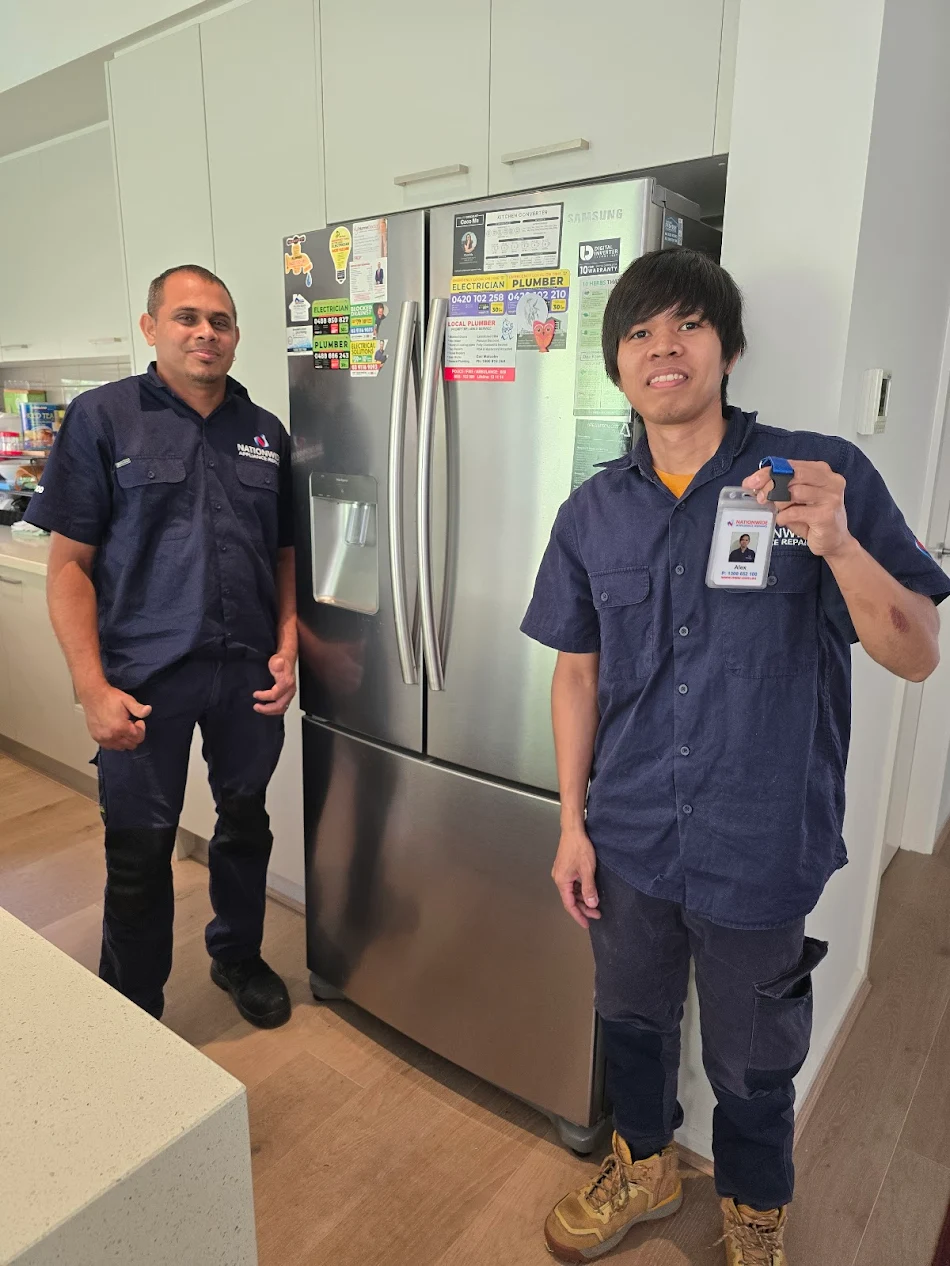
In 15+ years of repairing dishwashers across Australia, we’ve learned something important: standing water at the bottom of your dishwasher is almost always fixable. And nine times out of ten, you can actually solve it yourself in less than 30 minutes.
Here’s what we see most often when customers call us about drainage problems — and how to get your dishes clean again without waiting for an appointment.
Why Your Dishwasher Isn’t Draining (What We Find)
Your dishwasher has one job during the drain cycle: push water out through a pump and into your home’s drain system. When that water stays in the tub, something simple is blocking the path.
After countless service calls across Melbourne, Sydney, Brisbane, Perth, and Adelaide, here’s what’s usually happening:
A clogged filter is the #1 culprit — accounting for roughly 60% of drainage calls we could have prevented. Food particles accumulate and restrict water flow. We regularly find everything from popcorn kernels and bits of vegetable peeler to fragments of can labels wedged in there.
A kinked or blocked drain hose is #2. This tube runs behind your dishwasher, and honestly, it gets pinched more often than you’d think. We’ve pulled dishwashers out and found the hose twisted against the wall, crushed by being shoved back too tightly, or blocked by debris inside.
The garbage disposal connection causes problems, especially in older Australian homes where plumbing wasn’t standardized. If your dishwasher drains through the disposal and it’s full or clogged, nothing drains.
That little air gap on your sink (if you have one) gets overlooked constantly. Food debris accumulates in there, blocking everything.
The honest truth? We can usually tell over the phone whether it’s a five-minute fix or something that needs a technician. And most of the time, it’s the five-minute fix.
Step One: Remove the Standing Water (Safely)
Don’t run another cycle. That water needs to come out first, and we need to see what we’re working with.
Place towels or newspaper under and around your dishwasher to catch spills. Use a measuring cup, ladle, or small container to transfer water into your sink. When the level gets too low to scoop, use cloth or paper towels to absorb the rest.
This might take 10-15 minutes, but it’s essential. You need a clear view of the drain area to troubleshoot. Plus, you’re not risking water damage to your kitchen cabinets.
Pro tip from our technicians: If the water smells foul or has visible debris, take a photo before removing it. Send it to support@nationalappliancerepairs.com.au and we can often diagnose the problem without a service call.
Step Two: Clean the Filter
We’re putting this first because it actually fixes roughly 6 out of 10 drainage issues we see.
Remove the bottom dish rack. Look at the bottom of the tub. You’ll see a cylindrical or round component, usually with a handle or knob on top. Turn it counterclockwise and lift it out.
You’ll almost certainly find debris. And we mean debris. In Australian kitchens, we’ve found everything from pasta fragments to pieces of fruit stickers to bits of broken glass.
Under warm running water, rinse the filter thoroughly. Use an old toothbrush or soft brush to scrub away stubborn buildup, paying special attention to the mesh openings where food gets wedged.
Once it’s clean and dry, reinstall it by turning clockwise until it clicks into place. Don’t over-tighten or you’ll damage the threads (and then you’ll actually need to call us).
Run a short cycle with no dishes to test. If the water drains, you just saved yourself a service call and potentially $200+ in repair costs.
Step Three: Inspect the Drain Hose
This is where we find the second major category of problems.
Pull the dishwasher out slightly from the cabinet (unplug it first — this is non-negotiable). Look at the entire length of the hose running from the appliance toward your sink drain or standpipe.
What we look for:
- Obvious kinks or twists (straighten gently)
- The hose crushed against the wall (move it out a bit)
- Spots where it’s been pinched
A small kink is enough to restrict flow. We’ve had customers think their drain pump failed when really the hose was just bent at a bad angle.
Check where it connects to the sink drain. The hose should rise from the dishwasher and then descend into your drain. If it dips below the dishwasher connection level, siphoning can prevent drainage entirely.
If you suspect an internal blockage, disconnect the hose at both ends (have a bucket ready for water). Run hot water through it. If water flows slowly or not at all, soak it in hot water for 30 minutes, then try again. A pipe cleaner or even a wire coat hanger (bent carefully) can help dislodge stubborn clogs.
Step Four: Check the Garbage Disposal
If your dishwasher drains through a garbage disposal, that disposal must be clear.
Turn on the disposal and run water for 10-15 seconds. Listen for normal operation. If it sounds clogged or isn’t running at all, clear it before moving forward.
Here’s a detail we find ALL THE TIME – if you recently installed a new garbage disposal, someone probably forgot to remove the knockout plug. This is a small rubber or plastic disc inside the disposal’s drain port. If it’s still there, it blocks the dishwasher drain completely. Check inside the disposal drain opening and remove it manually if present.
We’ve driven across Melbourne and Sydney to remove a fifty-cent knockout plug that’s costing customers stress and worry. Don’t be that person. Check this first.
Step Five: Try the Reset/Drain Cycle
Sometimes a reset solves the problem, especially if the cycle was interrupted (power outage, door opened mid-cycle, that kind of thing).
Unplug the dishwasher and wait 5 minutes. Plug it back in. Run a short cycle (some models have a “drain only” or “reset” option — check your manual).
If you have an air gap on your sink (that small cylindrical fixture visible on the counter), remove the cap and clean out any debris. We can’t tell you how many drainage issues we’ve solved by simply cleaning that one small component.
When DIY Fixes Aren’t Working
If you’ve cleaned the filter, straightened the hose, cleared the disposal, and the dishwasher still won’t drain after 24 hours, you’re dealing with something more complex.
This is where we step in.
The drain pump might be defective. The impeller (the spinning component inside) could be stuck or damaged. The control board might not be signalling the pump to activate. The problem might not be the dishwasher at all — it could be a deeper clog in your home’s drain system that requires a plumber.
This is when professional dishwasher repair makes sense. Across Australia’s major cities, our technicians can diagnose whether it’s electrical, mechanical, or a plumbing issue. We carry genuine parts for all major brands and provide a 12-month parts warranty on repairs.
But sometimes repair isn’t the best option. If your dishwasher is 8+ years old and the pump has failed, we’ll tell you if replacement is smarter than repair. We’d rather be honest than push a repair you don’t need.
Stop Drainage Problems Before They Start
Good habits keep drainage issues from recurring — and from becoming expensive:
- Scrape dishes thoroughly (don’t rinse, just scrape) before loading to reduce food reaching the filter
- Clean the filter monthly if you run multiple loads per week — it takes 90 seconds
- Run the garbage disposal before starting the dishwasher (10-second rule)
- Check the drain hose annually for kinks or damage, especially if you move the dishwasher or renovate your kitchen
- Avoid overloading the dishwasher, which restricts water circulation and forces debris through the system
- Use only dishwasher-specific detergent in the correct amount (excess suds are the enemy of drains)
- Run a vinegar cleaning cycle monthly — this prevents mineral buildup and catches problems before they become real issues
Quick Reference: Drainage Troubleshooting Checklist
| Issue | Location | Fix | Time |
|---|---|---|---|
| Food debris blocking flow | Filter at bottom of tub | Remove and rinse filter | 5 min |
| Kinked hose | Behind dishwasher | Straighten hose, reposition | 10 min |
| Clogged hose internally | Drain hose itself | Disconnect and flush with hot water | 15 min |
| Disposal blocked | Kitchen sink | Run disposal to clear | 5 min |
| Knockout plug present | Inside disposal | Remove manually | 2 min |
| Air gap clogged | On sink counter | Remove cap and clean | 3 min |
| Pump not engaging | Electrical/mechanical | Call professional | N/A |
Frequently Asked Questions
How do I know if it’s a blocked hose vs. a clogged filter?
Remove standing water and clean the filter first — that fixes 60% of problems. If water still won’t drain, the hose is your suspect. Straighten any kinks and try again.
Can I damage my dishwasher trying to clean the filter?
No. Cleaning the filter is safe. Just turn it gently counterclockwise and don’t over-tighten when reinstalling. If you damage the threads, you’d need a $50 replacement cap, not a major repair.
What if my garbage disposal is full — does that block the dishwasher?
Yes, completely. If the dishwasher drains through the disposal and it’s full or clogged, nothing drains from the dishwasher either. Always run the disposal for 10 seconds before starting the dishwasher.
How often should I clean the dishwasher filter?
Monthly if you run the machine frequently, quarterly if occasional use. In hard-water regions like Adelaide, clean it every two weeks. This prevents most drainage issues from happening.
Is it expensive to replace the drain pump if it fails?
A pump replacement typically runs $250-350 for the part plus labor, totaling $400-600. It’s the most common repair needed if the filter and hose are clear but water still won’t drain.
Getting Back to Clean Dishes
A dishwasher that won’t drain is inconvenient, but in 15 years of service calls, we’ve learned that it’s usually fixable. Take your time working through these steps. Start with the filter — that’s where 60% of problems hide.
If you’ve tried these troubleshooting steps and water still won’t drain, or if you’d rather have a professional handle it from the start, we’re here. Book a same-day dishwasher repair appointment with National Appliance Repairs.
Call 1300 434 380 to schedule service in your area (Melbourne, Sydney, Brisbane, Perth, Adelaide). Our office team is available Monday-Friday 8:30 AM–7:00 PM, Saturday 8:30 AM–4:30 PM.
Your dishes and your peace of mind are worth it. And if it turns out to be that knockout plug? We won’t even judge.
Call Us:
or leave a message using the form below