Almost every call that comes into National Appliance Repairs contains some version of the same question.
Not “what’s wrong with it” – but “is it worth fixing?”
It’s a fair question that, in our experience, usually gets a bad answer. Retailers have an obvious interest in the reply, while most online advice repeats a single rule of thumb without explaining when the rule fails. And the person asking rarely has the two pieces of information that decide the outcome: what has actually failed, and how long this particular appliance was likely to last anyway.
This is the framework NAR technicians use on site. It works across fridges, washing machines, dishwashers, dryers, ovens and cooktops, and it takes about five minutes once you have a diagnosis in hand.
Start With the 50% Rule, Then Learn Where It Breaks
The rule most people have heard is simple enough. If the repair costs more than half the price of a comparable new appliance, replace it.
As a starting filter it holds up. A $220 pump in a dishwasher that would cost $800 to replace is 27% of replacement value, and you fix it. A $400 motor in a washing machine you could replace for $700 is 57%, and you probably don’t.
The rule breaks down in four situations, and they come up more often than the rule’s popularity would suggest.
- When the appliance is near the end of its service life anyway: A repair at 30% of replacement cost is poor value on an appliance with eighteen months left in it. The percentage is only meaningful when weighed against remaining life.
- When the same appliance has failed before: Two unrelated faults in eighteen months is a pattern, not bad luck. It usually means the machine has reached the stage where components are failing sequentially, and the third fault is already on its way.
- When parts availability is uncertain: Some brands support parts for a decade or more. Others discontinue a model’s control board four years after launch. A cheap repair you can’t get parts for next time is a false economy.
- When the fault is a symptom rather than the problem: A thermal cut-out that has tripped because of a blocked vent is a $60 part masking a $0 maintenance issue. Replace the part alone and it fails again. Fix the cause and a cheap repair genuinely is a cheap repair.
How Long Appliances Last, and When They Typically Fail
You can’t apply a percentage rule without knowing where the appliance sits in its life. The ranges below reflect what we see across Australian metro service calls, and they assume normal domestic use rather than a share house running three loads a day.
| Appliance | Typical service life | Age when first major fault usually appears | Most common terminal failure |
|---|---|---|---|
| Front-load washing machine | 8 to 12 years | 6 to 8 years | Bearings, drum spider, control board |
| Top-load washing machine | 10 to 14 years | 7 to 9 years | Transmission, motor |
| Dishwasher | 8 to 12 years | 6 to 8 years | Pump assembly, control board |
| Fridge or fridge-freezer | 10 to 15 years | 8 to 10 years | Compressor, sealed system leak |
| Vented or condenser dryer | 10 to 14 years | 7 to 10 years | Drum bearings, motor |
| Heat pump dryer | 8 to 12 years | 5 to 8 years | Compressor, control board |
| Electric oven | 12 to 18 years | 8 to 12 years | Control board on electronic models |
| Gas cooktop | 15 to 20 years | 10 to 15 years | Rarely terminal, parts usually available |
| Induction cooktop | 8 to 12 years | 5 to 8 years | Induction coil, power board |
| Rangehood | 10 to 15 years | 7 to 10 years | Motor |
| Automatic coffee machine | 5 to 10 years | 3 to 6 years | Brew unit, boiler, pump |
Two things stand out on that table.
The first is that gas cooktops outlive nearly everything else in the kitchen, because there is very little in one to fail and almost every part is available. If you have a gas cooktop with a dead igniter, fix it. The calculation isn’t close.
The second is that appliances with more electronics fail earlier. An induction cooktop is a better appliance than a gas one in most respects, but it has a power board and coils that a gas cooktop simply doesn’t have. The same pattern shows up between a basic vented dryer and a heat pump dryer.
For a broader Australian picture, CHOICE’s 2023 product lifespan survey of roughly 3,500 households found washing machines developed their first major fault at an average of 7.7 years, with a spread of several years between brands. That figure lines up closely with what we see in the van.
Cheap Faults and Terminal Faults
Age matters, but the specific part that failed matters more. Some faults are cheap on a fifteen-year-old appliance. Others are effectively terminal on a five-year-old one.
| Fault type | Verdict | Why |
|---|---|---|
| Door seals and gaskets | Repair, at almost any age | Low-cost wear part, quick to fit |
| Hoses, valves and filters | Repair, at almost any age | Cheap, and ignoring them causes water damage |
| Thermostats and temperature sensors | Repair | Inexpensive part, straightforward diagnosis |
| Switches, latches and lid interlocks | Repair | Low-cost part, common failure, no reason to replace a machine |
| Heating elements | Repair | Moderate cost, and failure is normal wear rather than decline |
| Igniters and gas valves | Repair | Licensed work, but the parts are available and the appliance is usually otherwise sound |
| Drain and circulation pumps | Usually repair | Moderate cost, weigh against age |
| Drum bearings on a front loader | Depends heavily on age | Labour-intensive; rarely worth it past about 8 years |
| Motors and transmissions | Weigh carefully | Expensive; often the point where age decides |
| Control boards on budget appliances | Usually replace | Board can approach half the machine’s value |
| Control boards on premium appliances | Often repair | Board is a smaller share of a higher-value machine |
| Fridge compressors | Usually replace past 8 years | Expensive, and a sealed system failure often follows |
| Sealed system refrigerant leaks | Usually replace | Difficult to locate, expensive to remedy, poor success rate on older units |
The line worth internalising: anything that seals, switches or senses is cheap. Anything that compresses, drives or computes is not.
Five Questions That Settle It
Once you have a diagnosis and a quote, work through these in order.
- What is the repair as a percentage of a genuine like-for-like replacement? Compare against what you’d actually buy, not the cheapest unit on the floor. If your dishwasher is fully integrated behind a cabinet door, the replacement has to be too.
- How far through its service life is it? Under halfway, the 50% rule applies as written. Past two-thirds, tighten it to about 30%.
- Is this the first fault, or the third? One fault on an eight-year-old machine is normal. Three faults in two years means the machine is telling you something.
- Are parts confirmed available, and for how long? Ask the technician directly. A repairer who carries the part in the van is also telling you that part is common and supported.
- Would the replacement genuinely be better? Sometimes yes: a fifteen-year-old fridge costs meaningfully more to run than a current one. Sometimes no: a well-built older washing machine may outlast the budget replacement.
If the answers point in different directions, question three usually breaks the tie. Recurring faults are the strongest single predictor of the next repair bill.
The Costs That Get Left Out of the Comparison
Comparing a repair quote to a retail price is not comparing like with like, and the gap is bigger than most people expect.
- Delivery and installation: Built-in ovens, integrated dishwashers and plumbed fridges all cost money to fit. Integrated appliances often require the cabinet door to be transferred, which is a job in itself.
- Removal and disposal of the old unit: Sometimes included, often not. Fridges and freezers carry refrigerant and have specific disposal requirements.
- Cabinetry: Appliance dimensions change between generations. A replacement oven that is 5mm taller than the old one turns into a joinery job.
- Downtime: A repair is often same-day. A replacement is a delivery window, and for a fridge that means a weekend of eskies.
- The disposal question in general: Replacing a repairable appliance sends a functioning chassis to landfill for the sake of one failed part.
Add those up and a repair that looked marginal at 45% of replacement cost frequently comes out ahead.
Before You Replace It, Check Whether Someone Else Should Pay
This is the step almost every repair-or-replace article skips, and it can change the answer entirely.
Under the Australian Consumer Law, goods sold in Australia come with automatic consumer guarantees, including that they will be of acceptable quality and as durable as a reasonable consumer would expect given the price and description. Those guarantees are separate from any manufacturer’s warranty and they do not expire when it does. The ACCC is explicit that consumer rights can last longer than warranty rights, and that you can ask for a repair, replacement or refund after the manufacturer’s warranty period has ended.
What counts as a reasonable lifespan depends on the product and what you paid for it. The ACCC’s own electrical and whitegoods industry guide works through the example of an $1,800 television that fails after two years, and concludes the supplier must remedy it because a reasonable consumer would expect more than two years from a set at that price. The same logic applies to a $2,500 fridge with a failed compressor at thirty months.
If a fault appears well before the lifespans in the table above, the honest answer to “repair or replace” may be neither. It may be that the retailer owes you a remedy. Our guide to what Australian Consumer Law still owes you when an appliance is out of warranty covers how that works in practice, including what an independent written fault report needs to contain to be useful in a claim – with the ACCC’s repair, replace, refund guidance acting as the primary source.
Do note that this is general information rather than legal advice, and the outcome depends on your circumstances.
Appliance-Specific Guidance
The framework is the same everywhere, but a few categories have quirks worth knowing.
Washing Machines
Front loaders are more repairable in their early years and less repairable in their later ones, because drum bearing replacement is labour-heavy. A bearing job past about eight years rarely makes sense. Pumps, seals, valves and control boards are all reasonable repairs well into a machine’s life. Start with our guides on machines that won’t turn on and machines that won’t drain if you don’t have a diagnosis yet, and see our washing machine repair service for what a callout covers.
Fridges and Freezers
The dividing line is whether the fault is inside the sealed system. Thermostats, fans, defrost heaters, door seals and control boards are all repairs. Compressors and refrigerant leaks are usually where a fridge past eight or ten years stops being worth saving. A fridge is also the appliance where running costs move the needle most, so an older unit that needs a major repair is worth comparing against a current model’s energy consumption.
Details on fridge repairs and freezer repairs are on our service pages.
Dishwashers
Dishwashers have a shorter practical life than most people assume and their most common faults are cheap. Filters, spray arms, drain hoses and door seals are minor jobs. Pump and control board failures are the decision points. Integrated units carry a hidden replacement cost most quotes ignore, which shifts the maths toward repair more often than for a freestanding machine.
Ovens, Stoves and Cooktops
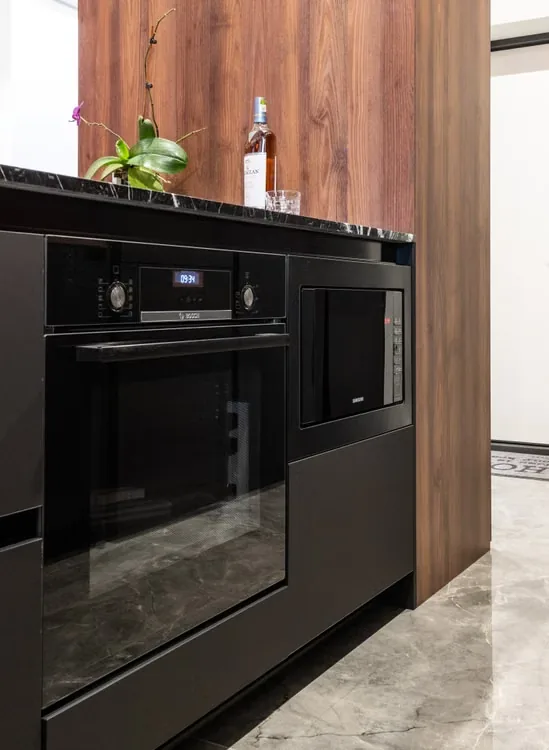
Cooking appliances are the most repairable category in the house, and the one people are quickest to replace unnecessarily. Elements, thermostats, igniters and seals are all standard parts. A built-in oven also carries the highest replacement complexity, because a new one has to fit an existing cavity.
Our pages on stove repairs, cooktop repairs, gas cooktops and stoves and induction cooktops cover the categories.
Dryers
Vented dryers are mechanically simple and repairable for a long time. Heat pump dryers are more efficient and more complex, and a compressor failure in one is close to terminal. Many reported dryer faults turn out to be blocked venting rather than a failed component, which our guide on dryers that won’t heat covers in detail.
Getting a Diagnosis You Can Decide On
None of this works without knowing what has failed. A quote for “the machine needs a new board” from someone who hasn’t tested the board is not a diagnosis.
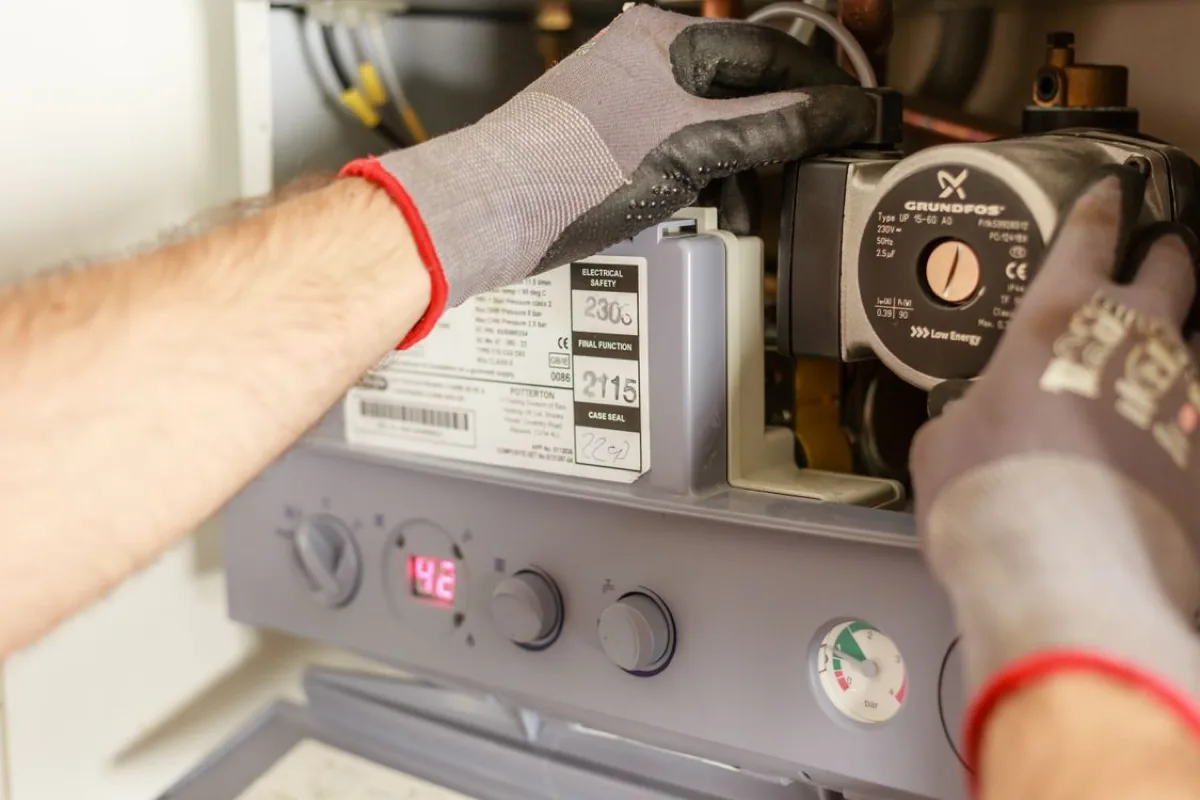
A useful assessment tells you which part failed, why it failed, whether the cause has been addressed, what the part costs, whether it’s carried in the van or needs ordering, and what the technician would do in your position. Our technicians carry genuine parts for major brands, which means most faults are diagnosed and resolved in a single visit, and every repair is backed by 12 months on parts and 3 months on labour.
We also say no. If a repair doesn’t make sense, our technicians will tell you so on site rather than quoting a job that leaves you worse off. That’s the position we take on every service we offer, and it’s why a lot of our work comes from people we’ve previously talked out of a repair.
Frequently Asked Questions
What is the 50% rule for appliance repairs?
If a repair costs more than half the price of a comparable new appliance, replacement is usually the better option. It works as a first filter, but it needs adjusting for the appliance’s age, its fault history and whether parts remain available. Past two-thirds of an appliance’s service life, a 30% threshold is more realistic.
Is it worth repairing an appliance that is more than ten years old?
It depends entirely on the part. Seals, switches, hoses, thermostats and elements are worth replacing at almost any age. Compressors, motors, transmissions and control boards on budget appliances usually aren’t, once the machine is past ten years.
How long should a washing machine last in Australia?
Front loaders typically run 8 to 12 years and top loaders 10 to 14 under normal domestic use. CHOICE’s 2023 lifespan survey found the first major fault appearing at an average of 7.7 years, with a noticeable spread between brands.
Can I claim a repair after the manufacturer’s warranty has expired?
Possibly. Consumer guarantees under the Australian Consumer Law are automatic, separate from any manufacturer’s warranty, and are not limited to the warranty period. Whether they apply depends on what a reasonable consumer would expect from that product at that price. This is general information, not legal advice.
Does a repair quote include everything, or are there extra costs?
Ask specifically whether the quote covers the call-out, labour, parts and any return visit. At National Appliance Repairs, when a part has to be ordered there is no second call-out fee for the return visit, only the approved parts and labour.
Making the Call
Repair or replace comes down to four things: what failed, how old the appliance is, whether it has failed before, and whether the parts exist. The 50% rule is a starting point rather than an answer, and it should be tightened as an appliance ages and loosened when the replacement carries installation, cabinetry or disposal costs the retail price doesn’t show.
Above all, don’t decide before you have a diagnosis.
Contact National Appliance Repairs or call 1300 434 380 for an on-site assessment across Melbourne, Sydney, Brisbane, Adelaide and Perth. You’ll get a straight answer about which side of the line your appliance falls on, including when that answer is “don’t fix it.”
Call Us:
or leave a message using the form below