Open the door at the end of a cycle and there’s a pool of grey water sitting in the bottom. Dishes still dirty, maybe a bit of a smell starting already. A Miele dishwasher not draining is one of the more common faults we see at National Appliance Repairs, and the good news is most cases come down to one of a small handful of causes, several of which don’t need a technician at all.
Here’s where to look, in the order that actually finds the problem fastest.
Start With the Filter
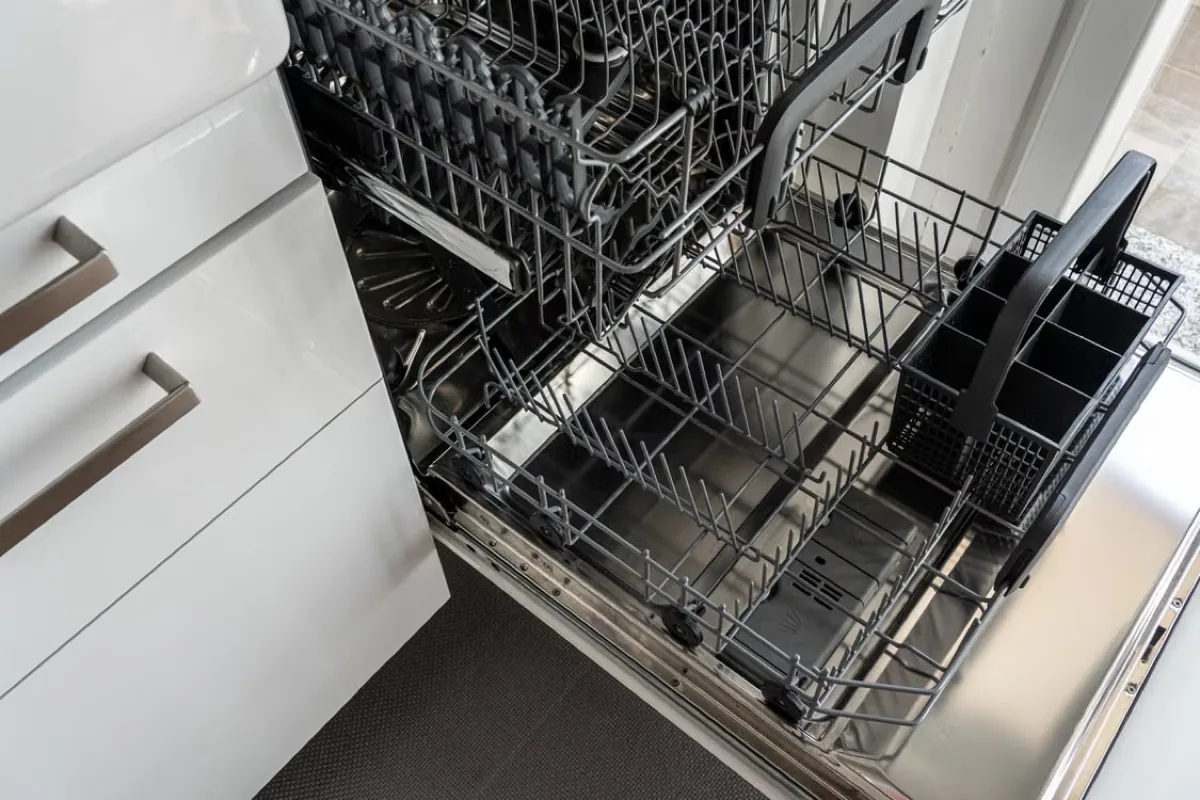
The filter assembly sits at the base of the tub, right under the lower spray arm. It’s the most common cause of drainage problems by a wide margin. Most Miele models split it into two parts: a coarse filter for larger scraps, a fine mesh underneath for grease and smaller bits. Leave it a few months and that fine mesh clogs enough to choke water flow before anything actually breaks.
Pull the bottom rack, twist the assembly to unlock it, rinse both parts under hot water. Soft brush beats plain water for stuck-on grease. Anything really baked on, soak it in warm soapy water for ten minutes first.
If the Filter’s Clean, Check the Disposal or Drain Line
If your Miele drains through a garbage disposal, run the disposal for a bit longer than usual before starting a cycle, since food scraps sitting in the disposal chamber block the same shared drain path. Newly installed disposal units sometimes still have a knockout plug in place blocking the dishwasher connection entirely. Worth confirming that’s out.
If your dishwasher drains into a standpipe instead, check that the hose hasn’t kinked behind the machine and that it’s still properly connected at both ends.
The Drain Pump and Non-Return Valve
Rule out the filter and the disposal or drain line and the next place to look is the drain pump itself, located underneath the non-return valve. The most common issue here is an obstructed pump impeller, the small fan-like part that spins to force water out. Broken glass, fruit pits, and bits of crockery are the usual culprits. Some water pooling back out when you check this is normal and not a sign of anything worse.
The non-return valve sits just above the pump and stops drained water flowing back into the tub. If it’s stuck, cracked, or sitting slightly out of place, drainage suffers even with a perfectly good pump underneath it.
Some Models Will Show You a Code
Some Miele dishwashers flash a drain indicator or throw an F11 code for this, and it usually means water’s sitting in the base pan rather than the tub itself. Not every model shows it this way though, and the display varies across the range.
Different flash pattern on yours? Owner’s manual is the fastest way to confirm what it actually means.
Quick Reference: Symptom to Likely Cause
| Symptom | Likely Cause | DIY or Technician? |
|---|---|---|
| Standing water, dishes still dirty | Clogged filter | DIY, five-minute clean |
| Gurgling or humming during drain | Pump impeller obstruction | DIY to check, technician if damaged |
| Drains fine without disposal, backs up when connected | Disposal blockage or leftover knockout plug | DIY |
| Water backs up after filter and hose are confirmed clear | Faulty drain pump motor or non-return valve | Technician |
| F11 or flashing drain light showing | Water detected in base pan | Technician, to find the source |
What You Can Check Yourself
- Remove and clean both filter components, weekly if you use the dishwasher daily
- Run the garbage disposal before starting a cycle if the two share a drain
- Check the drain hose isn’t kinked, crushed, or sitting at an awkward angle behind the machine
- Look at the pump impeller for visible obstructions once the filter’s out of the way
- Reset the dishwasher by powering it off for a minute, then run a short cycle to see if it clears on its own
When It’s Time to Call Someone
A blocked filter or a stray bit of glass in the impeller is a fair DIY job. A failed pump motor, a damaged non-return valve, or a control board that isn’t sending power to the pump at all is a different matter, and neither is something worth guessing at with a high-end appliance. Stagnant water left sitting in the tub for days breeds mould and can damage the pump seals over time, so it’s worth acting on rather than working around with a mop and a prayer.
National Appliance Repairs technicians work on Miele dishwashers regularly across dishwasher repairs, and carry genuine filters, pumps, and non-return valves for the range, so most drainage faults get sorted in a single visit. Every repair comes with a 12-month parts warranty and 3-month labour warranty.
Keeping It From Happening Again
- Scrape plates before loading rather than relying on the dishwasher to handle large food scraps
- Clean the filter on a schedule rather than waiting for a problem to force the issue
- Avoid putting anything with bones, fruit pits, or glass fragments in without checking they’re fully cleared away first
- If you’re on a shared drain with a garbage disposal, run it briefly before every dishwasher cycle, not just when there’s already a problem
Frequently Asked Questions
Why is my Miele dishwasher leaving water in the bottom?
Almost always the filter first, followed by a blocked disposal connection or drain hose, then the pump impeller if those check out clean. Work through them in that order and you’ll usually find it within a few minutes.
Is it safe to run the dishwasher again with water sitting in it?
Better not to. Standing water sits against the pump seals and can encourage mould, and running another cycle on top of it doesn’t fix the underlying blockage. Clear the cause first.
What does the F11 code mean on a Miele dishwasher?
On models that display it, F11 generally points to water detected in the base pan under the tub rather than the tub itself, which usually means a leak or overflow rather than a simple drain blockage. It’s worth a technician confirming the actual source rather than just clearing the code.
Can I fix a Miele drain pump myself?
Clearing an obstruction from the pump impeller is a reasonable DIY task once the filter’s out of the way. Replacing the pump motor or the non-return valve is more involved and best left to someone who works on these machines regularly.
How much does it cost to fix a Miele dishwasher that won’t drain?
Depends entirely on the cause. A filter clean costs nothing but time. A pump or non-return valve replacement is a bigger job. Call 1300 434 380 for a free phone consultation and ballpark pricing before booking.
The Bottom Line
Filter, disposal or hose, then the pump. Work through those three in order and you’ll solve the overwhelming majority of Miele drainage faults without calling anyone. Still sitting there after that? Get in touch with National Appliance Repairs or call 1300 434 380 for a same-day assessment, subject to availability, across Melbourne, Sydney, Brisbane, Adelaide, and Perth.
Call Us:
or leave a message using the form below