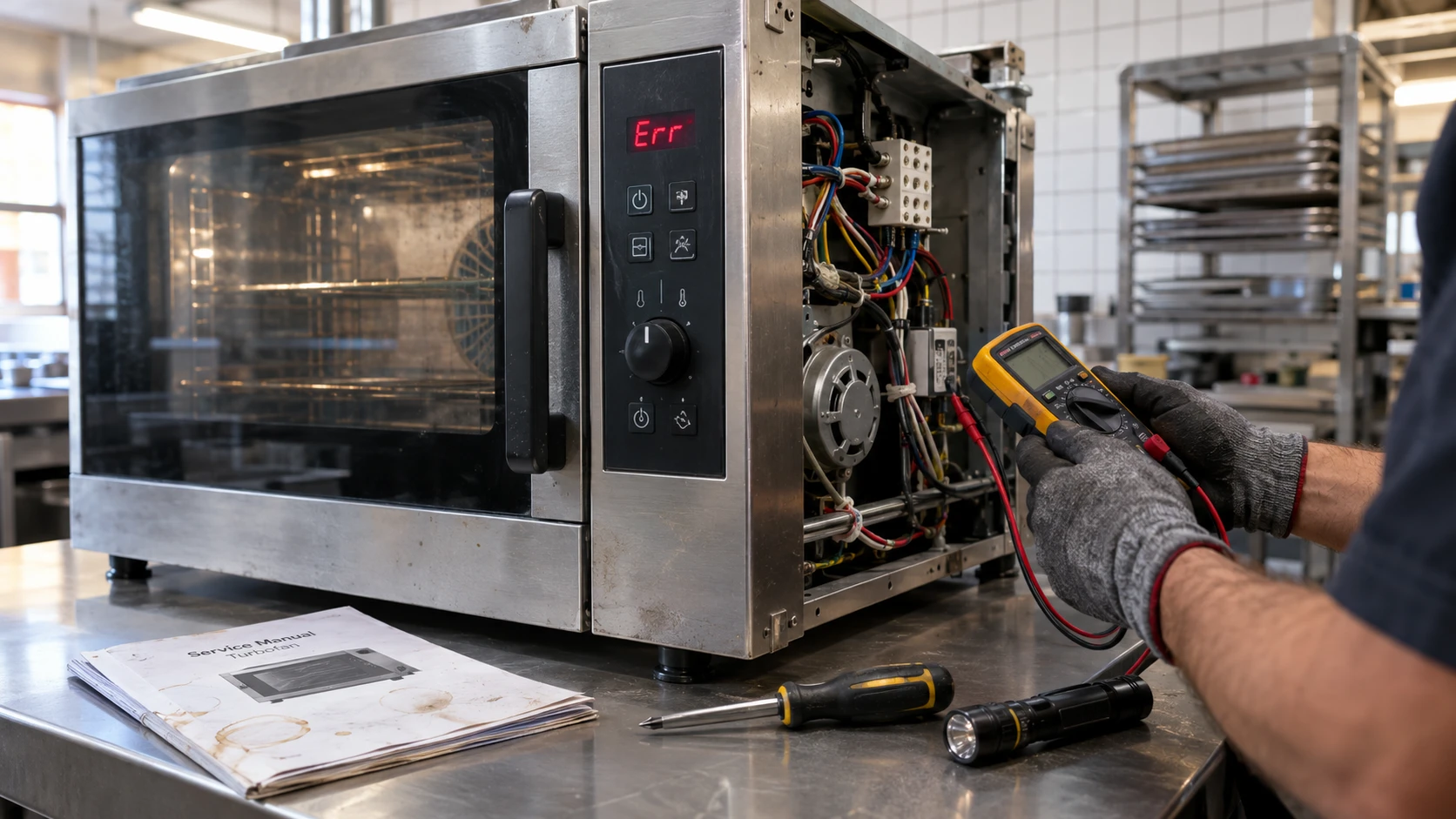
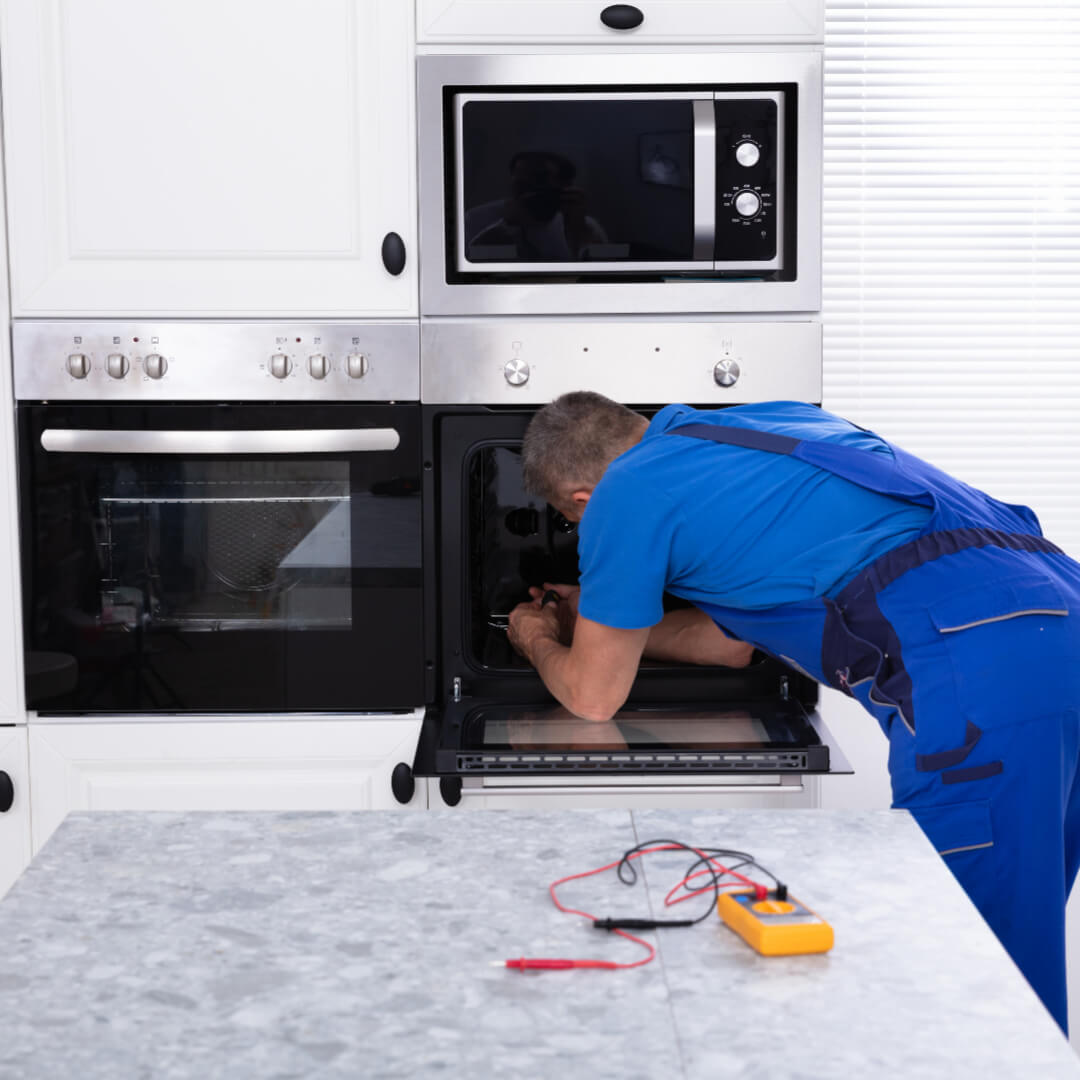

A dead oven has a way of making itself known at the worst possible moment. Most of the time the cause is one of a handful of familiar faults – a failed heating element, a tripped circuit breaker, a temperature sensor giving a false reading, or a thermostat that’s no longer cycling the elements correctly. Some announce themselves visually; others need proper diagnosis to confirm.
National Appliance Repairs services ovens and cooktops across Australia, including same-day callouts in Melbourne, Sydney, Brisbane, Perth, and Adelaide.
Electric vs Gas: Different Faults, Different Rules
Most ovens in Australian homes are electric. This guide focuses on electric faults. Gas oven issues involving the igniter, thermocouple, or gas valve must be handled by a licensed gasfitter – don’t attempt these repairs yourself.
Step 1: Check the Power Supply
A completely dead oven – no display, no response – is often not an oven fault at all. Check the switchboard before opening any panels. A tripped breaker on the oven circuit sits between ON and OFF rather than firmly at either position. Switch it fully off and back on, then test the oven.
If the breaker trips again on the same reset, there’s a fault in the oven’s wiring or internal components that’s causing the trip. Continuing to reset it won’t help and risks further damage – this needs a licensed technician.
Step 2: Inspect the Heating Elements
Electric ovens have two elements: the bake element at the bottom of the cavity and the grill/broil element at the top. When either fails, you’ll typically see a visible sign – a crack, a blister, a burn mark, or a hole in the element coil. On some elements the failure point is obvious; on others the element looks intact but has an internal break.
To check:
- Turn the oven on to bake and observe whether the lower element glows orange within a few minutes.
- Switch to grill and check whether the upper element glows.
- If one doesn’t glow at all, it has likely failed.
Do not touch elements while the oven is on. Allow the oven to cool completely before any visual inspection up close. Replacing a heating element is a straightforward repair on most models – the element is held by two screws and two wire connectors – but always switch off power at the switchboard before starting any work.
Electric Oven Fault Reference Table
| Symptom | Most Likely Cause | DIY Check? |
|---|---|---|
| Oven completely dead, no display | Tripped breaker or blown fuse | Yes |
| Oven turns on but won’t heat | Failed bake element | Yes (visual check) |
| Oven heats but unevenly | Failed element, faulty fan motor | Partly |
| Oven won’t maintain temperature | Faulty thermostat or temperature sensor | No |
| Oven overheats or burns food | Stuck thermostat relay or faulty sensor | No |
| Fan-forced oven not circulating | Failed fan motor | No |
| Display works but controls unresponsive | Faulty control board | No |
Step 3: Check the Temperature Sensor
The temperature sensor reads the cavity temperature and tells the control board when to cycle the elements. A failing sensor produces an oven that underheats, overheats, or cuts out mid-cook – sometimes all three on different occasions. The simplest test is an oven thermometer: preheat to a set temperature, wait 20 minutes, and compare the thermometer reading to the display. More than 15–20°C of difference confirms the sensor or thermostat is at fault.
Step 4: Thermostat Issues
Where the sensor reads temperature, the thermostat acts on it – cycling the elements on and off to maintain the set point. A thermostat running cold means food never fully cooks; one stuck in the on position is both a cooking problem and a safety hazard. Unlike a failed element, there’s nothing to see – a multimeter continuity test is the only reliable diagnostic. Professional repair.
Step 5: Fan Motor (Fan-Forced Ovens)
Most Australian kitchens have a fan-forced oven, where a rear fan circulates hot air for even cooking. When the motor fails, heat builds at the element but doesn’t distribute – one area of the oven runs hot while the rest lags behind. You’ll notice the absence of the usual air movement when the door is briefly opened during a cycle. Replacing the fan motor means working near the rear element and wiring harnesses – a technician job.
What About the Oven Door Seal?
A damaged or detached gasket lets heat escape, forces the oven to run longer, and produces inconsistent results. Inspect the full perimeter for cracks, flattening, or sections that have pulled away. Most replacement seals clip in without tools – one of the simpler oven repairs.
Frequently Asked Questions
Why is my electric oven not heating up?
Start at the switchboard – a tripped breaker is a common cause that takes thirty seconds to rule out. If power is confirmed, the most likely culprits are a failed bake element, a blown thermal fuse, or a faulty temperature sensor. Inspect the lower element visually once the oven has cooled.
How do I know if my oven heating element has blown?
Switch the oven on and watch the lower element – it should glow orange within a few minutes. No glow means it’s failed. Cracks, blisters, or burn marks on the surface confirm it, though some elements break internally and look fine. A multimeter resistance test is the only reliable check for those.
Can a faulty thermostat cause an oven not to heat?
Yes. A thermostat that’s failed completely cuts power to the elements entirely – the oven turns on but produces no heat. One that’s partially faulty causes the oven to heat inconsistently, cut out before reaching temperature, or run noticeably hotter or cooler than the set point.
My oven turns on but cooks unevenly – what’s wrong?
In a fan-forced oven, a failed fan motor is the first thing to check – heat builds at the element but doesn’t circulate. A failed element or inaccurate temperature sensor can produce the same result. An oven thermometer after a 20-minute preheat tells you whether the cavity is actually reaching the set temperature.
Is it worth repairing an oven that’s not working?
Usually yes. Element replacements, sensor faults, and door seal repairs are cost-effective on most machines. A failed control board on an older oven is where the repair-versus-replace calculation shifts. National Appliance Repairs gives you honest upfront pricing so you can decide before committing to anything.
Book a Repair
If the circuit breaker is intact, the elements appear undamaged, and your oven still won’t heat or maintain temperature correctly, the fault is in the thermostat, temperature sensor, fan motor, or control board. National Appliance Repairs services electric and gas ovens across Australia, with upfront pricing, genuine parts, and a 12-month warranty on repairs. Call 1300 434 380 or book online.