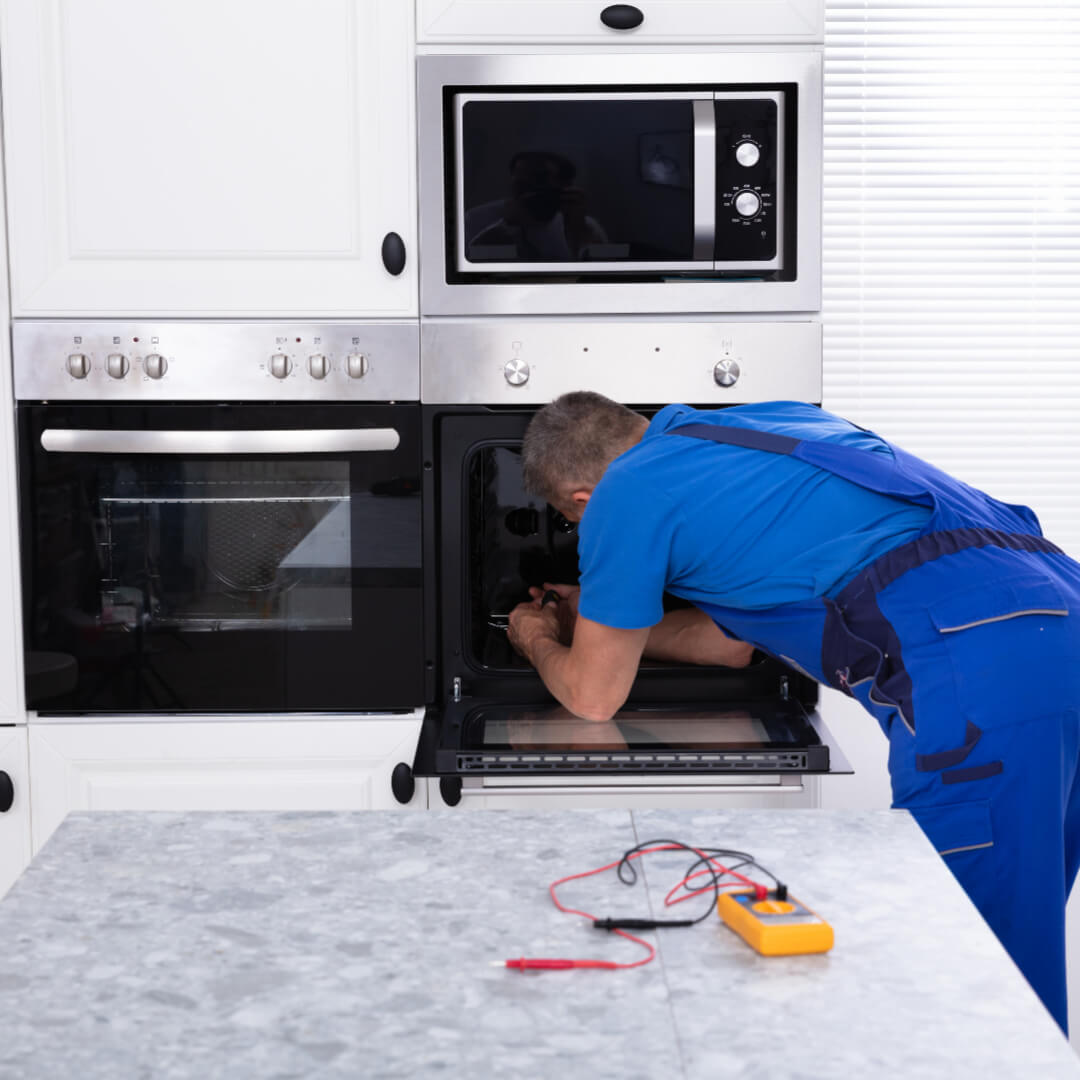

A fan-forced oven with a dead fan still heats up — it just doesn’t distribute that heat. Food browns on one side, the centre of a cake stays raw, a roast cooks unevenly. The fan is what separates fan-forced cooking from just using a box with a hot element in it.
When the fan stops, the fault usually comes down to one of four components. This guide covers each one, what you can safely check yourself, and when a technician is the right call. National Appliance Repairs services all major oven brands across Sydney, Melbourne, Brisbane, Adelaide, and Perth.
Two Different Fan Problems
Before getting into causes, it helps to be precise about what’s actually failing. There are two distinct fault types that both get described as “the fan isn’t working,” and they have different fixes.
- The fan isn’t spinning. The motor has failed, the blades are physically blocked, or power isn’t reaching the motor.
- The fan is spinning but the oven isn’t heating properly. The fan element — the circular heating element that surrounds the fan at the back of the oven cavity — has failed. Air is circulating, but there’s nothing hot to circulate.
If you can hear the fan running and the oven is blowing cold or barely-warm air, the element is almost certainly the issue. Go straight to that section. If the fan isn’t moving at all, start with the motor.
Fan Element (The Circular Rear Element)
The fan element is a circular heating element that wraps around the fan on the back wall of the oven. It’s the most frequently replaced part in fan-forced ovens — Australian repair data puts it at around 70% of fan-mode heating failures.
Signs it’s the fan element:
- Fan is spinning, oven is producing little or no heat on fan-forced settings
- Other modes (grill, conventional) may work normally
- There’s a visible break, dark spot, or burn mark on the circular element at the back of the cavity
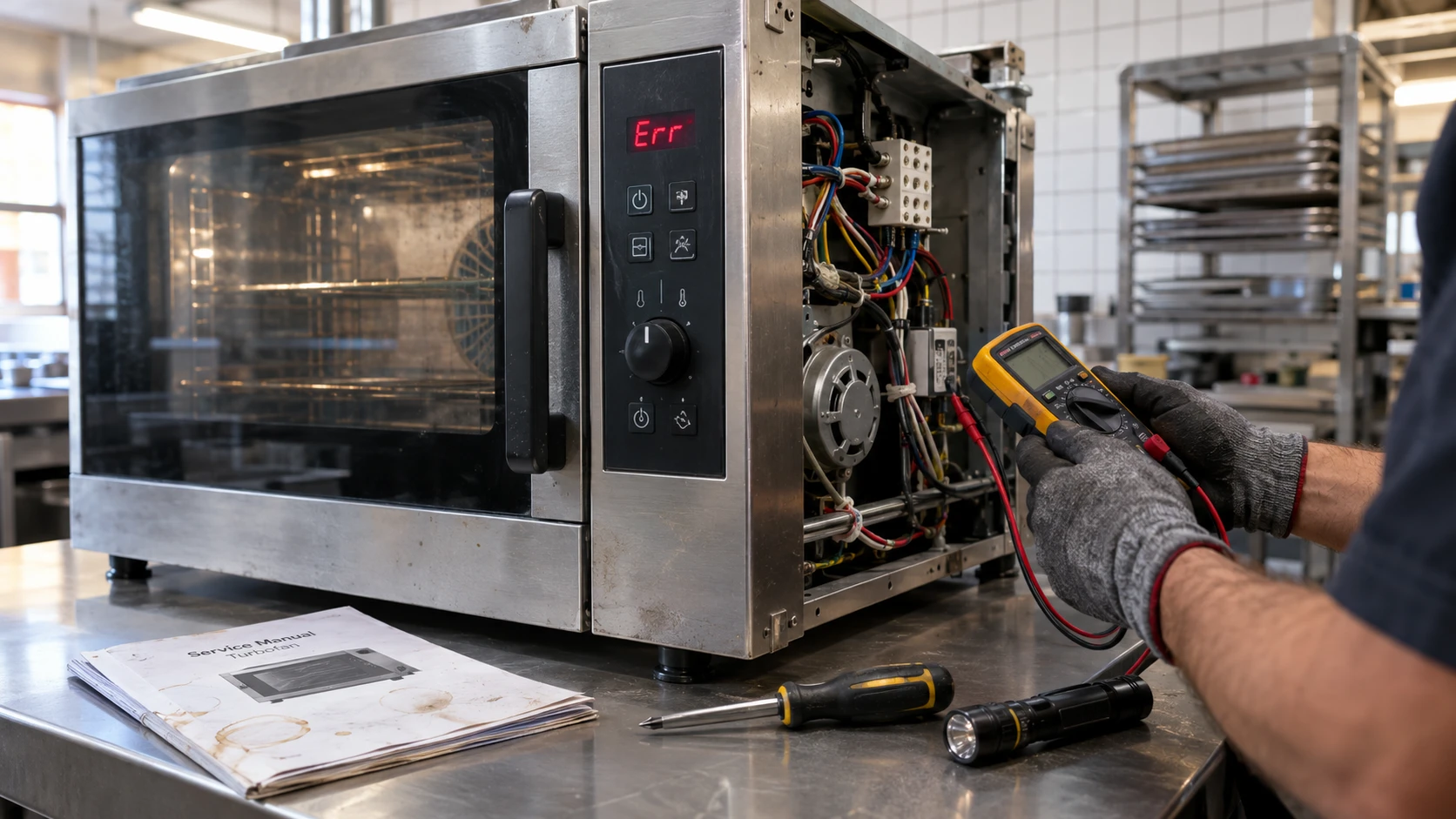
Switch the oven off and disconnect power at the wall before getting close to it. A visual inspection is often enough — breaks and burn marks on the element are usually clearly visible. A multimeter test confirms it: around 100 ohms means it’s functional; infinite resistance means it’s failed.
Fan element replacement in Australia typically runs $200–$400 including parts and labour. For an oven under eight years old, repair is almost always more economical than buying a replacement. Under the Australian Consumer Law, if the element has failed within what a reasonable person would consider an acceptable lifespan, you may have grounds for a remedy regardless of warranty expiry.
Fan Motor
The motor that drives the fan blade sits behind the back panel of the oven cavity. It’s more durable than the element, but it does fail — usually in older ovens or those used heavily day after day.
With the oven switched off and power disconnected, open the oven and try rotating the fan blade by hand. It should turn with light, smooth resistance. If it feels stiff, grinds, or won’t move, the motor bearings have seized. If the blade turns freely, the motor may have failed electrically rather than mechanically — a multimeter test for continuity gives a definitive answer.
Fan motors cost roughly $100–$200 in parts. Replacing one involves working with the oven’s internal wiring, which in Australia must comply with AS/NZS 3000 electrical standards — so motor replacement is a job for a licensed technician or appliance repairer.
A grinding or buzzing noise from the back of the oven is often the first sign of a motor going. The bearings are wearing before the motor fails entirely — worth getting it looked at before it stops completely.
Grease and Debris on the Blades
In a heavily used oven, grease and baked-on food accumulate on the fan blades. Significant buildup can slow the fan or cause the blades to scrape against the element surround with each rotation. The symptom is a rhythmic ticking or scraping when the fan is running — the noise comes and goes in time with the blade turning.
With the oven cold and unplugged, remove the fan cover (usually held by a central nut or clip), and clean the blades with a soft cloth and warm soapy water. Be careful not to get moisture into the motor housing itself. This is one of the few fan faults that doesn’t need a technician.
Thermostat
The thermostat monitors oven temperature and tells the system when to activate the fan and how much heat to maintain. A faulty thermostat can prevent the fan from receiving its activation signal, or cause the oven to run flat-out with no regulation.
Signals pointing to a thermostat fault:
- The oven heats but won’t hold a consistent temperature
- The thermostat indicator light doesn’t cycle on and off as the temperature control is adjusted
- The oven runs continuously at full heat rather than cycling
Testing involves an independent oven thermometer to compare actual cavity temperature against the displayed setting. A significant gap between the two points to the thermostat sensor. A multimeter can confirm whether the thermostat circuit itself has failed.
Control Board
If the element, motor, and thermostat all test fine, the control board is the remaining suspect. Board faults are the least common cause of fan failure, but they do occur — usually after a power surge. Try disconnecting the oven from the wall for five minutes before assuming the board has failed. A cold reset clears electronic faults in a small percentage of cases and costs nothing.
Control board replacement is expensive. Confirm the diagnosis carefully before going there.
Fault Guide
| What You’re Seeing | Most Likely Cause |
|---|---|
| Fan spinning, oven blowing cold or barely-warm air | Fan element has failed |
| Fan not spinning, blade turns freely by hand | Motor failed electrically, or no power to motor |
| Fan not spinning, blade feels stiff or won’t turn | Motor bearings seized |
| Rhythmic clicking or scraping when fan runs | Grease buildup on blades, or loose blade |
| Oven won’t hold temperature, fan intermittent | Thermostat fault |
| Oven completely dead on fan mode only | Control board or wiring fault |
We do same-day repairs in Melbourne, Sydney, Brisbane, Adelaide and Perth.
- Melbourne (03) 9123 0548
- Sydney (02) 9621 5988
- Brisbane (07) 3166 9770
- Adelaide (08) 7123 4027
- Perth (08) 9470 4450
FAQ
Can I still cook if the oven fan has stopped?
Yes, if your oven has conventional or grill modes. You’ll need to increase the set temperature by about 20°C compared to fan-forced recipes, and cooking times may run 15—20% longer. Recipes sensitive to even heat — pastry, bread, layered cakes — will be unreliable until the fan is fixed.
How long does a fan element usually last?
Between five and eight years with normal household use. Heavy daily use shortens that. Keeping the oven clean and avoiding food debris on the element helps extend its life.
Is replacing a fan element a DIY job?
With the oven unplugged and power isolated at the switchboard, the element itself can be accessed and replaced. Anything involving internal wiring or the control board connections falls under Australian electrical standards and should be handled by a licensed technician.
What does a grinding noise from the back of the oven mean?
The fan motor bearings are failing. This usually precedes complete motor failure by weeks or months — get it replaced before it seizes.
How much does an oven fan repair cost in Australia?
Fan element replacement typically runs $200–$400 all in. Fan motor replacement is usually $250–$450 depending on the brand. Control board replacements vary considerably and are more expensive.
Conclusion
An oven fan fault almost always comes down to the element or the motor — both of which can be tested and replaced in a single visit. If the fan spins but the oven won’t heat properly, the circular rear element has likely failed. If the fan isn’t moving at all, the motor is the starting point. National Appliance Repairs carries fan elements and motors for all major brands and can diagnose and fix most oven fan faults on the first call-out. Book on 1300 434 380.