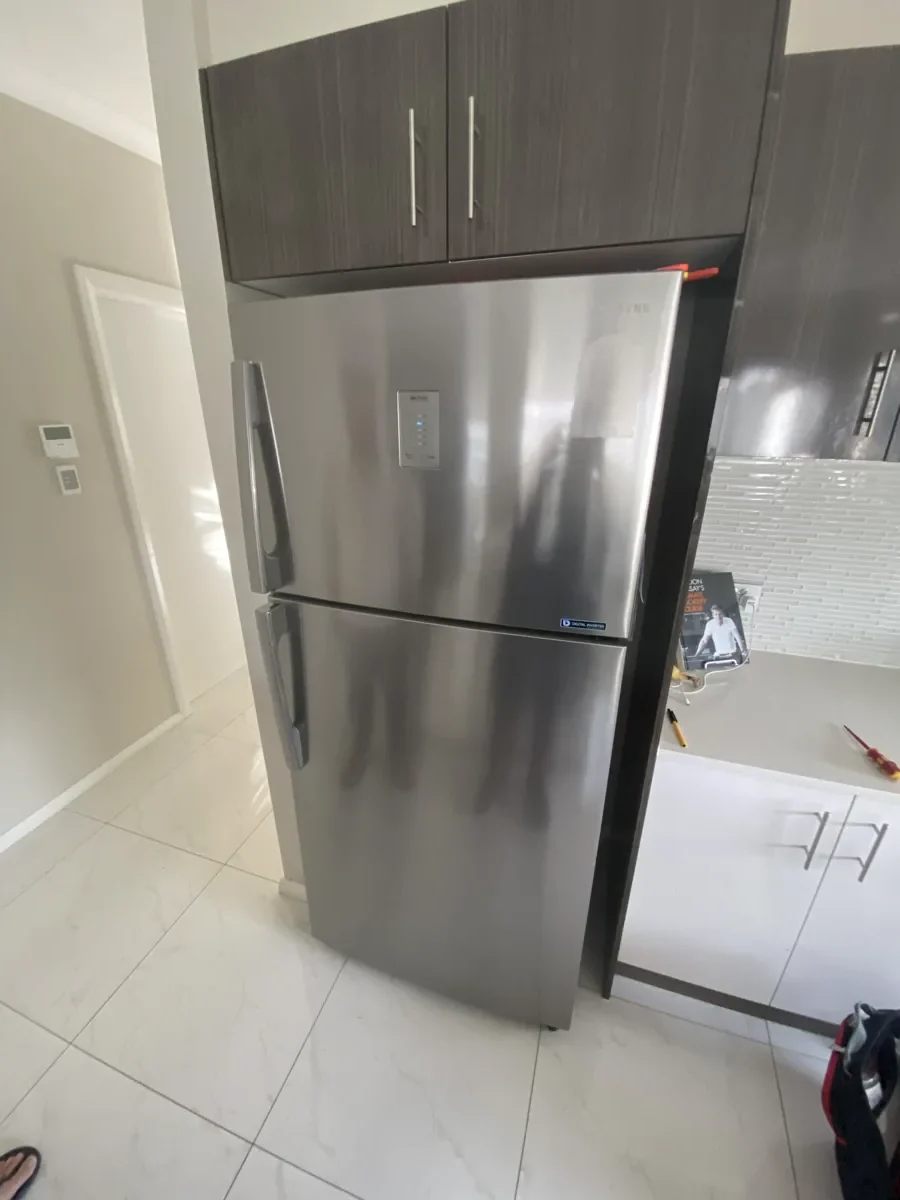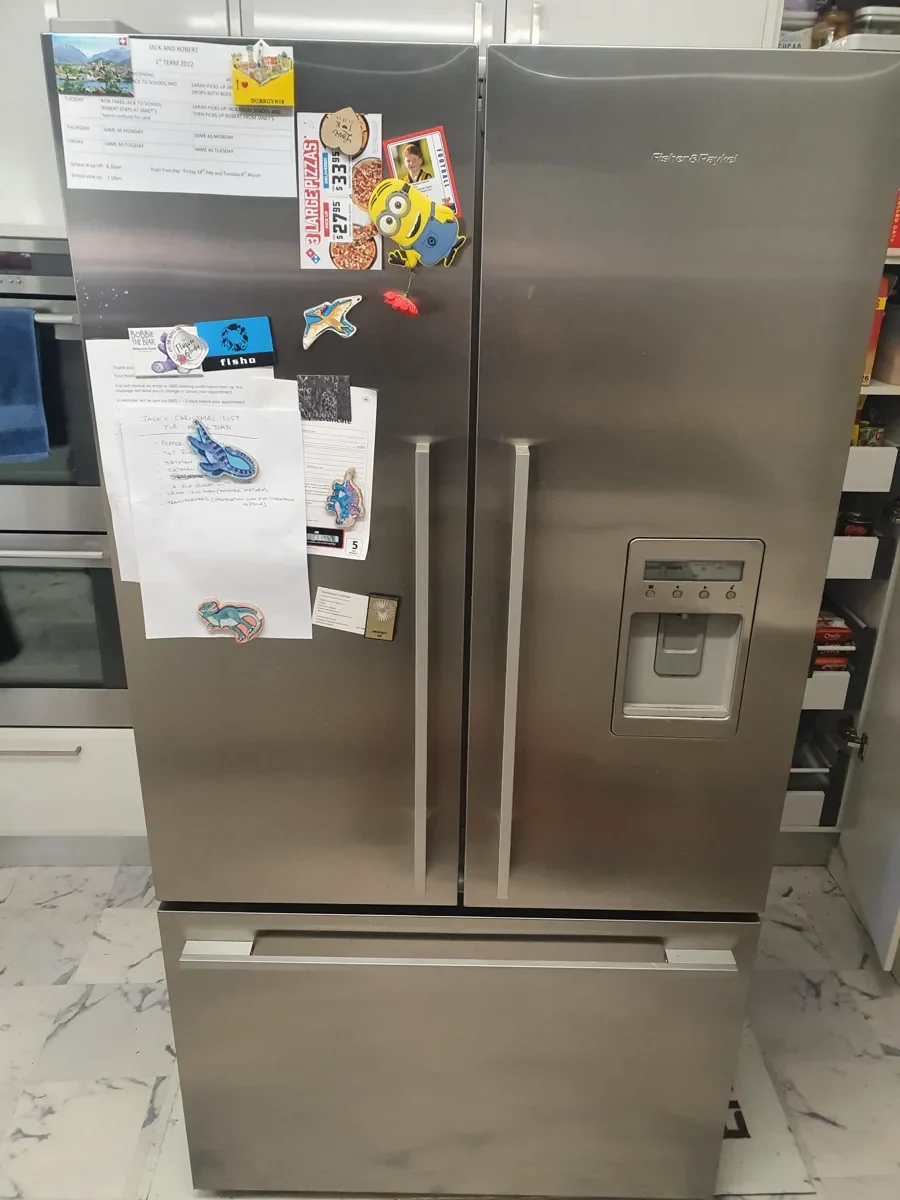
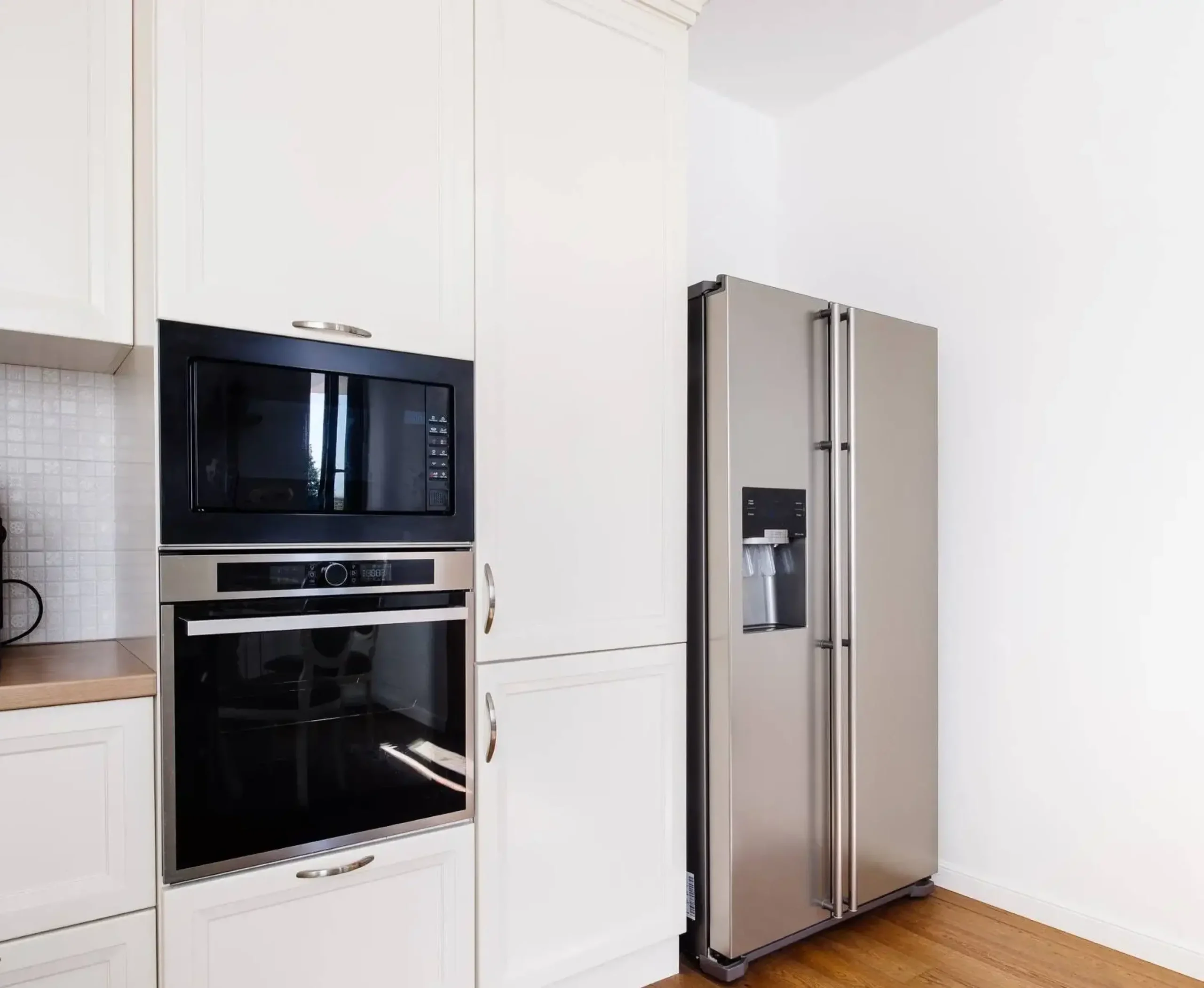

Not every fridge noise is a problem. A steady compressor hum, the occasional crack or pop from the ice maker, and the sound of water moving through the defrost drain are all part of normal operation. The noises worth investigating are the ones that are new – a grinding from the freezer compartment, a rattle that’s appeared in the last month, a buzzing that correlates with the compressor starting. Change is the signal.
Most abnormal fridge noises trace back to one of four components. The checks below let you identify the source yourself – or give a technician the right information to fix it quickly.
Normal Fridge Sounds vs. Sounds to Investigate
| Sound | Likely Source | Normal? |
| Low hum or gentle buzz | Compressor running | Yes |
| Gurgling or water flowing | Refrigerant or defrost drain | Yes |
| Occasional click or pop | Thermostat cycling / plastic expanding | Yes |
| Crackling or cracking | Ice maker filling or releasing ice | Yes |
| Loud grinding or squealing from freezer | Evaporator fan blocked by ice | Investigate |
| Loud rattling from back or base | Condenser fan, loose drain pan | Investigate |
| Loud buzzing or vibrating constantly | Condenser fan motor or compressor | Investigate |
| Knocking when compressor starts/stops | Loose compressor mounts | Investigate |
| Clicking without the compressor starting | Failing compressor relay | Investigate |
Step 1: Rule Out Simple Causes
Before opening any panels, check the basics. These take minutes and cost nothing.
- Loose drain pan – the pan at the base near the compressor can shift with vibration over time. A loose pan rattles whenever the compressor runs. Reseat it.
- Fridge isn’t level – a fridge that’s not stable on all four feet vibrates during compressor cycles. Adjust the levelling feet and lock them once set. A spirit level check takes thirty seconds.
- Items touching the interior walls – bottles or containers pressed against the back wall rattle when the compressor runs. Leave a small gap between contents and the walls.
- Too close to a wall or cabinet – the condenser fan at the rear needs airflow to operate correctly. A fridge pushed hard against the wall restricts that airflow, increases running noise, and causes the compressor to run hotter.
If none of these are the cause, move to the component checks below.
Step 2: Grinding or Squealing From the Freezer – Evaporator Fan
A grinding, squealing, or loud whirring from inside the freezer points to the evaporator fan. This fan pulls air across the evaporator coils and circulates it through both the freezer and fridge sections. When ice builds up around the blades – a sign the automatic defrost system has failed – the blades make contact with the ice as they spin, producing a scraping sound that worsens over time.
To check:
- Unplug the fridge.
- Remove the panel at the rear of the freezer compartment (held by screws or clips) to access the evaporator fan and coils.
- Look for ice buildup around the fan blades or on the coil fins.
What you find tells you what’s wrong:
| Finding | Cause | What It Means |
| Ice around fan blades or coils | Defrost system failure (heater, thermostat, or timer) | Manually defrosting stops the noise temporarily; the defrost fault must be repaired or ice will return |
| No ice, but loose fan blades | Worn motor grommets | Fan motor needs replacing |
| No ice, blades visibly damaged | Physical damage | Fan motor needs replacing |
All evaporator fan work requires unplugging the fridge and is best handled by a technician.
Step 3: Rattling or Buzzing From the Back – Condenser Fan
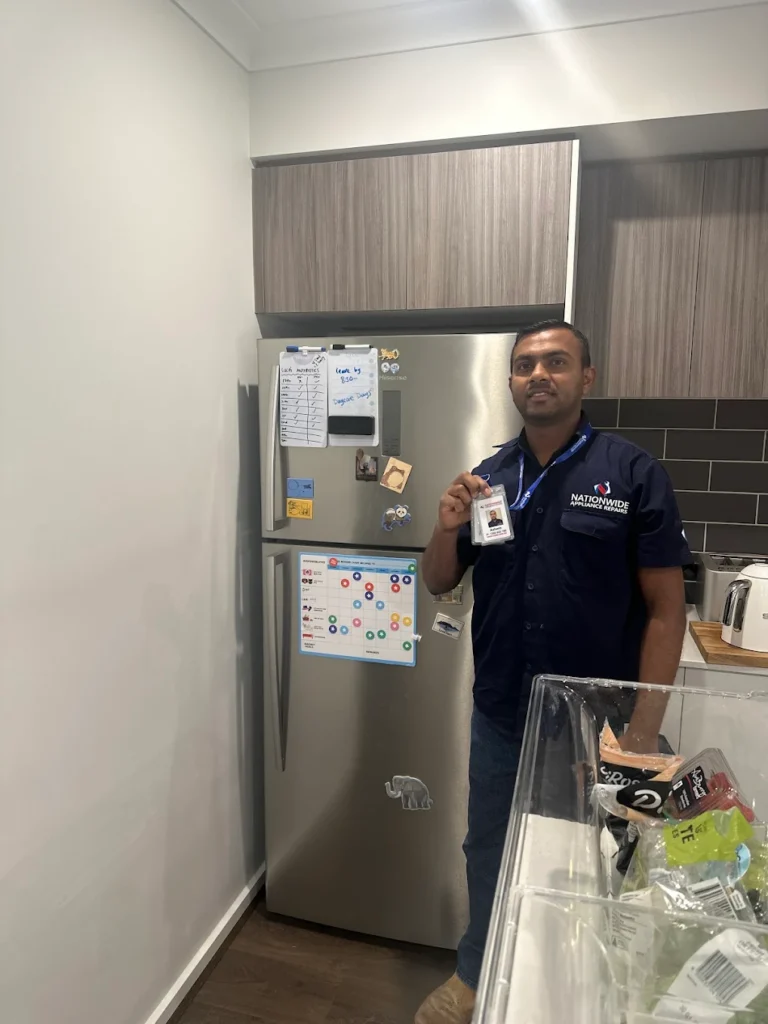
The condenser fan sits at the rear of the fridge near the compressor, at the base. It draws air through the condenser coils to dissipate heat from the refrigeration cycle. A rattling, buzzing, or grinding sound from the back of the fridge – particularly one that correlates with the compressor running – often points here.
Common causes:
- Debris (dust, pet hair, small items) caught in the fan blades, causing a rattle
- Worn bearing in the fan motor, producing a grinding sound
- Loose mounting screws causing the motor to vibrate against its housing
To check: pull the fridge away from the wall and remove the rear access panel. With the fridge unplugged, check for debris around the blades, inspect the blades for damage, and confirm mounting screws are tight. If the motor bearing is worn, the fan motor needs replacing.
Step 4: Noise From the Compressor Area
The compressor produces a steady hum during normal operation. New or worsening noise from the compressor area warrants attention.
| Noise | Likely Cause | What to Do |
| Loud humming or vibrating | Worn rubber mounting grommets | Grommets allow compressor to vibrate against frame – professional repair |
| Clicking without compressor starting | Faulty start relay | Shake the relay; a rattle inside confirms failure. Inexpensive to replace. |
| Loud buzzing, compressor not starting | Failed capacitor or compressor motor | Professional diagnosis required |
Compressor diagnostics require the fridge to be running near live electrical components – this is a professional repair in all cases.
Condenser Coil Maintenance
Dusty condenser coils force the compressor to work harder and generate more noise. Vacuum or brush the coils – located at the rear or base of the fridge – every 6–12 months. In homes with pets, quarterly cleaning is worthwhile.
This is one of the simplest maintenance tasks with the most direct impact on running noise and energy efficiency.
Frequently Asked Questions
Why is my fridge making a loud humming noise?
The compressor always hums – the question is whether it’s louder than it used to be. Dirty condenser coils are the most common cause; they force the compressor to work harder and generate more noise. A worn condenser fan bearing or a compressor approaching failure produce the same result. Start with a coil clean; if the hum doesn’t settle, the fan motor or compressor needs a closer look.
Why is my fridge making a grinding noise from the freezer?
Ice has built up around the evaporator fan blades and they’re hitting it as they spin. The grinding is the symptom; the cause is a defrost system fault – the heater or timer has failed and ice is accumulating between defrost cycles rather than being cleared. Manually defrosting the fridge will stop the noise temporarily, but the defrost fault must be repaired.
Is it normal for a fridge to make a clicking sound?
A click when the thermostat cycles the compressor on or off is perfectly normal. Repeated clicking without the compressor starting is different – that points to a faulty start relay, a small component on the side of the compressor that’s inexpensive and straightforward to replace.
Why does my fridge rattle when the compressor runs?
Usually one of three things: the drain pan has shifted and is vibrating against the base, the condenser fan has debris caught in the blades, or the compressor’s rubber mounting grommets have worn. Check the pan and fan before assuming anything more serious.
When should I call a technician for a noisy fridge?
When the noise is coming from inside the freezer, from the compressor area, or when the fridge is running constantly alongside the noise. Evaporator and compressor faults don’t resolve on their own and will cause food spoilage if left.
When to Book a Repair
The simple checks – levelling, drain pan, condenser coils – take minutes and cost nothing. When those don’t identify the source, or the noise is coming from the evaporator fan, condenser fan motor, or compressor, the fault needs professional diagnosis.
National Appliance Repairs services fridges across Australia. All major brands, genuine parts, upfront pricing, 12-month warranty on all repairs.
Call 1300 434 380 or book online.