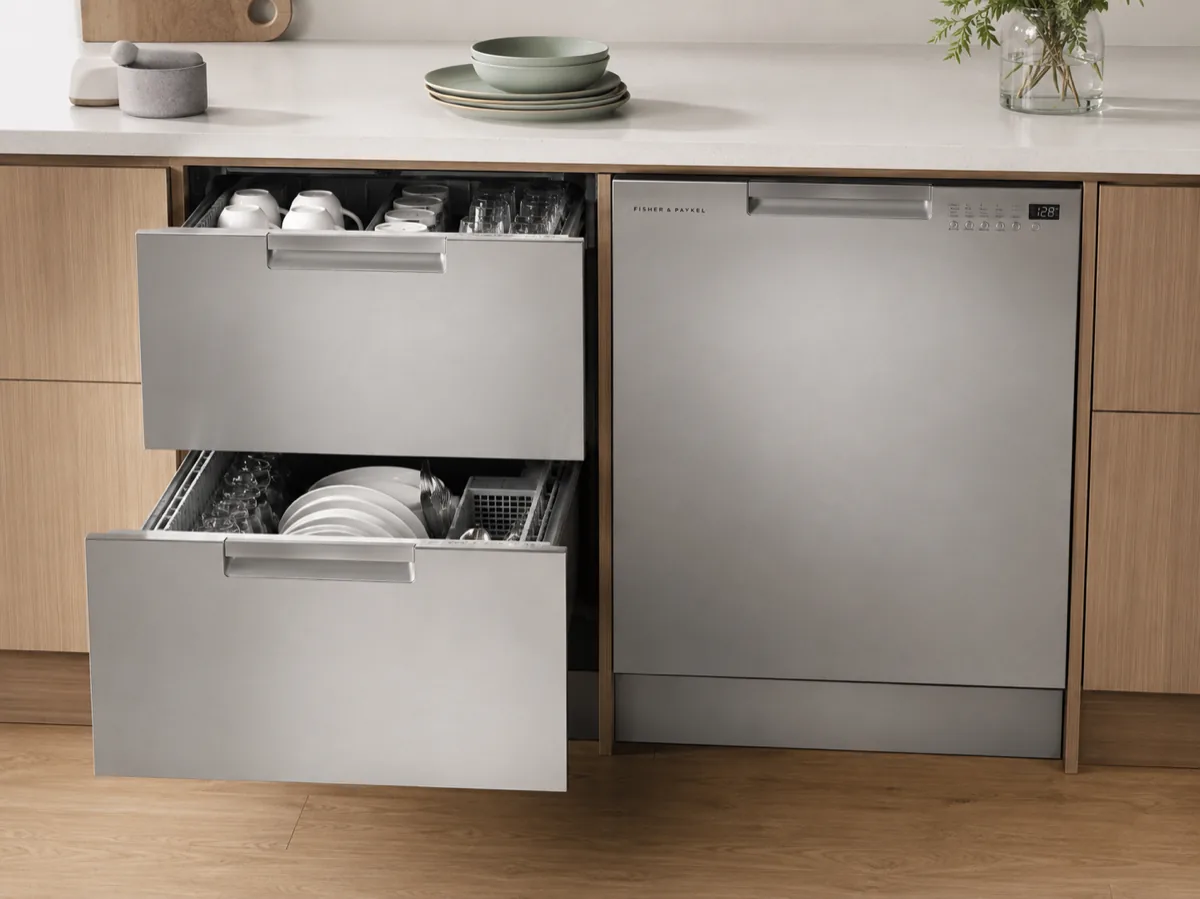
E6 on a Fisher & Paykel freestanding dishwasher is a drain fault – the machine couldn’t clear the tub within the required time, the cycle stopped, and there’s usually standing water at the bottom. A blocked filter is the cause in most cases, which makes it one of the more straightforward fault codes to resolve at home.
National Appliance Repairs services Fisher & Paykel dishwashers across Australia, with same-day appointments in Melbourne, Sydney, Brisbane, Perth, and Adelaide.
What the E6 Code Means
When the E6 error appears, the dishwasher’s control board has determined that water drainage failed during the drain phase of the wash cycle. The machine stops to prevent it from cycling through the rest of the programme with an undrained tub.
The drain system on a Fisher & Paykel freestanding dishwasher includes the filter assembly at the bottom of the tub, the drain pump, and the drain hose that connects to the household waste pipe. A restriction anywhere in this path can trigger E6.
| Cause | How Common | DIY Fix? |
|---|---|---|
| Clogged filter | Very common | Yes |
| Kinked or blocked drain hose | Common | Yes |
| Debris in drain pump | Common | Yes |
| Incorrect drain hose installation | Moderate | Yes |
| Failed drain pump motor | Less common | No |
| PCB or wiring fault | Rare | No |
Need This Fixed Today?
Our licensed technicians repair this exact fault every week – fast, reliable, and backed by a workmanship guarantee.
- Licensed & insured
- Workmanship guarantee
- No fix, no fee
Safety Before You Start
Turn the dishwasher off at the power point before reaching into the tub or accessing any components. If the cycle was interrupted recently, the water at the bottom of the tub may still be hot – give it 15–20 minutes before handling.
Step 1: Clean the Filter
Remove the lower rack and twist the filter cap counterclockwise to release the assembly. Separate the coarse outer mesh from the fine inner filter – both can be clogged independently. Rinse both under hot running water until clear; a brief soak in warm water with a small amount of dishwasher detergent will shift a stubborn greasy film. Check the housing in the tub floor for any remaining debris before reinstalling. Seat and lock the filter correctly – an improperly installed filter will trigger further faults. Run a short rinse cycle to confirm E6 has cleared.
Step 2: Inspect the Drain Pump
With the filter out, shine a torch into the sump beneath it. Small debris – glass fragments, foil seals, olive stones – can bypass a damaged or incorrectly seated filter and jam the impeller. Wearing protective gloves, feel carefully around the pump area for anything that isn’t visible from above. If you can reach the impeller, check it rotates freely. A seized impeller with an audible motor means the pump needs replacing.
Step 3: Check the Drain Hose
Trace the hose from the back of the machine to the waste trap connection under the sink. Feel for kinks, flattened sections, and areas compressed behind cabinet panels. The hose should run a high loop before dropping to the drain connection to prevent back-siphoning. At the spigot, check for grease and debris accumulation – this junction narrows gradually in older installations and is a common restriction point that doesn’t announce itself until drainage fails. If the hose end sits in standing water at the trap, reposition it so it enters the spigot cleanly.
Step 4: Reset and Test
Switch the machine off at the wall for 60 seconds, then back on. Select a short rinse programme and listen through the first drain phase – the pump should be audible and the water level in the tub should drop. No returning E6 means the fault is resolved.
When the Drain Pump Has Failed
Clean filter, clear hose, E6 still appearing – the pump motor has likely failed. Confirming it requires a resistance measurement across the pump windings; a reading significantly outside the expected range indicates winding failure. Replacing the pump means removing access panels and disconnecting wiring – the right point to hand the job to a technician.
Keeping E6 From Coming Back
Most E6 faults are preventable. The filter is the highest-maintenance point – clean it weekly for daily use, or every three to four cycles for lighter loads. A monthly hot empty cycle with a cleaning tablet keeps grease from building up further down the system, inside the pump housing and hose where it’s harder to reach. Every six months, disconnect the drain hose at the trap spigot and clear any build-up at the junction. And scraping plates before loading makes a genuine difference – less food entering the machine means less reaching the filter.
Frequently Asked Questions
What does E6 mean on a Fisher & Paykel dishwasher?
Drain fault – the tub didn’t clear in time. Blocked filter is the cause most often, followed by a kinked hose or pump debris.
How do I fix the E6 error on my Fisher & Paykel dishwasher?
Remove and separate the filter assembly, rinse both sections under hot water, check the sump for debris, inspect the drain hose for kinks. Fault persists after all that – the pump needs testing.
Why does my Fisher & Paykel dishwasher keep getting E6?
Filter not being cleaned often enough, or a partial hose blockage that’s reducing flow without stopping it. Recurring E6 despite clean filters and a clear hose means the pump motor is likely deteriorating.
Is E6 on a Fisher & Paykel dishwasher the same as A3 on a DishDrawer?
Same fault, different machine. E6 is freestanding; A3 is DishDrawer. Troubleshooting logic is identical, machine layout differs.
How often should I clean the filter on a Fisher & Paykel dishwasher?
Weekly for daily use, every one to two weeks for lighter loads. Monthly hot empty cycle on top of that keeps E6 away.
Book a Repair If Needed
A clean filter resolves E6 in most cases. If the fault returns after the filter and hose have both been checked, the drain pump needs professional diagnosis before the situation gets worse.
National Appliance Repairs handles Fisher & Paykel dishwasher repairs across all major Australian cities – genuine parts, upfront pricing, and a 12-month warranty on components. Call 1300 434 380 or book online.
Call Us:
or leave a message using the form below