If you’re running the same load twice because it came out damp the first time, something’s wrong with the heating side of the dryer. Not the motor, not the drum. Usually a blocked vent, a dead thermal fuse, or a heating element on its way out.
In this guide from National Appliance Repairs, we’ll walk you through the actual causes, what you can check without a technician, and when it’s not a DIY job anymore.
Why Your Dryer Runs But Doesn’t Heat
Plenty of dryers keep tumbling perfectly normally while producing no heat at all, because the drum motor and the heating system don’t depend on each other. So the fault isn’t always obvious just from listening to it run.
A Blocked Vent or Lint Build-Up
This is by far the most common cause, and the easiest to rule out yourself. Lint that escapes the filter gradually coats the exhaust duct, the drum seals, and the areas around the motor. Once airflow drops enough, drying times stretch out even before the heating element or thermal fuse actually fails. A blocked vent is also a genuine fire hazard: Queensland’s Electrical Safety Office notes that lint build-up around the drum and vent openings can elevate drum temperature enough to ignite, and recommends cleaning the filter every use.
A Blown Thermal Fuse
It’s a one-time safety device — trips once and stays tripped. Its job is cutting power to the heating element (or, on gas dryers, the burner circuit) if things run hotter than they should. Almost always the real cause is a blocked vent choking off airflow, not the fuse itself being faulty. That’s the trap: swap the fuse without clearing the vent and the new one blows again within a few loads.
A Failed Heating Element or Igniter
Electric dryers heat with a coiled element, and years of running hot because of a half-blocked vent will eventually burn one out. Gas dryers don’t have an element at all — they’ve got an igniter and a gas valve instead. Watch for the igniter not glowing, or the valve just not opening. Drum spins fine either way. No burner firing means no heat, full stop.
A Faulty Thermostat or Sensor
This one’s harder to spot. The thermostat and moisture sensor decide when heat cycles on and off, and when one’s faulty the results are inconsistent — sometimes under-heating, sometimes overheating, sometimes cutting the heat cycle short. All three look identical from the laundry room: clothes that never quite finish drying.
Quick Reference: Symptoms and Likely Causes
| Symptom | Most Likely Cause | Can You Check This Yourself? |
| Clothes damp after a full cycle, drum spins normally | Blocked vent or dirty lint filter | Yes, clean filter and check outside vent flap |
| No heat at all, drum still tumbles | Blown thermal fuse or failed heating element | Limited, requires multimeter testing |
| Gas dryer tumbles but never warms up | Faulty igniter or gas valve | No, requires a licensed technician |
| Drying time gradually getting longer over weeks | Vent restriction building up | Yes, worth checking before it fails completely |
| Burning smell during the cycle | Overheating from severe blockage | Stop using immediately, call a technician |
What You Can Check Before Booking a Repair
A few checks take five minutes and rule out the simplest causes.
- Clean the lint filter and check it isn’t torn or clogged with a waxy build-up from dryer sheets
- Check the external vent flap opens freely when the dryer is running
- Make sure the exhaust duct isn’t crushed, kinked, or disconnected behind the machine
- Confirm you’re not overloading the drum, since a packed load restricts airflow too
- Note whether the number of cycles needed to dry a normal load has crept up recently
If clothes are still damp after these checks, or if you notice a burning smell or the dryer feels hot to the touch, stop using it and arrange a professional inspection.
Why This Isn’t a DIY Repair Job
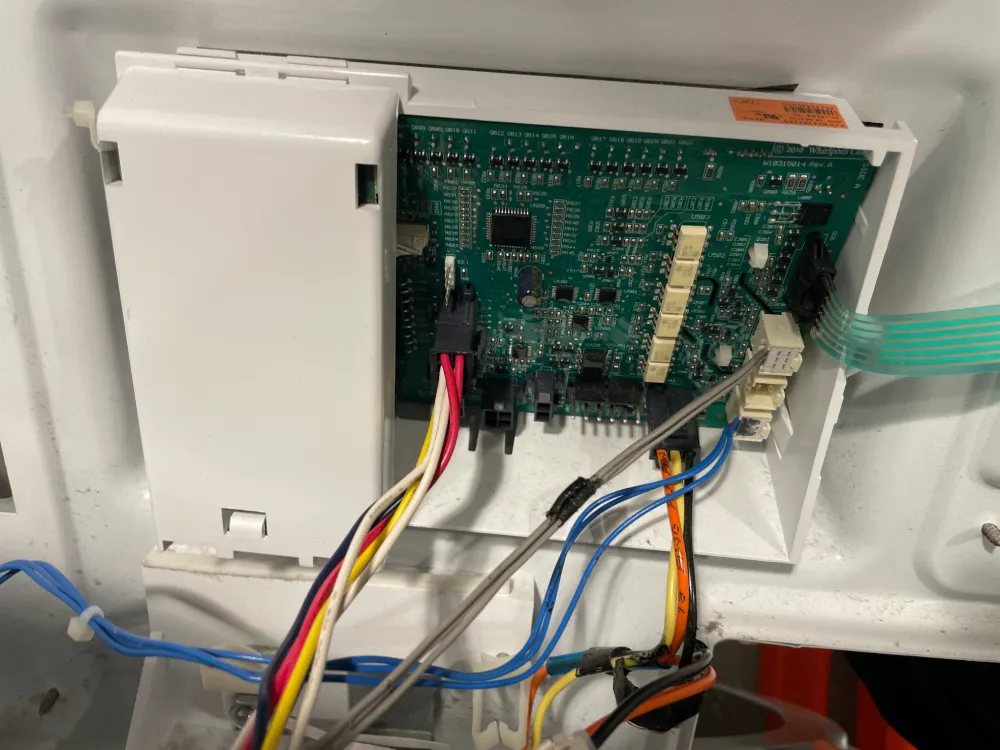
Checking the lint filter and vent is safe and sensible. Going further, such as testing or replacing a heating element, thermal fuse, or gas igniter, is not. Dryers combine high-voltage electrical components with parts that reach several hundred degrees during normal operation, and gas models add pressurised gas lines into the mix. Getting it wrong risks electric shock, burns, or a fire.
National Appliance Repairs technicians are trained across vented, condenser, and heat pump dryers, and carry genuine heating elements, thermal fuses, and vent components in every van, so most heating faults are diagnosed and fixed in a single visit. Every dryer repair comes with a 12-month warranty on parts and a 3-month warranty on labour, and same-day appointments are often available across Melbourne, Sydney, Brisbane, Adelaide, and Perth, subject to availability.
Frequently Asked Questions
Why does my dryer run but not produce heat?
Two separate systems. The motor spins the drum, the element (or burner) makes the heat, and one can die without touching the other. Blocked vent or blown thermal fuse is the usual culprit. After that, a burnt-out element on electric models or a dead igniter on gas ones.
Is a dryer that won’t heat actually dangerous?
Can be. If the no-heat problem is coming from a blocked vent, that’s not just an efficiency issue — it’s a recognised fire risk. Burning smell, hot casing, anything like that: stop running it and get it looked at instead of pushing through another cycle.
Can I fix this myself?
Some of it. Lint filter, external vent flap — go ahead. Heating element, thermal fuse, thermostat, gas igniter — no. Those involve either high voltage or a gas line, and that’s a technician’s job.
What does it cost to fix?
Depends entirely on what’s actually broken. A thermal fuse is a cheap part. A heating element or gas valve is a bigger job. Ring 1300 434 380 and you’ll get a ballpark over the phone before anyone books anything.
How often should the vent actually get cleaned?
Filter, every load — that one’s non-negotiable. The full exhaust duct wants a proper clear-out at least once a year, sooner if you notice loads taking longer than they used to.
The Bottom Line
A dryer that won’t heat is rarely worth ignoring or working around with extra cycles. Most cases trace back to a blocked vent, a blown fuse, or a worn heating component, and all three are straightforward for a qualified technician to diagnose and fix. If your dryer is taking two or three cycles to finish a normal load, get in touch with National Appliance Repairs or call 1300 434 380 to book a same-day assessment, subject to availability, before a minor fault turns into a bigger one.
Call Us:
or leave a message using the form below