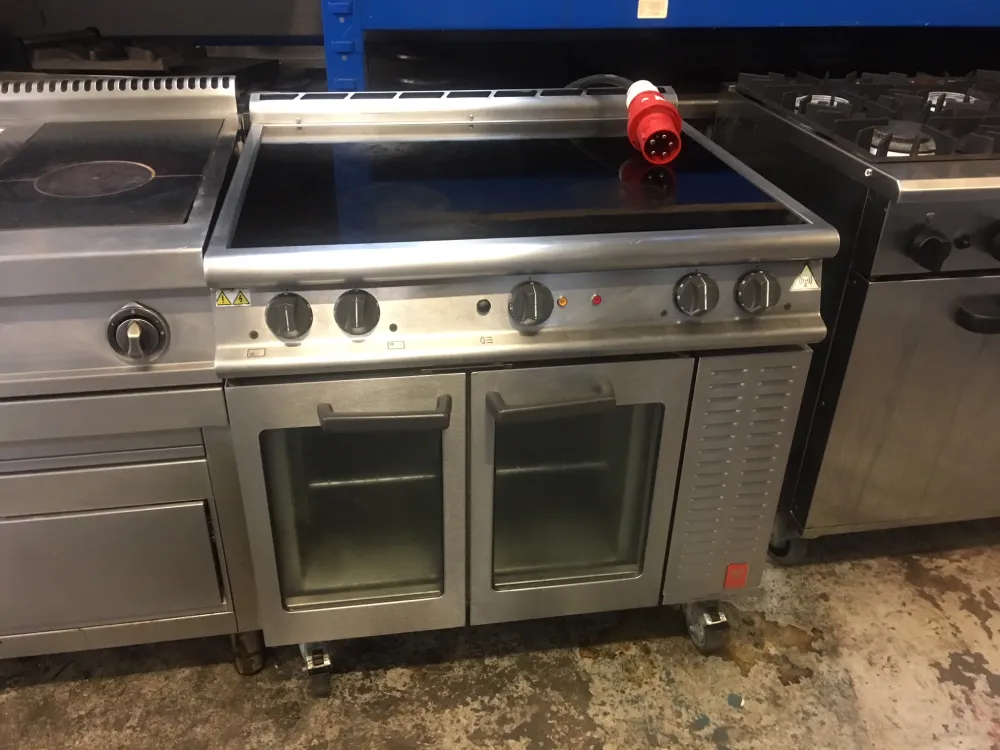
Zone’s lit up, power level’s showing, everything looks normal, and… the pan sitting on it is stone cold. At National Appliance Repairs, we get these kinds of calls all the time. It can understandably be quite confusing at first because induction doesn’t work like gas or standard electric.
Before assuming the cooktop’s broken, it’s worth understanding what it’s actually checking for, because most “not heating” cases turn out to be the appliance doing exactly what it’s designed to do.
How Induction Heating Actually Works
No heat comes from the surface itself. An electromagnetic field forms underneath the glass, and it only transfers energy into cookware with a magnetic base. Pan’s not magnetic, wrong size for the zone, or not sitting flush against the surface — no heat, by design, not by fault. Get the cookware right and most of these “faults” disappear on their own.
The Most Common Causes
Incompatible cookware. Aluminium, copper, glass, and plenty of stainless steel just aren’t magnetic enough. Quick test: hold a fridge magnet to the base of the pan. Sticks firmly, it’ll work. Slides off or barely clings, it won’t, no matter what’s wrong or right with the cooktop.
Pan too small for the zone. Every zone’s got a minimum detection size. Fully magnetic pan, still too small, still won’t register. Catches people out most with a small saucepan or milk pot sitting on a standard zone.
Pan off-centre or not sitting flat. Compatible cookware still won’t get detected if it’s not centred over the zone markings, or if a warped base leaves a gap underneath. Worth checking on a flat surface if you suspect this.
Moisture or debris on the surface. Water, oil, food residue between the cooktop glass and the pan base can throw the sensor off. Wipe both dry before placing anything down.
Control lock or an active timer. Plenty of models include a child lock or timer that stops heat output without making it obvious from the display. Worth a look in the manual for how your model shows this.
Overheat protection kicking in. Long session, or a cooktop mounted above another heat source like an oven, and a safety shutdown can trigger. Power off, lift the pan, give it 10 to 15 minutes. Usually clears on its own.
Buying Cookware That Actually Works
If you’re regularly running into detection issues, it might be worth checking your whole cookware set rather than one problem pan. Stainless steel is the trickiest category, since some stainless cookware is fully magnetic and some isn’t, depending on the specific alloy used in the base. Cast iron, enamelled cast iron, and any pan explicitly labelled induction-compatible will almost always work without issue. Aluminium, copper, and most glass or ceramic cookware won’t work at all unless it has a magnetic base plate bonded on, which some manufacturers do add specifically to make otherwise incompatible cookware induction-ready.
The magnet test takes ten seconds and saves a lot of guesswork before you buy anything new: if a magnet sticks firmly to the base in the shop, it’ll work on your cooktop at home.
Caring for the Glass Surface
The glass surface is more durable than it looks, but it isn’t indestructible, and how you treat it affects both cooking performance and how long it lasts. Sliding heavy cast iron across the surface rather than lifting it can scratch or, in rare cases, crack the glass. Sugar-based spills left to burn onto the surface can etch it if not cleaned up while still warm. A cooktop-specific glass cleaner and a dedicated scraper handle both of these far better than an all-purpose kitchen cleaner or an abrasive scourer, which can dull the surface over time and make it harder to keep clean.
Quick Reference: Fault vs Fix
| Symptom | Likely Cause | Quick Check |
| Zone lit, pan stays cold | Non-magnetic cookware | Fridge magnet test on pan base |
| Zone flashes and shuts off | Pan too small for zone | Check minimum zone diameter in manual |
| Detection fails intermittently | Pan off-centre or warped base | Recentre pan, test on flat surface |
| No response at all from any zone | Power supply or breaker issue | Check outlet and dedicated circuit |
| Works, then shuts down after time | Overheat protection | Power off, let cool for 10-15 minutes |
| Display shows an error code | Model-specific fault | Check manual for that code’s meaning |
What to Check Before Booking a Repair
- Run the fridge magnet test on the base of the pan you’re using
- Confirm the pan fully covers the cooking zone markings, not just touches the edge
- Wipe the cooktop surface and pan base dry before placing cookware
- Check for an active control lock or timer setting on the display
- If the whole cooktop is unresponsive, check the circuit breaker, since induction cooktops draw significant current and require a dedicated circuit
When It’s Actually a Fault, Not Cookware
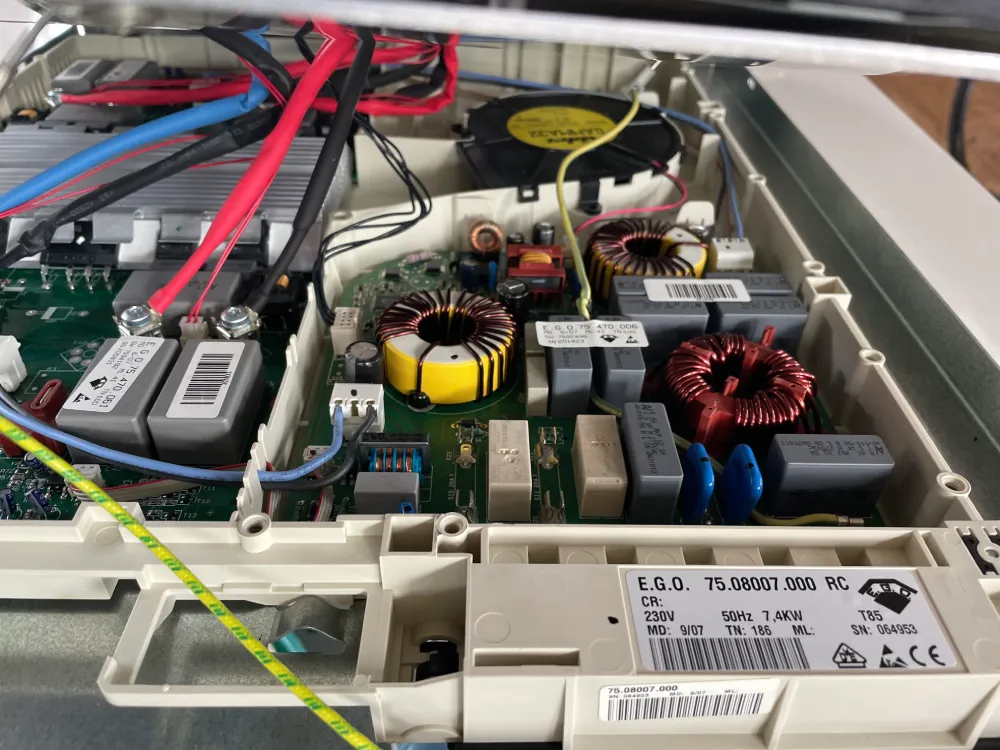
Confirmed compatible, correctly sized, properly placed cookware, and the zone still won’t detect it or make heat. Now it’s the appliance. Usually a failed coil, a faulty sensor, or a control board problem, and none of those get fixed safely without proper diagnostic gear and genuine parts.
National Appliance Repairs technicians work across induction, ceramic, and electric cooktops, and carry coils, control boards, and sensors for major brands in every van. Most induction cooktop repairs wrap up same-day when parts are in stock, backed by a 12-month parts warranty and 3-month labour warranty. Weighing up induction against a gas cooktop for your next appliance? Our technicians can talk through it during a service call too.
What a Technician Actually Tests
A proper diagnosis starts with ruling out cookware, since it’s the fastest and most common explanation. From there, a technician checks power delivery to the cooktop, tests each zone individually to see whether the fault is isolated to one coil or affects the whole unit, and inspects the control board for visible signs of damage or component failure. An isolated single-zone fault usually means a localised coil or sensor issue, quicker and cheaper to fix. Every zone failing together points toward the control board or the main power connection, a bigger job but still a single, contained repair rather than a reason to replace the whole appliance.
Frequently Asked Questions
Why does my induction cooktop show power but the pan won’t heat?
Almost always cookware, not a fault. The base needs to be magnetic, the right size for the zone, and sitting flat and centred for the cooktop to detect it at all.
How do I know if my cookware will actually work on induction?
Fridge magnet, held to the base of the pan. Sticks firmly, it’s compatible. Doesn’t stick, or barely clings, that pan’s not going to heat regardless of what condition the cooktop’s in.
Why does it shut off after a while?
Overheat protection, most likely, especially after a long session or if it’s installed above another heat source like an oven. Power off, lift the pan, let it cool before you go again.
Nothing at all gets detected on any zone. Serious?
If the cookware’s confirmed compatible, right-sized, and dry, and still nothing registers anywhere, that’s pointing at a genuine electrical fault, a failed coil or control board. Needs a professional look.
What does it cost to fix an induction cooktop?
Depends on the fault. A sensor or touch control issue costs less than a coil or control board replacement. Call 1300 434 380 for a ballpark before booking.
The Bottom Line
Most induction cooktops reported as “not heating” are working exactly as designed, just paired with the wrong pan. Run through cookware, positioning, and lock settings first and you’ll solve most of these in a few minutes. Still won’t heat with confirmed compatible cookware? Contact National Appliance Repairs or call 1300 434 380 for a same-day assessment, subject to availability, across Melbourne, Sydney, Brisbane, Adelaide, and Perth.
Call Us:
or leave a message using the form below