
Oven & Built-In Installation
Fitted to the Cut-Out | Ventilated Correctly | Old Oven Removed
A built-in oven looks like a box that slides into a hole. In practice it is a high-current appliance running hundreds of degrees inside timber cabinetry, and it needs the ventilation, fixing and electrical supply its manufacturer specifies to run safely and cook evenly.
National Appliance Repairs installs built-in ovens across Melbourne, Sydney, Brisbane, Adelaide and Perth as part of our appliance installation service. We also repair ovens, which means we know exactly which installation shortcuts turn into service calls.
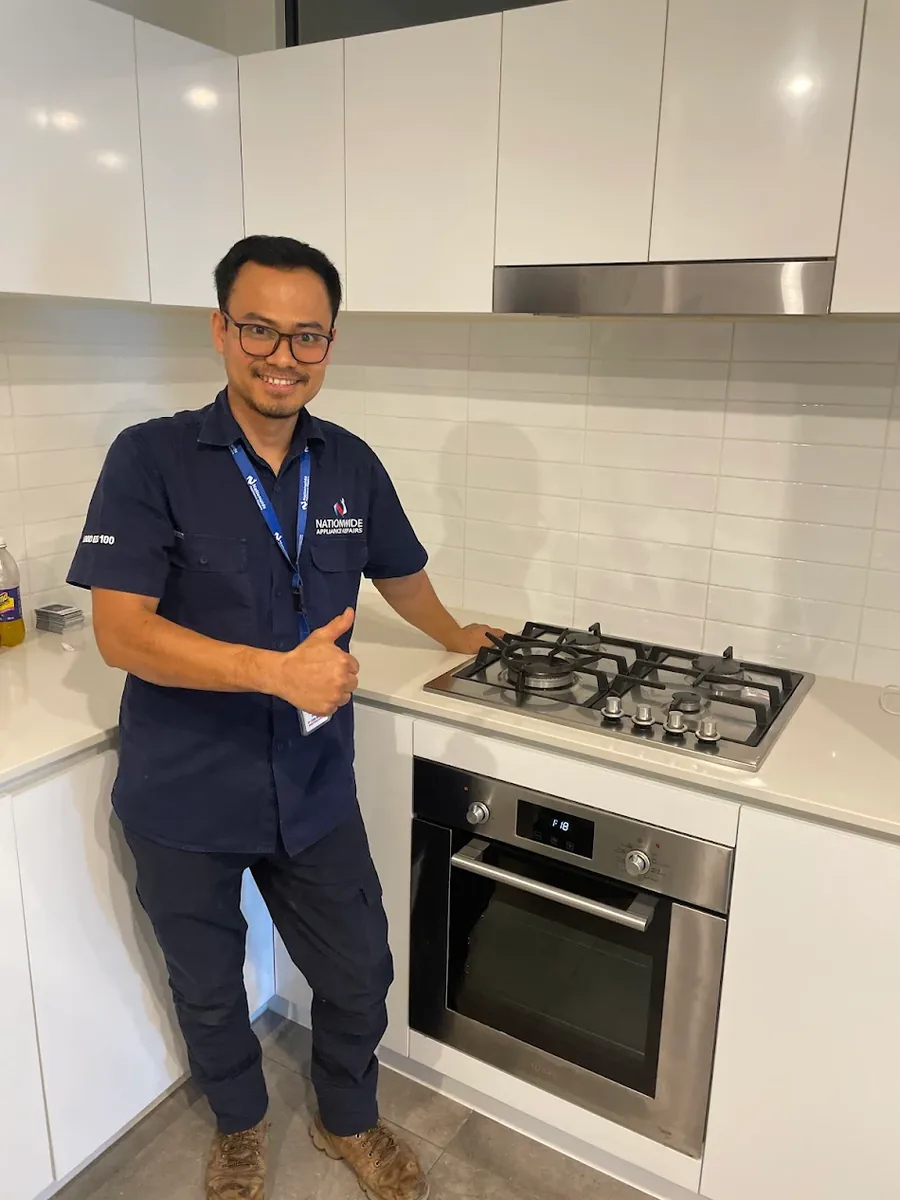

Fitted to the Cut-Out
Checked against your existing opening before anything is ordered or cut.

Ventilated Correctly
Installed with the clearances and airflow the manufacturer specifies.

Old Oven Removed
We take the old oven away when the new one goes in.
What’s Included
Every built-in oven installation covers the same ground, whether it is a straight replacement or an oven going into new cabinetry.
What’s included:
- Checking the new oven’s dimensions against your existing cut-out
- Checking the electrical supply, or the gas supply for a gas oven
- Fitting the oven with the ventilation clearances the manufacturer specifies
- Securing the oven to the cabinetry
- Connecting it, with licensed connections certified
- Testing every function, including the fan, grill and oven light
- Removing your old oven
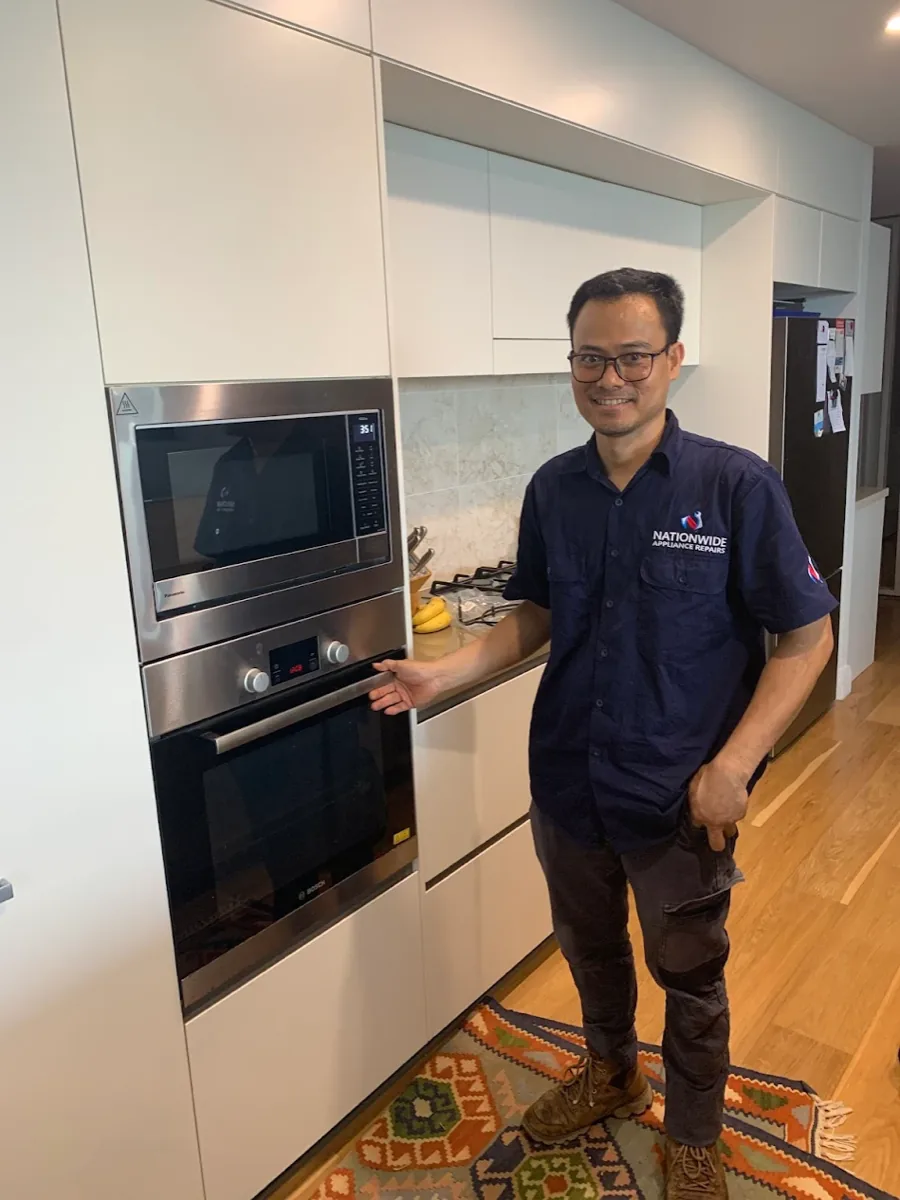
The Ovens We Install
Where an oven goes decides what has to be checked first.
| Oven type | Where it goes | What to check first |
|---|---|---|
| Under-bench oven | Beneath the cooktop | Whether the oven and cooktop can be combined, and the gap the cooktop needs |
| Wall oven | In a tall tower cabinet | Cut-out height, and cabinetry able to carry the weight |
| Double oven | Tower cabinet | A larger cut-out and a higher electrical load |
| Compact oven | Tower or paired with another appliance | Cut-out height, often 45cm class |
| Steam oven | Tower cabinet | Whether it is plumbed in or uses a water tank |
| Pyrolytic oven | Under-bench or tower | Ventilation, because the self-clean cycle runs extremely hot |
Most replacements are decided by the cut-out:
- Ovens vary slightly in height, width and depth between brands and between generations of the same brand
- Send us the model number and a measurement and we will tell you whether it fits
Ventilation
Every built-in oven’s installation instructions specify ventilation: gaps behind or beneath the oven, openings in the cabinetry, and clearances to the surrounding panels. The oven’s own cooling fan relies on that airflow to keep its electronics and the cabinetry around it within safe temperatures.
An oven boxed in tighter than its instructions allow runs hot. The effects arrive slowly: uneven cooking, discoloured or delaminating cabinetry, and control electronics failing years early. Pyrolytic ovens, which heat to extreme temperatures during their self-clean cycle, are the least forgiving.
Why it matters:
- The cooling fan needs the specified gaps to protect the oven’s own electronics
- Pyrolytic self-clean cycles make correct ventilation non-negotiable
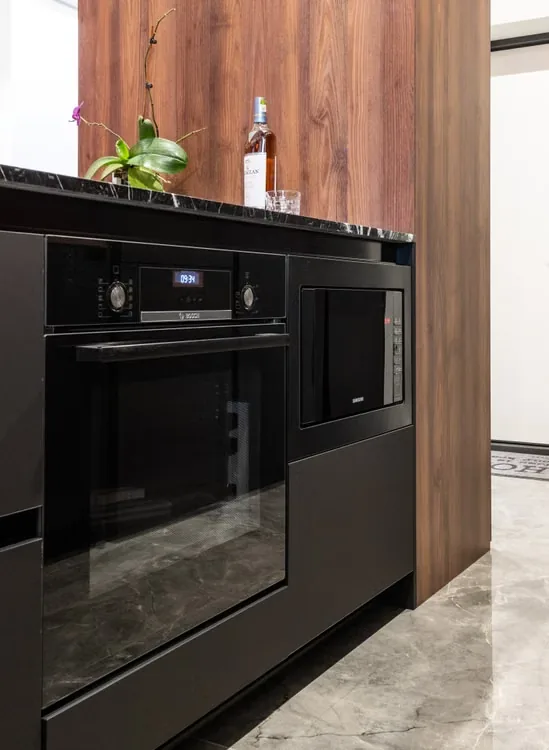
Connections
Electrical and Gas Connection
Most built-in electric ovens are hardwired on their own dedicated circuit and cannot be plugged into a standard power point.

Hardwired electrical
Hardwiring an oven is licensed electrical work under AS/NZS 3000, the Wiring Rules. It is carried out by a licensed electrician and comes with a certificate of electrical safety or your state’s equivalent. Larger and double ovens draw more current and can need a higher-rated circuit than the oven they replace.

Gas ovens
Gas ovens are connected by a licensed gasfitter, to AS/NZS 5601, with a gas compliance certificate.
An Oven Under an Induction Cooktop
This combination catches out a lot of installations. Induction cooktops need airflow beneath them to cool their electronics, and fitting an oven directly underneath without the gap the cooktop specifies causes the induction zones to overheat and shut down.
Not every oven is approved for installation under every cooktop. Both appliances’ installation instructions need to agree.
Check before you buy:
- That the oven is approved for installation beneath your specific cooktop
- The exact gap the cooktop’s instructions require above the oven
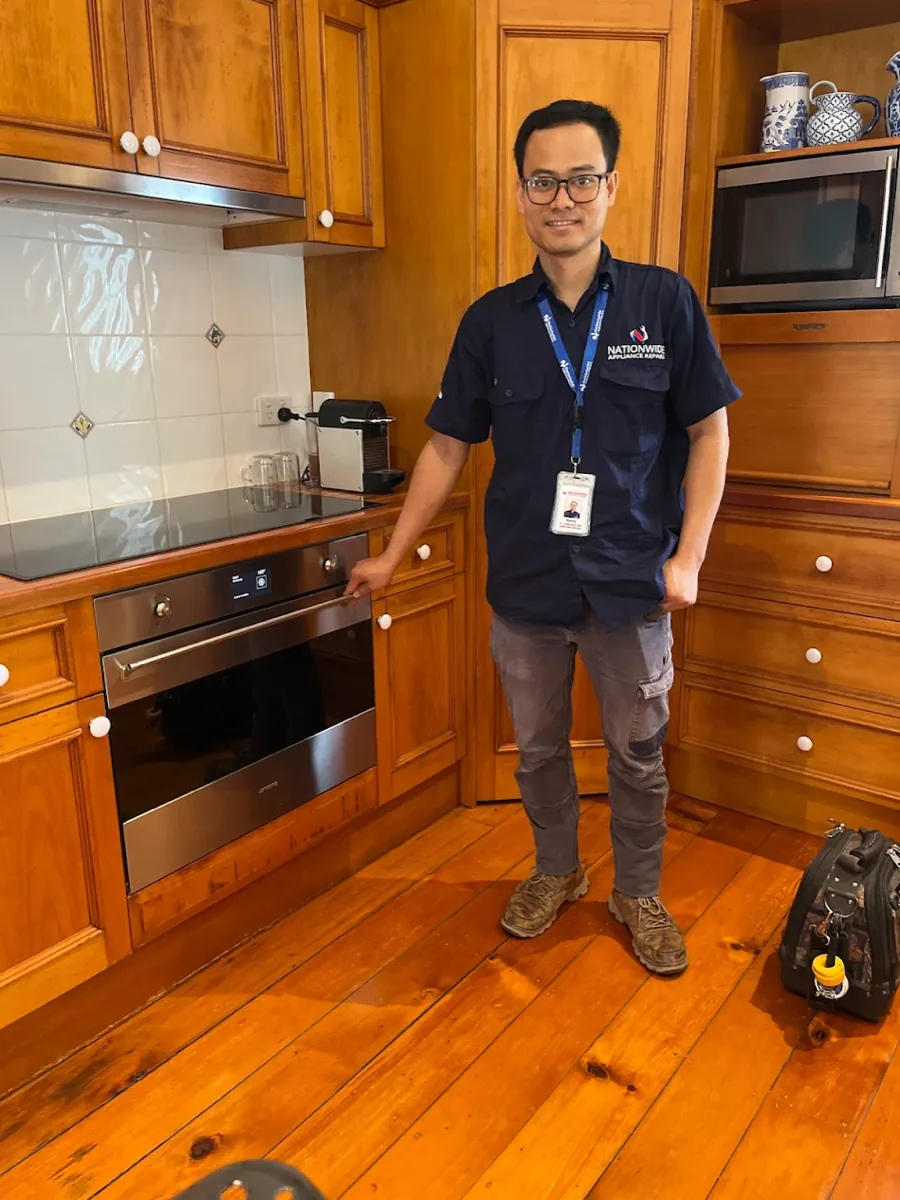
Common Faults
Installation Mistakes We Fix
These are the faults we are called out to repair that started at installation.

Boxed in without ventilation
The most common, and the slowest to show.
Not secured to the cabinetry
The oven shifts forward when the door is opened with a heavy tray on it.
Under-rated circuit
A bigger oven connected to a circuit sized for a smaller one trips breakers or runs cables hot.
Oven and induction cooktop incompatible
Zones shut down mid-cook.
Freestanding cooker without its stability bracket
A freestanding cooker must be fitted with the anti-tip bracket supplied, or it can tip forward when weight is put on the open door.
Repair Before You Replace
Plenty of ovens get replaced over a single failed component. Our oven and cooktop repair service custom-makes and installs oven door glass and heating elements, including fan-forced, grill and standard elements, which keeps many older ovens running when parts are otherwise hard to source. If the oven is worth saving, we will tell you.
Worth checking first:
- Door glass and heating elements can often be custom-made rather than sourced
- An oven running hot or cooking unevenly may be a calibration issue, not a replacement

Client Testimonials
Thousands of Australian families trust National Appliance Repairs. Here's why.
Households and property managers across five capitals trust National Appliance Repairs with their kitchens. Here is what they say.



FAQS
Built-In Oven Installation Questions
Will a new oven fit my existing cut-out?
Often, but not always. Compare the installation dimensions in the new oven’s specifications with your current opening before you buy. Small differences between brands can mean cabinetry changes.
Can I plug a built-in oven into a power point?
Most built-in ovens cannot. They are hardwired on a dedicated circuit, which is licensed electrical work and comes with a certificate.
Can any oven go under my cooktop?
No. The oven and cooktop manufacturers both specify which combinations are allowed and what gap is needed. Induction cooktops in particular need airflow beneath them.
Does a pyrolytic oven need anything special?
Its ventilation requirements matter more than most, because the self-clean cycle runs extremely hot. It must be installed exactly to its instructions.
Do you take the old oven away?
Yes. We remove your old oven when we install the new one.
Installations Process
Oven & Built-in Installation
Book your installation
Call 1300 434 380 or enquire online. Our live team answers in about 30 seconds. Tell us what you are installing, the model number if you have it, and what it is replacing.
Check the site
Before anything is fitted, we check what the new appliance needs against what is already there: the cabinet cut-out, clearances, the electrical supply, the gas type and connection, and the water and drainage. Most installation problems are decided at this step.
Agree the price
You get a clear quote covering the installation and anything the site needs to accept the new appliance. Nothing proceeds without your approval.
Install and connect
The appliance is fitted and levelled to the manufacturer’s specifications. Gas and hardwired electrical connections are made by appropriately licensed trades and certified.
Test, hand over and remove the old one
We test the appliance, walk you through it, hand over your compliance documentation, and take the old appliance away.
Contact us
Book Your Oven Installation
Tell us the oven model, whether it is going under a cooktop or into a tower, and what it is replacing.
Call us: 1300 434 380

Old Oven Removed
*subject to availability
Licensed connections, certified

Servicing Australia since 2009
Call Us:
or leave a message using the form below
Call Us:
or leave a message using the form below